3D Printing and Drones
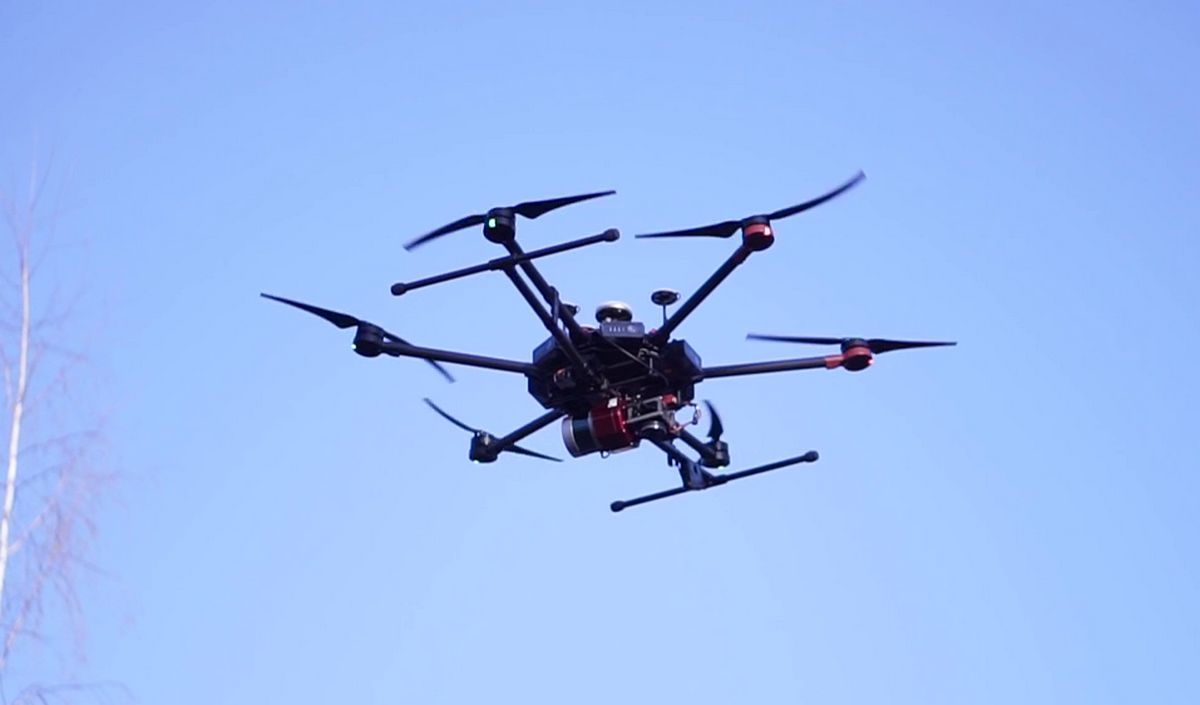
Drones have become ubiquitous, transforming sectors ranging from logistics to agriculture, cinema, security, and recreation. Behind these agile flying machines lies another equally revolutionary technology: 3D printing. Far from being a mere trend, additive manufacturing is redefining drone design, production, and customization, opening the door to unprecedented performance, functionality, and accessibility.
The alliance between 3D printing and drones is a perfect synergy where the design freedom of one meets the requirements of lightweight, complexity, and optimization of the other.
Why 3D Printing is a Major Asset for Drones
The characteristics of 3D printing make it an ideal tool for drone development and manufacturing:
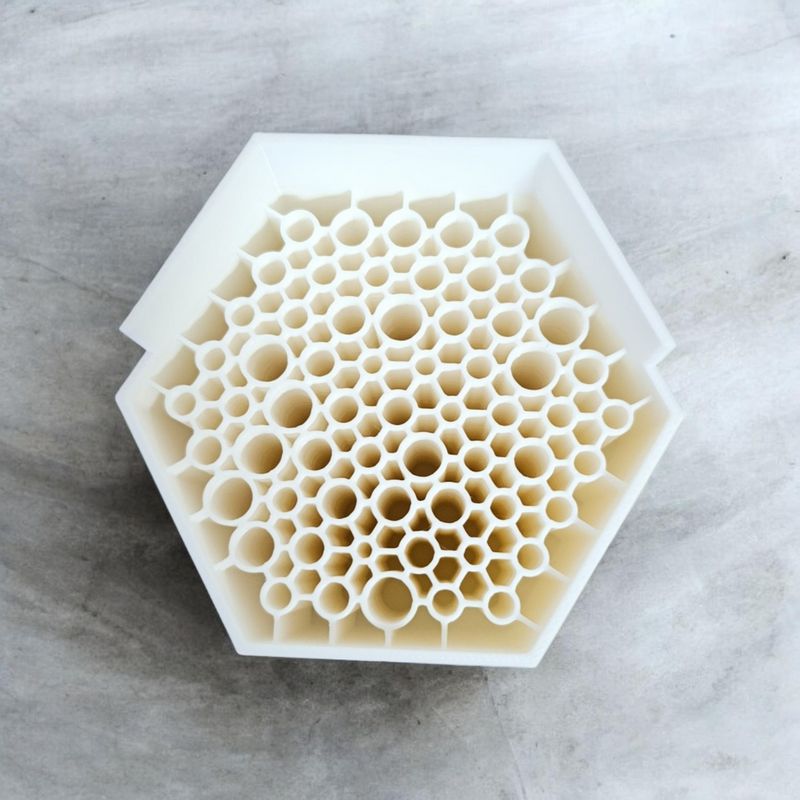
- Lightweight and Topology Optimization: Weight is the enemy of flight time and payload capacity in a drone. 3D printing allows creation of structures with complex internal lattices, honeycomb patterns, or topology optimizations that dramatically reduce part weight without compromising structural resistance. This is essential for maximizing flight duration.
- Rapid Prototyping and Iteration: Drone design cycles are often fast, requiring numerous aerodynamic tests, component integration, and impact resistance assessments. 3D printing enables fabrication of frame, propeller, and bracket prototypes in hours or days, accelerating R&D phases and continuous improvement.
- Customization and Specialization: Each drone application can have unique requirements. 3D printing enables design and manufacturing of custom drones: an inspection drone with a specific camera mount, a delivery drone with an optimized compartment, or a racing drone with an ultra-rigid, lightweight frame.
- Geometric Complexity and Feature Integration: From complex aerodynamic shapes to internal channels for cable management and integrated sensor mounts, 3D printing facilitates creation of sophisticated geometries that would be difficult or impossible to achieve with traditional manufacturing methods.
- On-Demand Production and Small Batches: For specialized drones, spare parts, or limited runs, 3D printing is extremely cost-effective as it requires no expensive tooling. This reduces production lead times and startup costs.
- Repair and Maintenance: In case of crashes or component failure, 3D printing enables rapid fabrication of spare parts, extending drone lifespan and reducing maintenance costs.
Drone Components Commonly 3D Printed
Nearly all non-electronic parts of a drone can benefit from 3D printing:
- Frames: The main drone body, often designed to be lightweight, rigid, and protective for electronics.
- Propellers and Ducts: For propellers with specific aerodynamic profiles or ducts to improve thrust and safety.
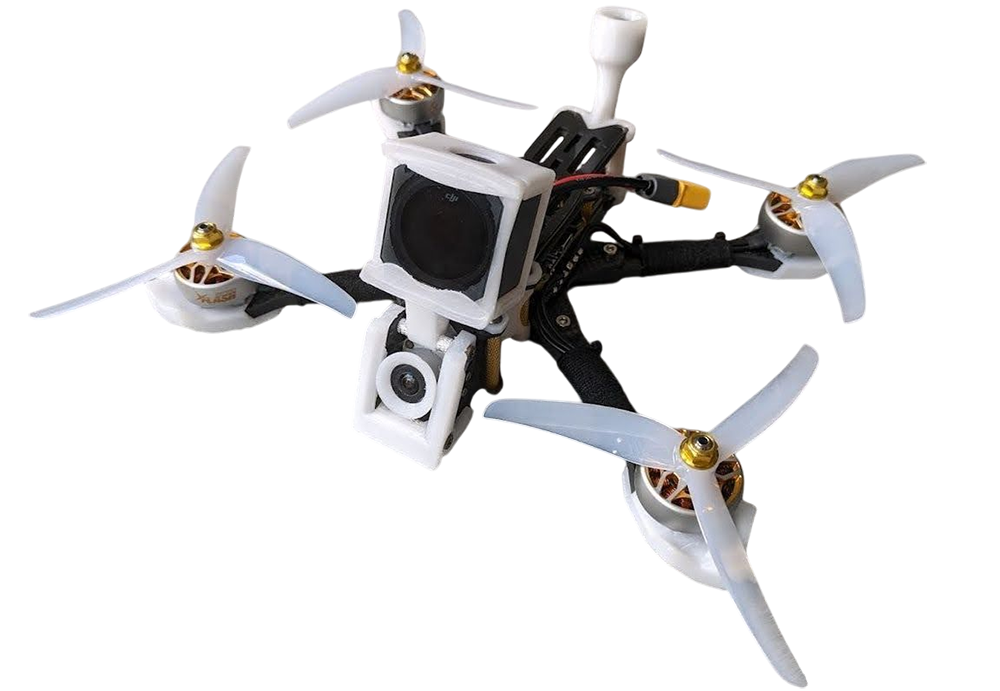
- Mounts and Enclosures: For cameras (FPV, GoPro), sensors, GPS, batteries, antennas, or flight controllers.
- Protective Parts: Landing gear, propeller guards, bumpers.
- Internal Components: Cable management systems, motor mounts, vibration dampers.
Preferred Materials and 3D Printing Technologies
The choice of material and printing technology depends on required performance:
- FDM (Fused Deposition Modeling):
- Materials: PLA for rapid prototyping and ABS or PETG for greater durability. Filaments loaded with carbon fiber (PC-CF, Nylon-CF) or fiberglass are increasingly used for their excellent strength-to-weight ratio and rigidity, essential for drone frames. TPU (flexible) is ideal for landing gear protection or shock-absorbing camera mounts.
- Advantages: Affordable, wide material selection, accessible to everyone.
- Disadvantages: Lower isotropy (variable resistance by axis), visible layer lines.
- SLS (Selective Laser Sintering):
- Materials: Primarily Nylon PA12.
- Advantages: Highly resistant, lightweight parts with excellent isotropic properties (uniform strength in all directions). Enables very complex geometries without supports. Ideal for robust, aesthetic drone frames.
- Disadvantages: Expensive technology, typically reserved for professional printing services.
- SLA / DLP (Stereolithography / Digital Light Processing):
- Materials: UV resins ("Tough" or "Engineering" resins).
- Advantages: High precision, smooth surface (ideal for aerodynamics), excellent detail for small mounts or enclosures.
- Disadvantages: Parts often more brittle than SLS Nylon, post-processing (cleaning, UV curing) required.
Real-World Applications
3D printing has already proven its value in many drone-related fields:
- Racing Drones (FPV Racing Drones): DIY culture is strong, and pilots print their own ultralight frames, custom camera mounts, and spare parts.
- Industrial Inspection Drones: Adaptation of existing drones with custom mounts for specialized sensors (thermal, multispectral).
- Delivery Drones: Design of optimized chassis for transporting specific loads, with integrated compartments.
- Aerospace Research and Development: Rapid testing of new wing profiles, propulsion systems, or sensors.
- Custom / Hobby Drones: Unique drones for enthusiasts with distinctive designs or unique features.
Challenges and Future Perspectives
Despite advances, challenges remain:
- Stress Resistance: Develop printable materials that withstand intense vibrations, impacts, and extreme environmental conditions encountered by drones.
- Electronic Integration: Printing conductive components or circuits directly into parts is a promising research field.
- Certification: Ensuring 3D-printed drones comply with safety and performance standards.
However, the prospects are immense. 3D printing will continue to democratize drone design, enable hyper-personalization, accelerate innovation, and facilitate maintenance. It is an essential driver for the emergence of increasingly specialized, high-performance drones tailored to tomorrow's specific needs. The sky is the limit, and 3D printing is the path.