Why Aerospace Adopts 3D Printing

The aerospace industry, always at the forefront of innovation, was among the first to adopt 3D printing, or additive manufacturing. More than just a production method, this technology is redefining the design, manufacturing, and maintenance of aircraft and spacecraft, propelling the sector toward horizons once thought unreachable.
A New Era of Design and Additive Manufacturing

The aerospace sector constantly seeks gains in performance, weight, and cost while ensuring maximum safety. 3D printing meets these imperatives with major benefits:
- Drastic Weight Reduction and Performance Optimization: This is the holy grail of aerospace. Every kilogram saved on an aircraft or rocket translates to reduced fuel consumption, increased range, and greater payload capacity. 3D printing enables the creation of complex geometries (lattice structures, internal channels, consolidated parts) impossible with traditional methods. For example, brackets can be 20 to 40% lighter than their forged counterparts without sacrificing strength. Aircraft engine fuel nozzles, once composed of multiple pieces, can now be printed as a single block, lighter and more efficient.
- Design Freedom and Part Consolidation: 3D printing frees engineers from manufacturing constraints. It's now possible to design parts with unlimited complexity, integrating multiple functions into a single component. This allows consolidation of multiple assembled parts (by welding or bolting) into one printed piece, reducing weak points, assembly costs, and production time. A single component can replace dozens of parts, simplifying the supply chain and maintenance.
- Rapid Prototyping and Accelerated Iteration: Developing new aircraft and equipment is a long and costly process. 3D printing revolutionizes prototyping by allowing a progression from digital concept to physical model in hours or days. This accelerates testing, validation, and iteration cycles, significantly reducing time-to-market and costs associated with late-stage design errors. Aerodynamic test models can be quickly produced and modified.
- On-Demand Production and Supply Chain Optimization: For spare parts, particularly for older or rare aircraft, 3D printing offers an on-demand production solution. Gone are the days of storing vast, costly inventories prone to obsolescence. Airlines and armed forces can print needed parts when required, reducing aircraft downtime (AOG - Aircraft On Ground) and optimizing inventory management.
- Waste Reduction and Sustainability: Unlike subtractive methods (machining) that generate significant scrap, additive manufacturing deposits material only where needed. This minimizes waste of costly and precious materials like titanium or superalloys, contributing to more sustainable and eco-responsible production.
Concrete Applications of 3D Printing in Aerospace
3D printing is already widely integrated into many aspects of aerospace:
- Engine Components: GE Aviation prints fuel nozzles for its LEAP engines (reducing 20 parts to 1 and saving 25% weight), as well as complex sensor housings. Rolls-Royce uses AM for reactor parts.
- Structural Parts: Boeing uses titanium-printed rear galley brackets for the 787 Dreamliner, validated by the FAA. Airbus integrates spacer panels and complex hinges.
- Tooling, Jigs, and Fixtures: Custom production tools, jigs, and assemblies are 3D printed to precisely assemble the millions of components in an aircraft. This can reduce manufacturing costs and lead times by 60 to 90%.
- Space Components: Companies like SpaceX print elements of their rocket engines (SuperDraco) and other structural components. Relativity Space even prints entire rockets (Terran 1 and Terran R) to drastically reduce manufacturing lead times.
- Cabin Interiors: Interior parts, from air ducts to armrests, can be printed to reduce weight and offer customization.
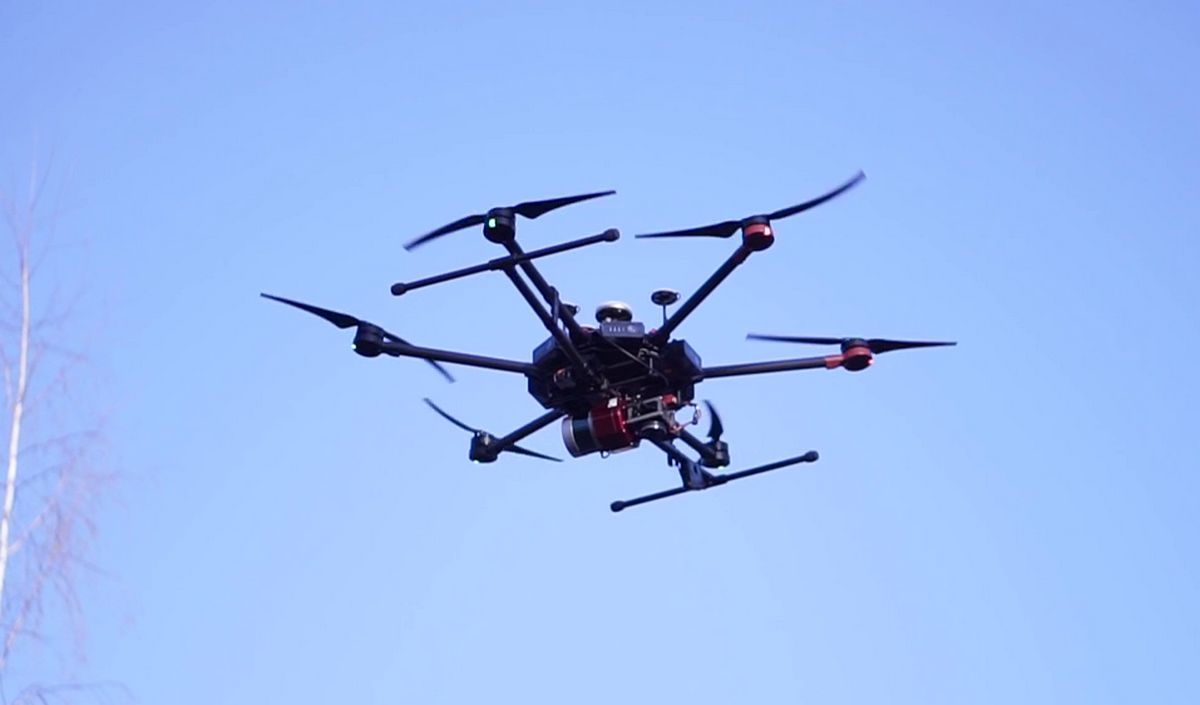
- Drones (UAVs): Entire drones or drone sections can be rapidly printed for specific missions, as RapidFlight does with its mobile production systems.
Challenges and the Future of Aerospace 3D Printing
Despite this massive adoption, challenges remain:
- Rigorous Certification: Obtaining necessary certifications (such as from the FAA or EASA) for printed parts is a lengthy and costly process requiring exhaustive testing to ensure reliability and safety.
- Advanced Materials: Continuous development of new metal alloys and high-performance polymers capable of withstanding extreme aerospace conditions (temperature, vibrations, pressure) is crucial.
- Quality Control: Ensuring consistency and integrity of each printed part, identifying invisible internal defects, remains a major challenge driving the integration of sensors and AI into the process.
- Standardization: Establishing universal standards and protocols for additive manufacturing is essential for broader adoption.
Despite these obstacles, 3D printing has become a cornerstone of aerospace innovation. Its ability to create lighter, more complex parts faster than ever before paves the way for more efficient, safer, and cost-effective aircraft and spacecraft, marking a true revolution in the conquest of sky and space.