FDM vs Resin 3D Printing: Complete Comparison

Updated November 16, 2026
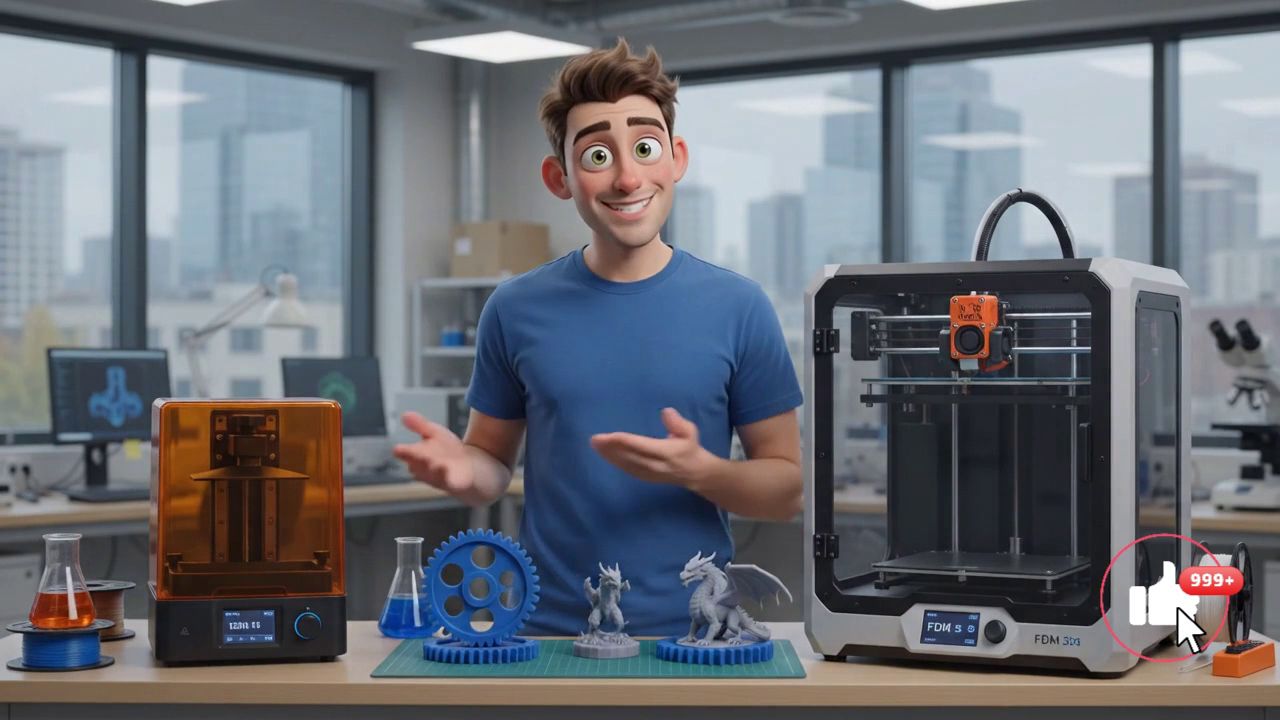
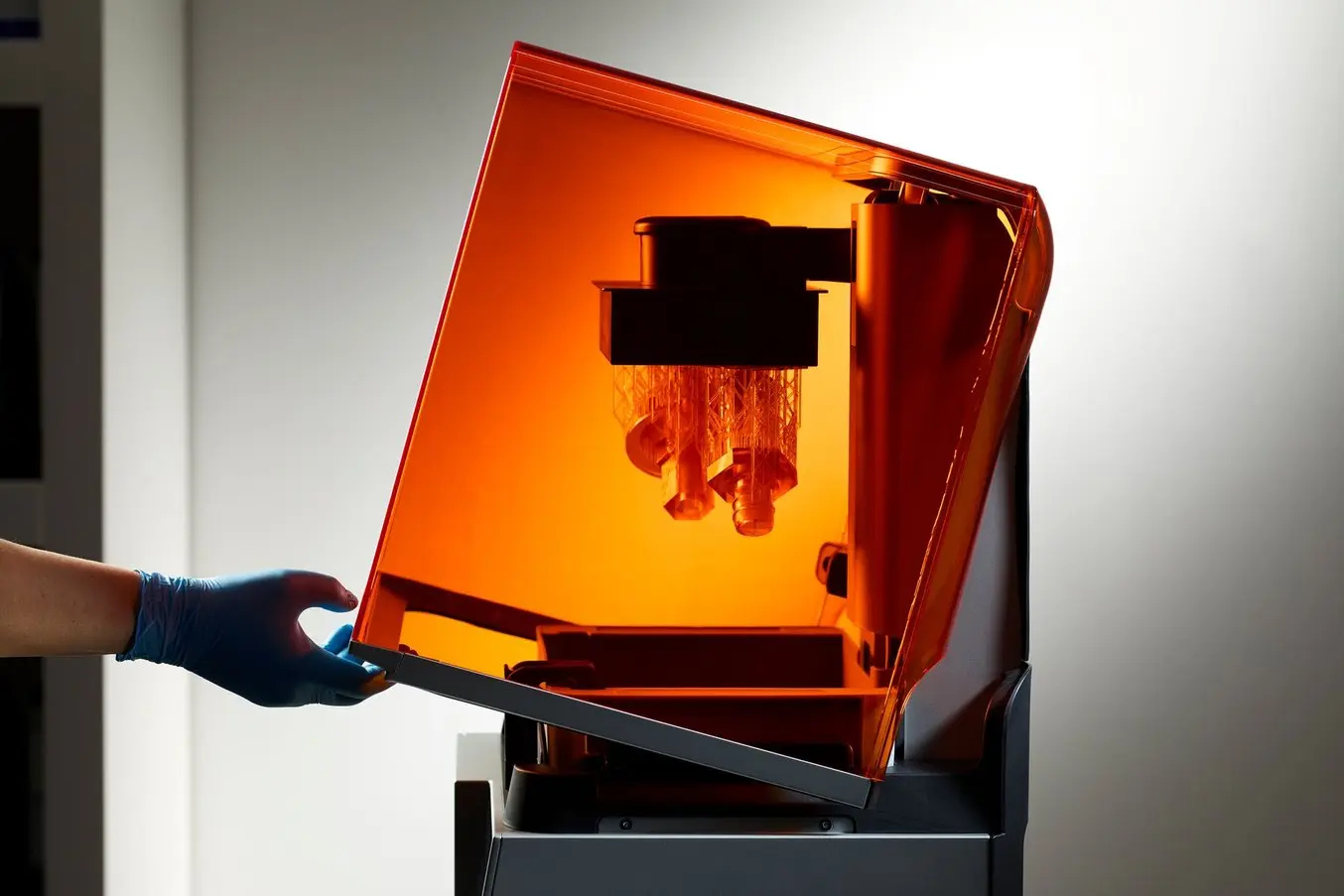
3D printing has split into two distinct worlds, each dominating its own application domain: Fused Filament Deposition (FDM/FFF) and resin printing (SLA/DLP/LCD). While FDM is the workhorse of versatility and accessibility, resin is the champion of detail and finesse.
Understanding the strengths and weaknesses of each technology is key to choosing the 3D printer that will perfectly match your projects.

Quality and Detail: Resin Crushes FDM
This is where the difference is most striking. In FDM, layers typically range from 0.08 to 0.3 mm and line width depends on the nozzle (0.4 mm standard, 0.2 mm for details). In resin, layers drop to 0.025 or 0.05 mm, and 12K or 16K screens offer precision around 20 microns: layers become virtually invisible.
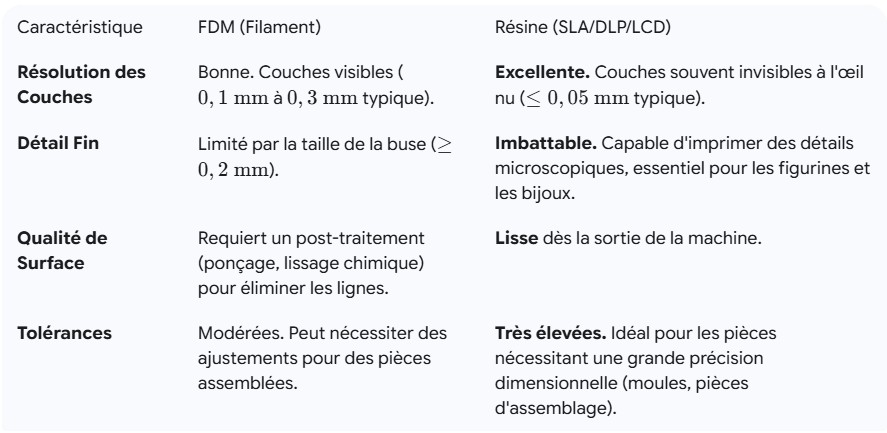
Verdict: For scale models, aesthetic prototypes, gaming miniatures and jewelry, resin is the go-to choice. FDM remains quite solid for miniatures 10 cm and larger, especially with a 0.2 mm nozzle and thin layers.
Cost and Accessibility: FDM Takes the Lead
Budget and ease of use heavily favor filament-based printing. Entry-level machine prices are similar (a few hundred euros either way), but resin also requires a wash-and-cure station, nitrile gloves, isopropyl alcohol and ventilated space. In practice, a spool of PLA typically costs less than a liter of resin, and doesn't expire once opened if stored dry.
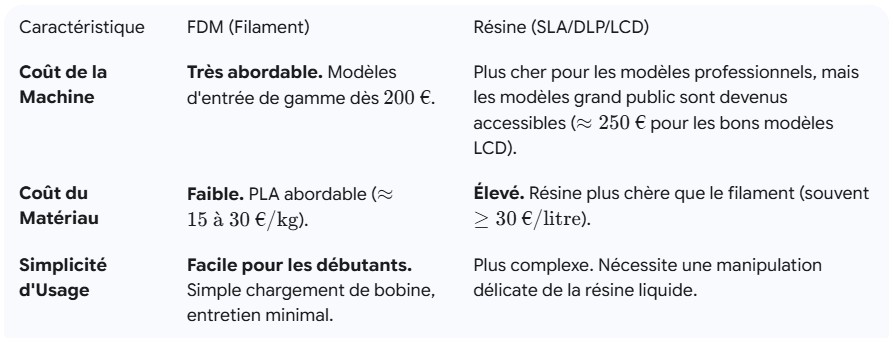
Verdict: For learning, initial prototyping and budget-conscious projects, FDM is the ideal starting point.
Need to budget? Our 3D printing cost calculator estimates the cost per part for your filament prints.
Speed and Build Volume
How speed is calculated differs dramatically between the two technologies. In FDM, the nozzle draws each part: more parts or more material means longer times. In resin, the entire layer is cured at once by the screen: timing depends mainly on part height, whether you're printing 1 or 15 miniatures on the platform. For volume, common FDM printers often exceed 25 cm per side, while most resin printers remain more compact.
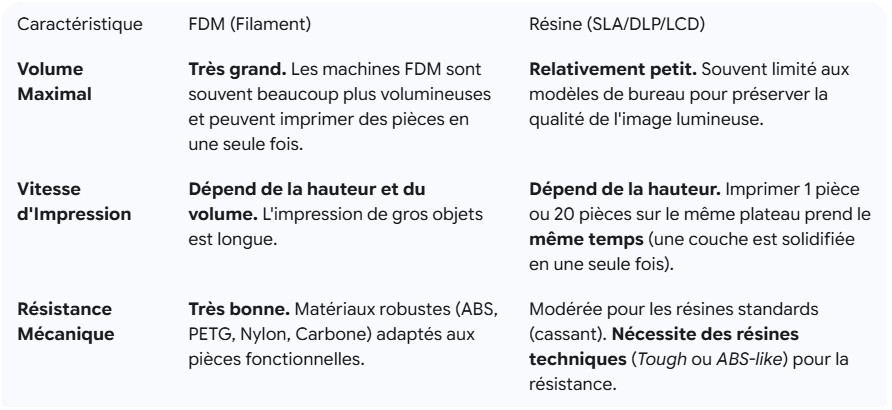
Verdict: For large single functional parts, go FDM. For producing detailed small batches, resin is faster.
Safety and Post-Processing
This is the major friction point for home users.
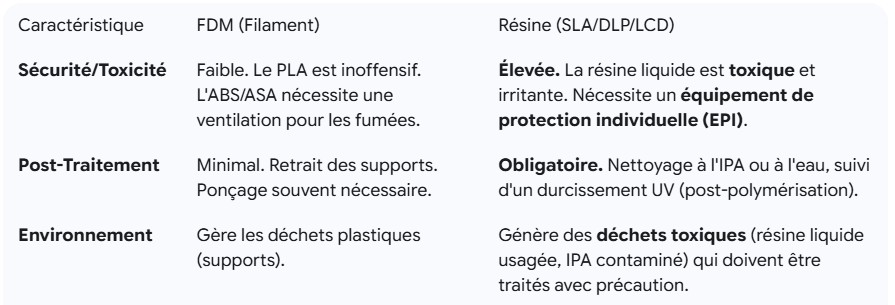
- Resin: Uncured, it's irritating and can cause skin allergies. Nitrile gloves, safety glasses and good ventilation are essential. Every part must be washed in isopropyl alcohol then UV-cured. Contaminated alcohol and resin scraps never go down the drain: let them cure in sunlight or under UV, then dispose at a waste facility.
- FDM: PLA and PETG print without notable odor. ABS and ASA release fumes: prefer an enclosed printer with filter in a well-ventilated room. Post-processing is limited to support removal and optional sanding.
Conclusion: When to Choose What?

For many enthusiasts, the ideal solution is to have both: an FDM printer for utility projects and a resin printer for art and fine details.
Which camp are you in? Vote in our big resin vs FDM poll!