Why Does 3D Printing Matter?

3D printing, often called additive manufacturing, is far more than just a production method. It's a technology that transforms the rules of design, development, and manufacturing, offering unprecedented advantages that set it radically apart from traditional techniques. Let's explore together why 3D printing has become a cornerstone of innovation across so many industries.
Unlimited Design Freedom

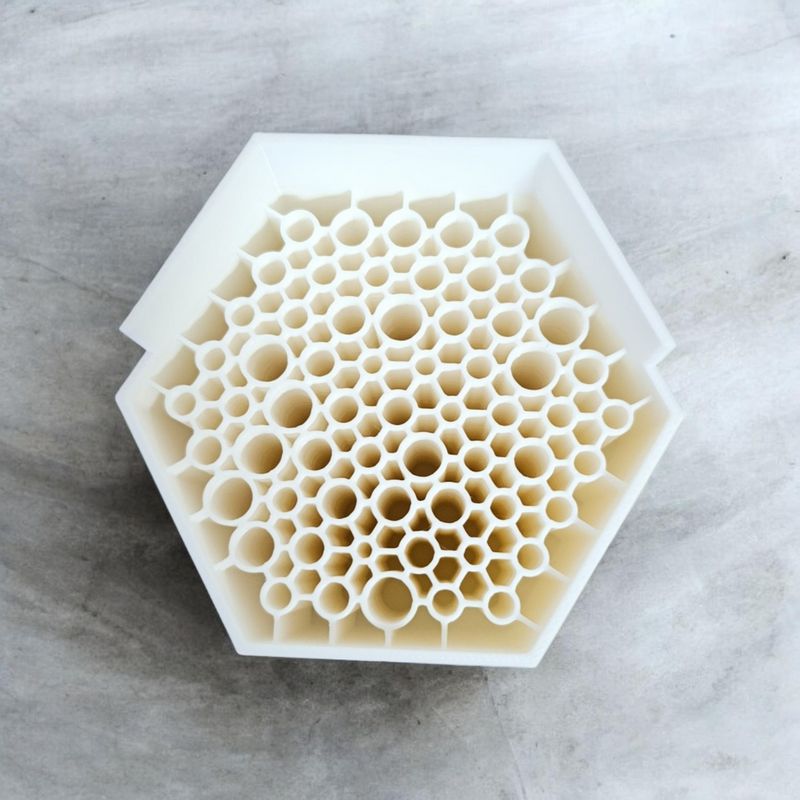
Imagine being able to create objects of mind-bending complexity. That's precisely what 3D printing enables. Where machining (which removes material) or molding (which constrains it to a form) are limited by their tools or molds, additive manufacturing builds layer by layer, opening the door to optimized internal geometries, ultralight lattice structures, or organic shapes inspired by nature. You can now design parts with complex internal channels for fluids, honeycomb designs to reduce weight without compromising strength, or even articulated assemblies printed in a single piece. This ability to materialize any idea, no matter how complex, is a true revolution for engineers, designers, and artists.
Customization and Made-to-Order
In an era where customization is increasingly valued, 3D printing excels by enabling mass customization. Say goodbye to mass production of standard objects! With 3D printing, every piece can be unique and perfectly tailored to an individual's specific needs or application.
Whether in the medical field with prosthetics and dental or orthopedic implants precisely molded to a patient's anatomy, in industry with ergonomic tooling adapted to an operator's hand, or in consumer goods with personalized phone cases, jewelry, or figurines, additive manufacturing makes "made for you" accessible and efficient. It's an unparalleled ability to meet individual requirements with remarkable agility.
Rapid Prototyping: Accelerating Innovation
Before 3D printing, developing a new product was a slow and costly process, punctuated by mockups and prototypes manufactured using traditional methods. 3D printing transformed this stage, making it extraordinarily fast and cost-effective.
You can now go from a digital concept to a physical, functional object in just hours or days. This means design teams can test, refine, and iterate their designs at lightning speed. A prototype doesn't work? Modify the 3D file, run another print, and test a new version the same day. This ability for rapid iteration drastically cuts development timelines, reduces costs from early mistakes, and accelerates time-to-market for new products.
On-Demand Manufacturing: Less Inventory, More Flexibility
The mass production model, with its vast warehouses filled with products, is being challenged by 3D printing. This technology promotes on-demand manufacturing, an approach where parts are produced only when and where they're needed.
This approach offers significant advantages:
- Reduced storage costs and risk of unsold inventory.
- Elimination of minimum order quantities, which is ideal for small runs, rare spare parts, or limited editions.
- Enhanced responsiveness to market fluctuations or unexpected needs.
Whether it's tooling urgently needed on a production line or creating a spare part for older equipment, on-demand manufacturing minimizes resource waste and maximizes agility.
Waste Reduction: A More Sustainable Approach
In a context of growing environmental concerns, 3D printing's impact on waste reduction is a major asset. Unlike subtractive methods (like machining, which generates chips and scrap material), additive manufacturing only adds material where it's structurally necessary.
This means drastic minimization of scrap and waste. Plus, 3D printing's ability to create optimized geometries with hollow or lattice internal structures allows you to reduce the total amount of material used while maintaining, or even improving, the mechanical properties of the final part. It's a more eco-responsible approach to production that fully aligns with a circular economy.
Ultimately, 3D printing is not just a simple technological innovation; it's a transformative force that democratizes creation, optimizes industrial processes, and opens unprecedented perspectives for a future where manufacturing is more agile, personalized, and respectful of resources.