Repair, Recycle, Reinvent: 3D Printing and the Circular Economy

Updated November 11, 2026
Facing overconsumption, resource depletion, and mounting waste, the "take, make, throw away" model is hitting its limits. The circular economy proposes the opposite: keeping objects and materials in use as long as possible. Europe is pushing in this direction, with a right-to-repair directive adopted in 2024, which member states had to integrate into their laws by summer 2026.
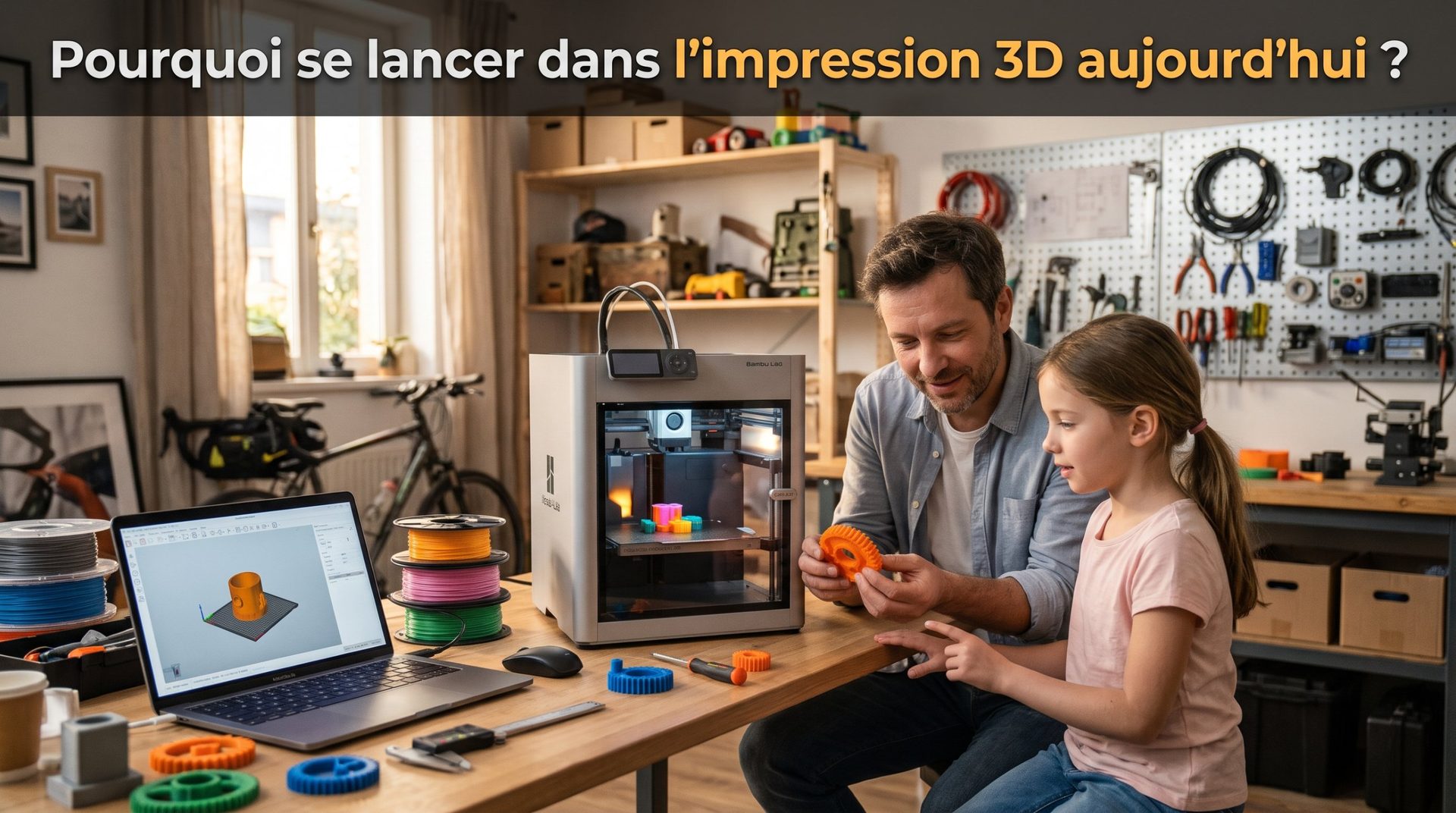
In this movement, 3D printing is no longer just a manufacturing technology: it's a practical tool for repairing, recycling, and rethinking how we produce. With a few limitations worth knowing.
1. Repair: Extending the Life of Objects
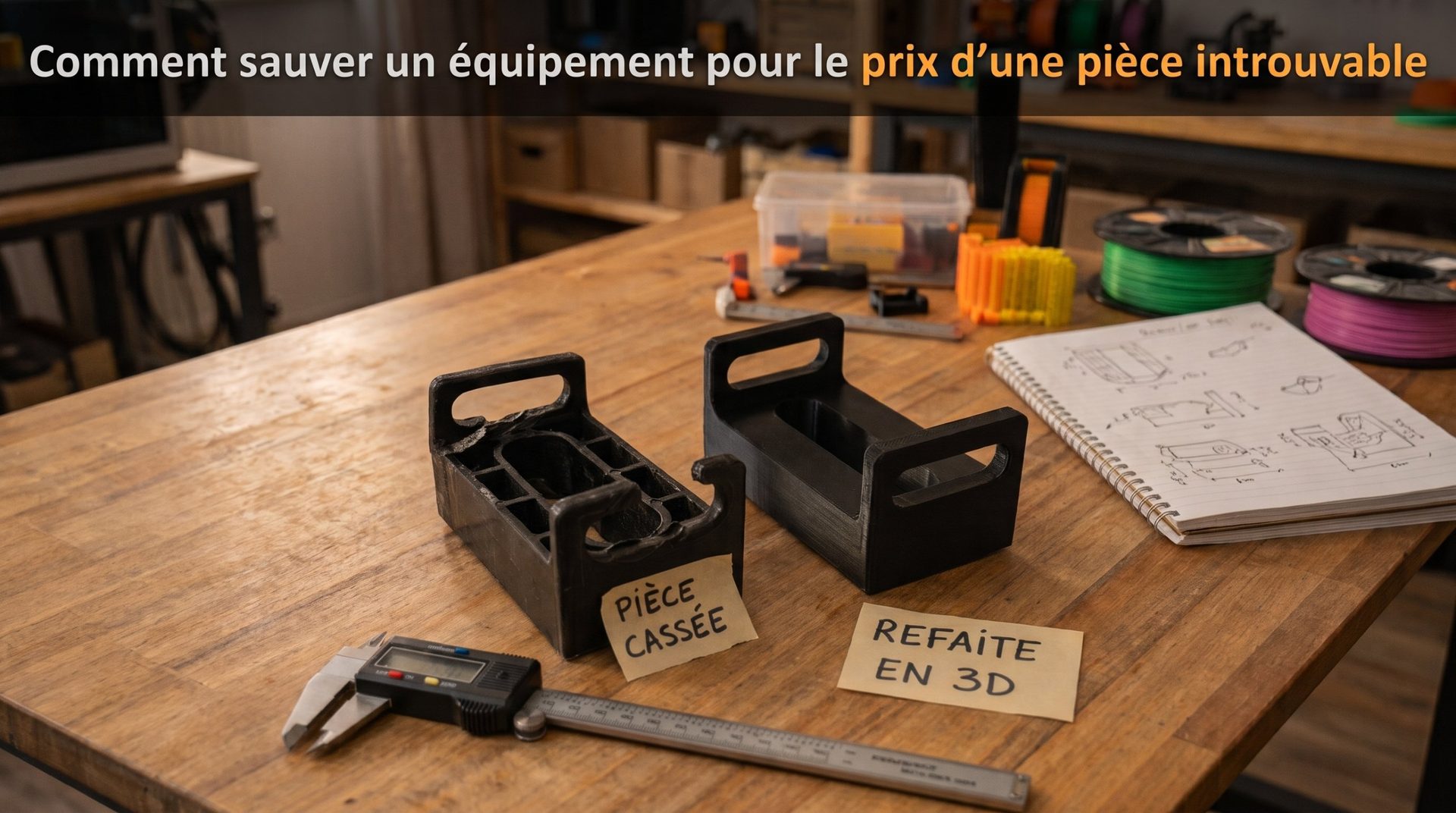
How many appliances end up in the trash because of a small broken or unavailable plastic part? This is where 3D printing proves most useful in everyday life.
- Parts that no longer exist: robot vacuum gears, refrigerator door hinges, washing machine buttons, blind clips, dishwasher basket wheels, vacuum dust covers, door latches… A part weighing just a few grams can breathe new life into an entire appliance.
- Ready-to-print files: thousands of replacement parts are shared for free online (Printables, MakerWorld, Thingiverse). Search for your appliance model number followed by "spare part" or "replacement."
- Or a custom-made part: with calipers and free CAD software, you can recreate a broken part in an evening. Our step-by-step guide: creating a custom replacement part.
- The right material for longevity: PLA works for decorative or low-stress parts. For a part that heats up, gets wet, or experiences stress (dishwasher, car, outdoors), choose PETG or ASA; for a seal or non-slip foot, flexible TPU.
Repairing instead of replacing an entire appliance for a part worth just a few cents reduces waste and cuts dependence on after-sales services and their delays.
2. Recycle: Giving Plastic a Second Life
- Recycled filaments: more and more manufacturers offer rPLA or rPETG made from production scraps, bottles, or packaging. They print almost like standard filaments; colors are sometimes less consistent. Full details: recycled PLA, a step toward sustainable 3D printing.
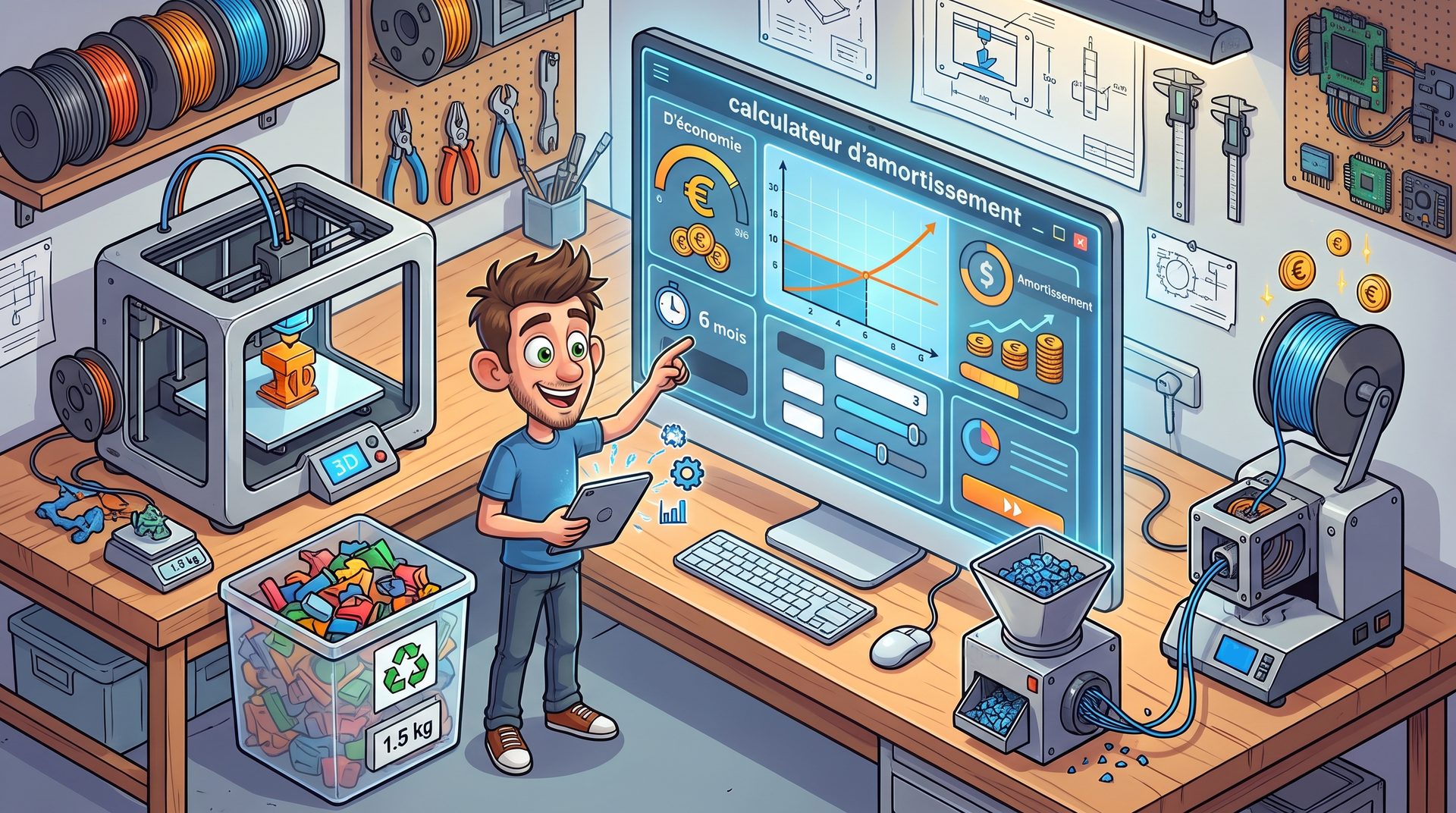
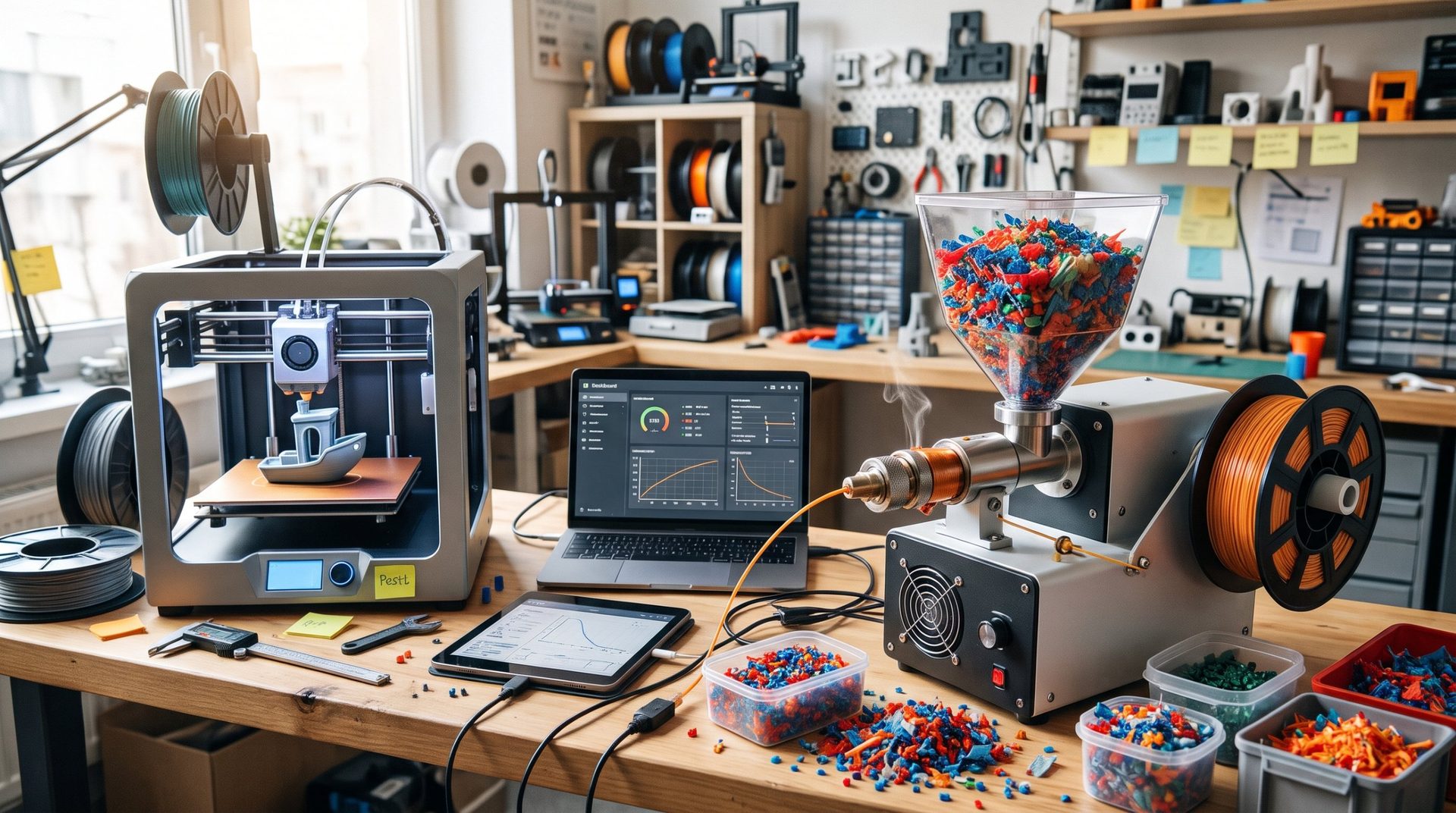
- Home recycling: shredding your supports and failed prints to remake filament is possible with a shredder and desktop extruder. But the investment isn't always worthwhile: do the math with our article on desktop shredders and extruders.
- Sorting your scraps: without a machine, keep your scraps sorted by material (PLA, PETG, etc.): some manufacturers and organizations will collect them for recycling.
3. Reinvent: Producing Differently
- On-demand manufacturing: no need to stock thousands of spare parts. A digital file is enough, and the part is printed only when needed.
- Produce locally: a locally printed part doesn't travel across the planet in a shipping container.
- Use less material: partial infill (10 to 30% is often enough) and optimized shapes deliver lightweight parts with just the material needed where strength matters.
- Design for repair: creators increasingly build objects that are easy to disassemble, with wear parts simple to reprint.
Limitations to Keep in Mind
3D printing isn't magic when it comes to ecology. It's still plastic, consumes electricity, and every failed print or wasted support is more waste. As for PLA, often marketed as "green," it's plant-based but only composts in industrial facilities, not in your backyard: we break it down in is PLA really ecological?
Good habits: print what's useful rather than gadgets, dial in your machine to avoid failed prints, orient parts to minimize supports, and size infill for the job at hand.
Conclusion
Repairing an appliance instead of tossing it, reusing your scraps, producing only what you need and locally: used thoughtfully, 3D printing is one of the most concrete tools of the circular economy, within everyone's reach.
No printer at home? Send us the part that needs replacing (photo, dimensions, or file): we'll print it and ship it anywhere in the world.