Shredder and Extruder Profitability: Is Recycling Your Scraps Worth It?
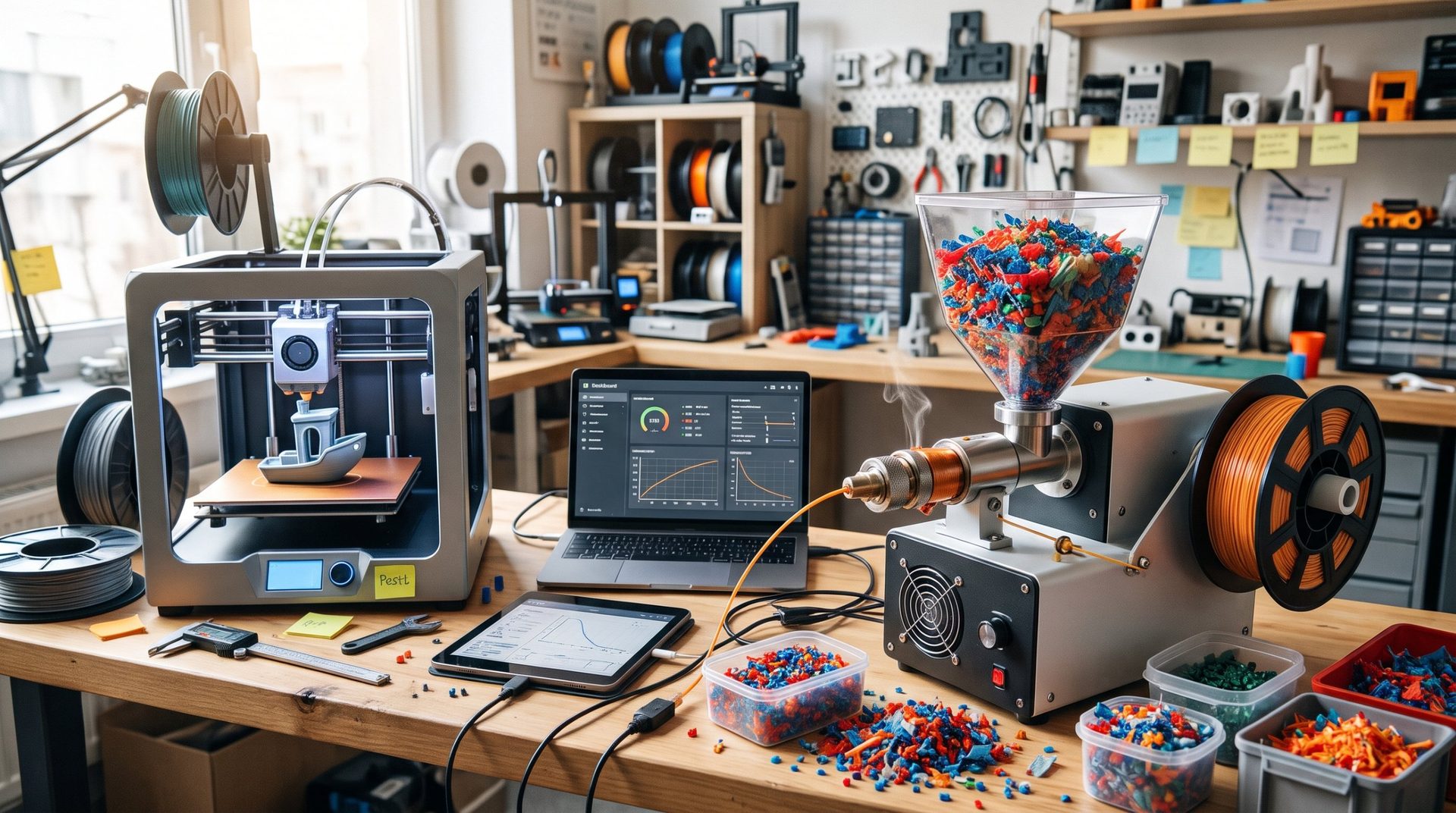
The arrival of compact, affordable recycling equipment like the Creality Filament Maker M1 and Shredder R1 duo has sparked real enthusiasm in maker workshops. The promise is attractive: stop throwing away color-change purges, brims, and failed prototypes, and turn them into fresh 1.75 mm spools instead.
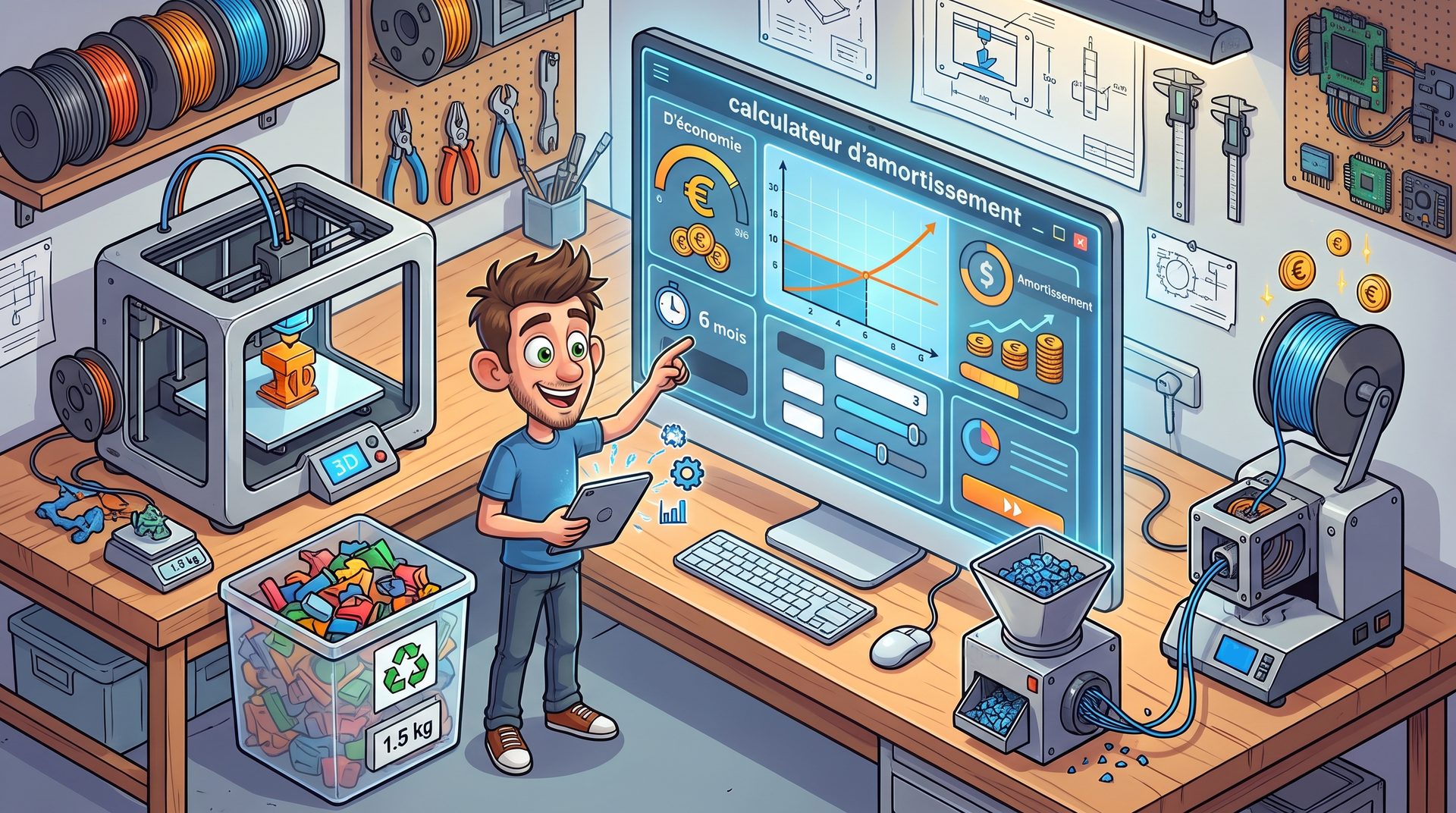
Yet faced with an investment of several hundred, or even over a thousand euros, one question becomes unavoidable: after how many kilos recycled does the equipment actually pay for itself? To answer this accurately, we've created a profitability estimator embedded in this article.
1. Why intuitive math often leads you astray
Many makers do a quick calculation: "I buy PLA at €20 per kilo, the machine costs €1,000, so I just need to recycle 50 kg to break even." This reasoning ignores several key factors:
- Real waste rate: you don't throw away 100% of your material, but on average 15 to 30% of each spool depending on supports, purge towers, and failed prints. To collect 50 kg of scraps, you need to print about 170 to 330 kg of filament.
- Energy costs: shredding, then maintaining an extruder screw at 200–300 °C for hours consumes electricity. The cost stays modest, but it factors into your recycled filament's cost per kilo.
- Plastic degradation: with each remelting, molecular chains shorten. To maintain good mechanical properties, you often add 10 to 20% virgin pellets, raising the cost of each kilo produced.
- Yield losses: some material is lost during diameter calibration, startup, and cleaning. And you must sort scraps by material type—you can't recycle a PLA + PETG mix.
2. The real profitability driver: technical materials
Profitability depends almost entirely on the price of the filaments you recycle:
| Material | Average new filament price/kg | Value of 10 kg recycled | Payback speed |
|---|---|---|---|
| Standard PLA | €18–22 | €180–220 | Slow (printing farms, high volume) |
| PETG / ABS | €22–28 | €220–280 | Medium |
| TPU (flexible) | €35–50 | €350–500 | Fast |
| Nylon, PC, PA-CF | €60–110 | €600–1,100 | Very fast |
Raw values and approximate, before losses and production cost. Prices observed in France end of 2026.
Recycling only entry-level PLA scraps requires huge volume to offset a shredder and extruder. However, if your workshop regularly produces technical parts, each purge you reuse is worth far more. Beware of fiber-filled filaments though: shredding shortens fibers and wears the extruder screw. Always check your machine's accepted materials list.
3. Calculate your workshop's profitability
Enter your printing habits: the estimator calculates recoverable plastic per year, your net monthly savings, and equipment payback time. Default values match a regular maker's output and the announced public price of the M1 + R1 bundle; adjust them to your situation.
♻️ Recycling Profitability Estimator
Approximate estimate. The calculation assumes 80% of scraps become usable filament and each recycled kilo costs roughly €3 to produce: about €0.25 for shredder and extruder electricity, the rest for virgin pellets and wear. It doesn't factor in your time or possible equipment failures.
Reduce waste before you even recycle
The most profitable material is the one you never waste. To minimize losses from the start:
- pick the right material on your first try using our filament selector, to avoid failed prints;
- spot the mistakes that ruin 3D prints;
- share and find optimized models to minimize supports on MakerWorld.
To dive deeper into how shredders and extruders work, also read our article on home recycling of scraps.