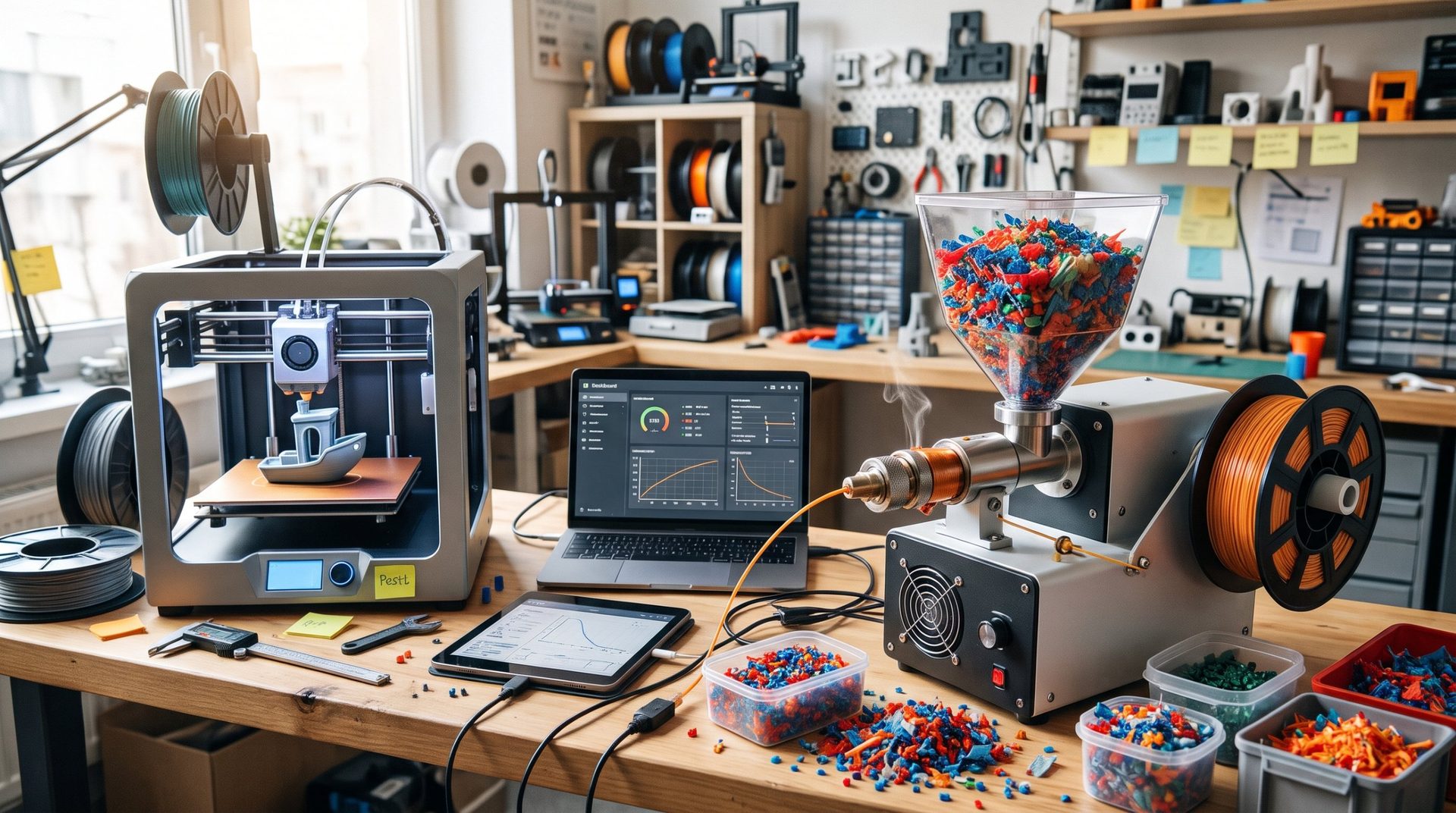
Recycled PLA: A Step Toward Sustainable 3D Printing

In the ever-evolving world of 3D printing, choosing the right filament is crucial—not only for the quality of your final object, but also for its environmental impact. While PLA (Polylactic Acid) is already popular for its ease of use and biodegradability under certain conditions, the emergence of recycled PLA marks a significant step toward more sustainable and responsible additive manufacturing practices.
What Is Recycled PLA?
Recycled PLA, often labeled as "rPLA" or "recycled PLA", is a filament made from existing PLA waste. These scraps can come from various sources:
- Post-industrial waste: Production offcuts, failed prints, residues from factories manufacturing PLA products.
- Post-consumer waste: PLA objects collected after use by consumers (though this is more complex due to sorting and contamination challenges).
These scraps are collected, sorted, cleaned, then ground into pellets. The pellets are then melted and extruded to form new 3D printing filament.
The Benefits of Recycled PLA:
Choosing recycled PLA offers several major benefits—both for the environment and your wallet:
- Reduced Carbon Footprint: Producing PLA from virgin materials (corn starch, sugarcane) requires energy and resources. By recycling PLA, we reduce demand for new resources and the energy needed to manufacture it, lowering the filament's overall carbon footprint.
- Decreased Plastic Waste: Every spool of recycled PLA represents plastic waste that doesn't end up in landfills or the environment. It's a direct contribution to reducing plastic pollution.
- Promotes the Circular Economy: Recycled PLA perfectly embodies circular economy principles, where materials are reused and valued rather than discarded. This creates a virtuous cycle where today's waste becomes tomorrow's raw material.
- Economic Potential: Depending on suppliers and recycling processes, recycled PLA can sometimes be offered at a more competitive price than virgin PLA, making sustainability more accessible.
- Comparable Quality: Thanks to advances in recycling technology and quality control, many recycled PLA filaments now deliver printing performance very similar to virgin PLA in terms of ease of use and mechanical properties.
Considerations and Challenges of Recycled PLA:
Despite its many advantages, recycled PLA can present a few particularities:
- Color Uniformity: Since it's made from various PLA sources, recycled filament color can sometimes vary slightly from spool to spool or be limited to darker shades or blends (gray, black).
- Impurity Quality: While recycling processes are improving, the presence of residual micro-impurities can sometimes slightly affect extrusion consistency or the mechanical strength of the final part. It's recommended to choose brands with strong quality control.
- Traceability: The exact origin of recycled PLA can vary. Some manufacturers are very transparent about their sources (for example, 100% post-industrial waste), while others may be less specific.
Recycled PLA is more than just a filament—it's a symbol of the 3D printing community's growing commitment to sustainability. Initiatives are emerging to facilitate collection of "failed prints" and supports for recycling through short supply chains. Companies are investing in more sophisticated recycling technologies to ensure greater quality and consistency of recycled filament.
Adopting recycled PLA is an essential step in making 3D printing not only an innovative and accessible technology, but also one deeply respectful of our planet. Every print made with this type of filament is a small victory for the circular economy and a sign that technology can be a powerful lever for a greener future.
Still unsure? Our filament comparison tool guides you in just a few clicks.