Scraps, Supports & Failed Prints: How Home Recycling Turns Your 3D Waste into New Filament
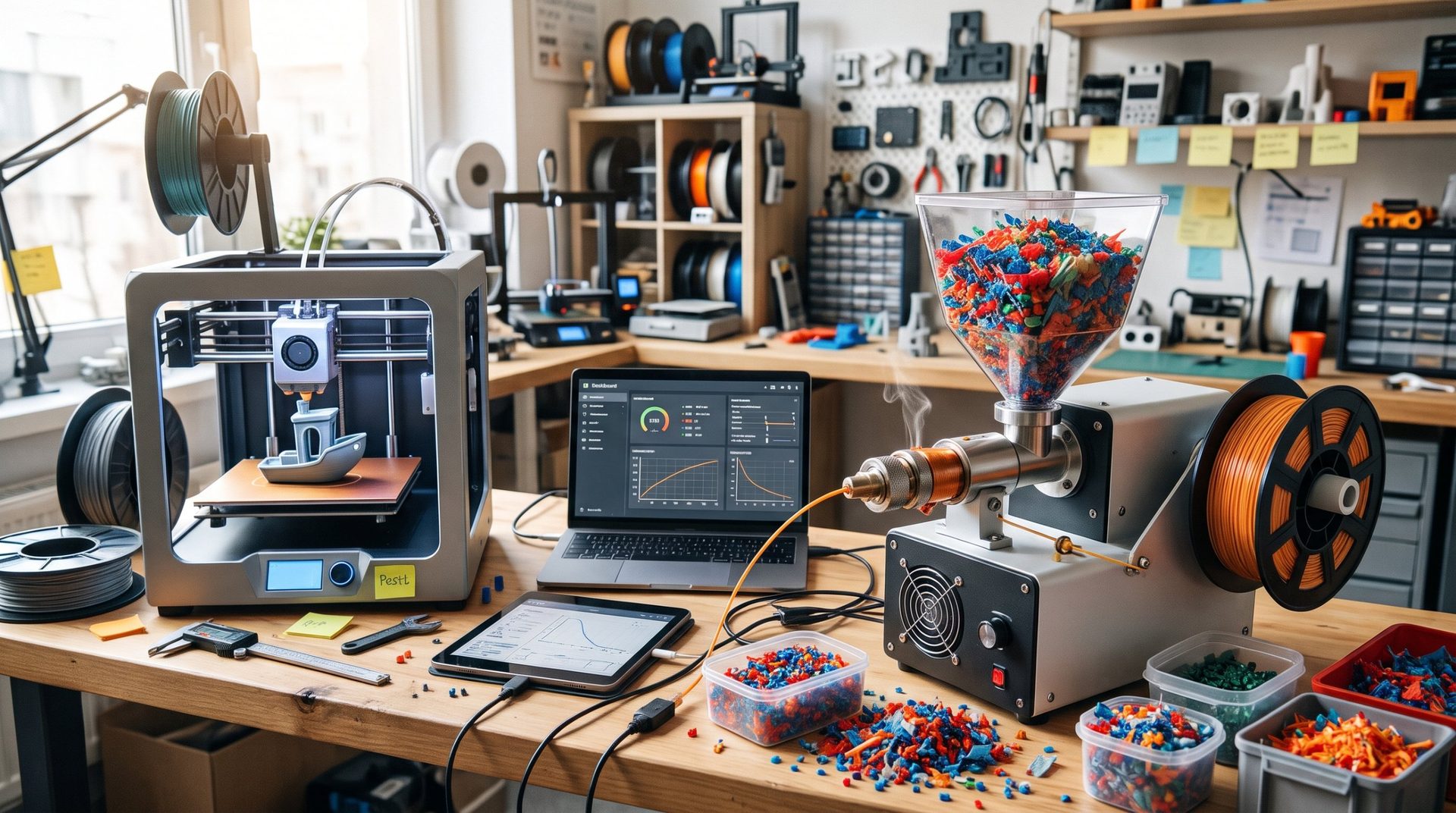
Every 3D printer user knows that box overflowing in the corner of the workshop: adhesion brims, torn supports, color-change purges, and failed prototypes. For an active maker, these scraps represent a significant portion of every spool consumed—even more so with multicolor printing.
Until recently, these residues ended up in the trash: standard recycling systems don't accept 3D printing PLA or PETG. But a real shift is happening as micro-extruders and workshop shredders mature, capable of closing the production loop directly on your workbench.
1. From Failed Print to Calibrated Pellets
The main challenge of small-scale plastic recycling has always been consistency:
- Strict polymer sorting: mixing PLA and PETG produces brittle, unusable filament because their melting temperatures are incompatible. Source sorting remains the golden rule.
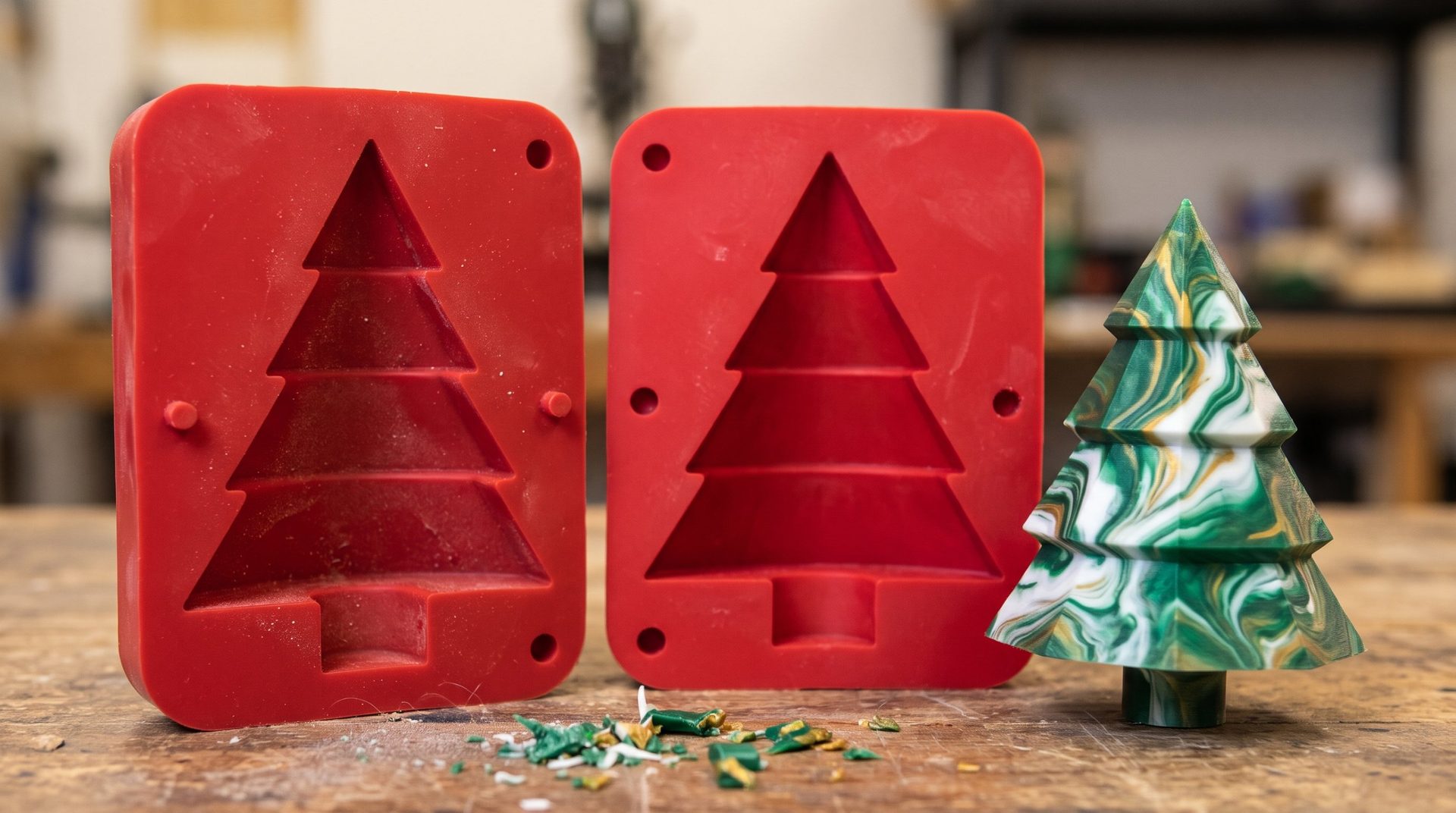
- Shredding: compact new-generation shredders reduce defective prints into homogeneous fragments a few millimeters in size.
- Essential drying: shredded plastic exposed to air absorbs moisture. A pass through an oven or dehydrator is necessary to prevent bubbles and micro-voids (see why you need to dry your filament).
2. The Tolerance Challenge: Real-Time Optical Sensing
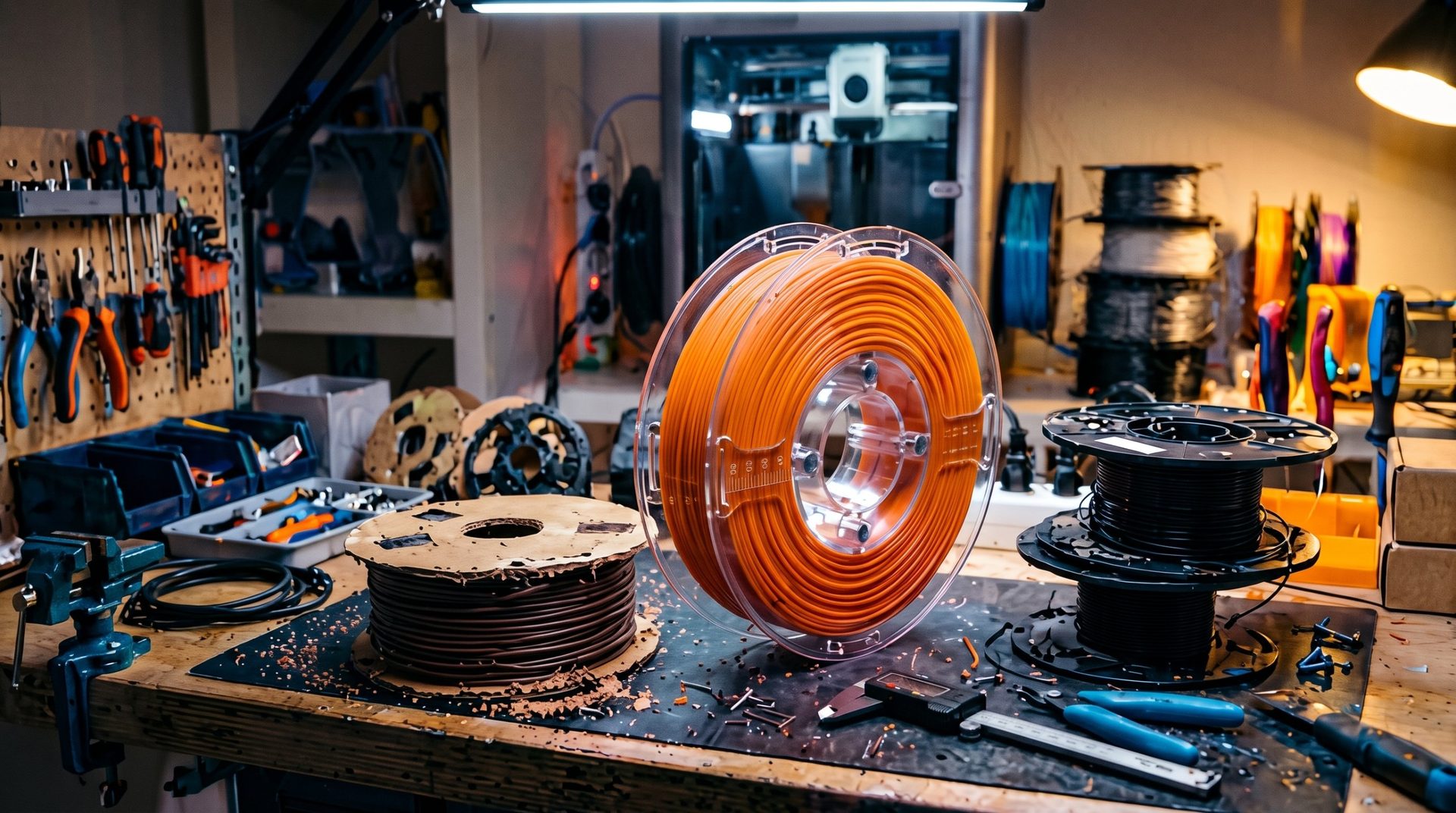
Why did old DIY extruders disappoint? Because filament must maintain a very consistent 1.75 mm diameter, or it will clog the nozzle or cause under-extrusion. Commercial spool makers typically target ± 0.02 to ± 0.05 mm.
Today's machines now include:
- A laser sensor that measures filament diameter at the nozzle exit dozens of times per second.
- Closed-loop extrusion control: if the filament thickens, the drive motor speeds up to thin it; if it thins, it slows down.
- An automatic winder with adjustable tension for clean spooling, without overlapping coils.
3. Economics & Sustainability: The Real Numbers
- Reduced environmental impact: no shipping, no packaging, and an immediate second life for kilos of polymer.
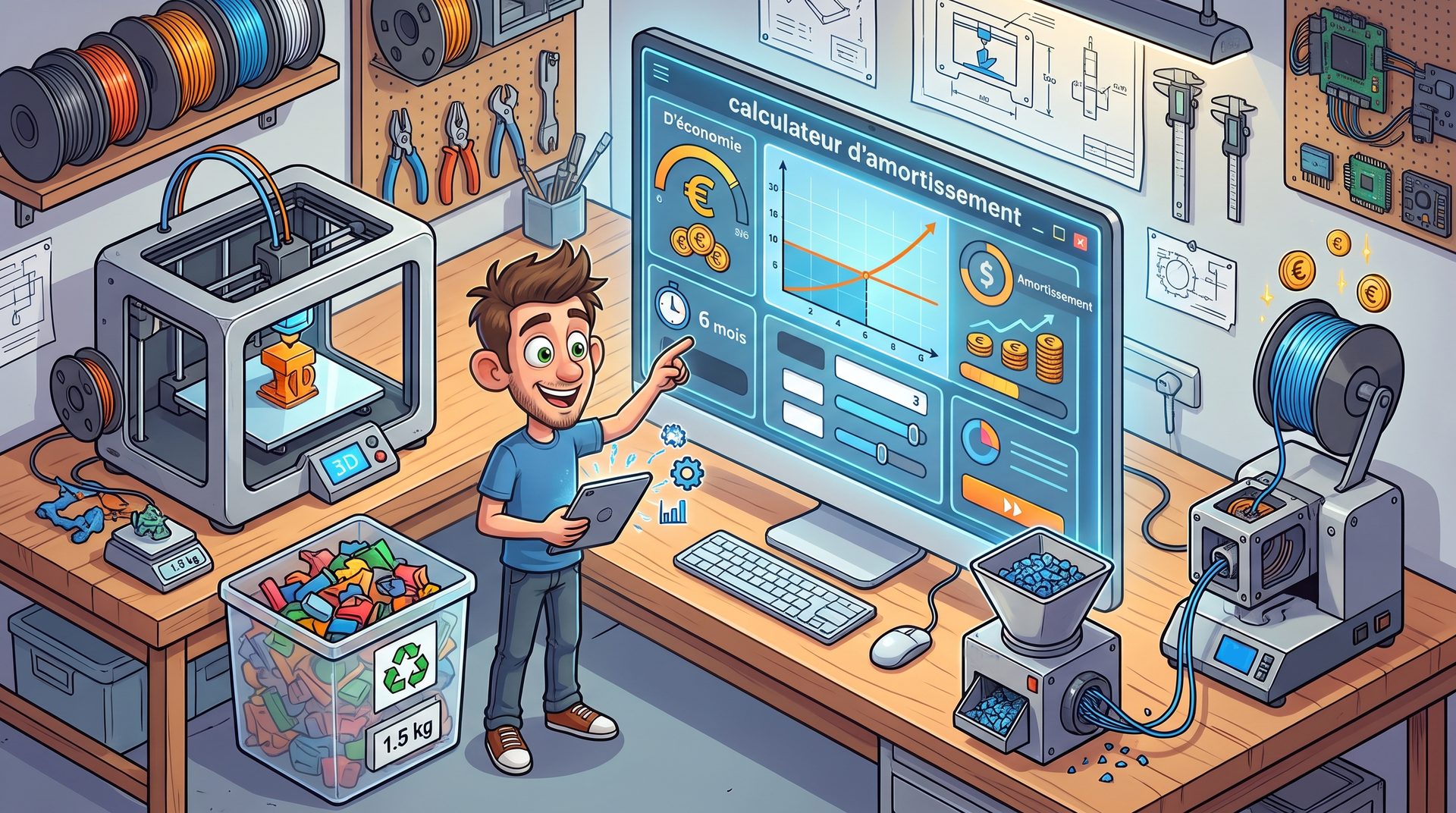
- The economic equation: standard PLA spools cost around twenty euros, but engineering filaments (Nylon, PETG-CF, TPU) often exceed 40 to 60 € per kilo. Recycling these high-value materials pays back your investment much faster.
Additive manufacturing reaches a new milestone: after design and assembly autonomy comes raw material autonomy, now rooted at the heart of your workshop.
4. What Practical Solutions Exist Today?
The Consumer Push: Creality
The Creality Filament Maker M1 and Shredder R1 duo, launched via crowdfunding, is the solution getting the most buzz among makers:
- The Shredder R1 reduces purges, supports, and failed parts into pellets under 4 mm, and dries them in the same pass.
- The Filament Maker M1 heats to 350 °C for eight material families (PLA, PETG, ABS, ASA, TPU, PC, PA, PET), controls diameter in real time, and winds automatically. Creality claims 1.70 to 1.80 mm diameter with virgin pellets and 1.65 to 1.80 mm with recycled material—a slightly wider tolerance than commercial spools.
It's the first consumer-grade system designed to democratize closed-loop recycling at home without heavy modifications.
Professional References
- 3devo (Composer and Precision): the industrial tabletop standard. Multiple heating zones and cutting-edge optical control allow extrusion of PLA and ultra-high-temperature polymers alike. Highly capable, but aimed at fablabs, universities, and R&D labs.
- Felfil (Evo and Shredder): a proven modular Italian solution with a compact shredder and tabletop extruder that regulates pull-back speed to maintain 1.75 mm.
Open-Source & Semi-DIY Projects
- Precious Plastic and Artme 3D: for makers who prefer building their own tools. Free plans let you assemble your shredder and extrusion screw from aluminum profiles, PID regulators, and stepper motors.
The No-Machine Alternative
- For those unwilling to invest, commercial recycled filaments like recycled PLA remain an option, as do local workshop initiatives that collect sorted scraps by material and color.