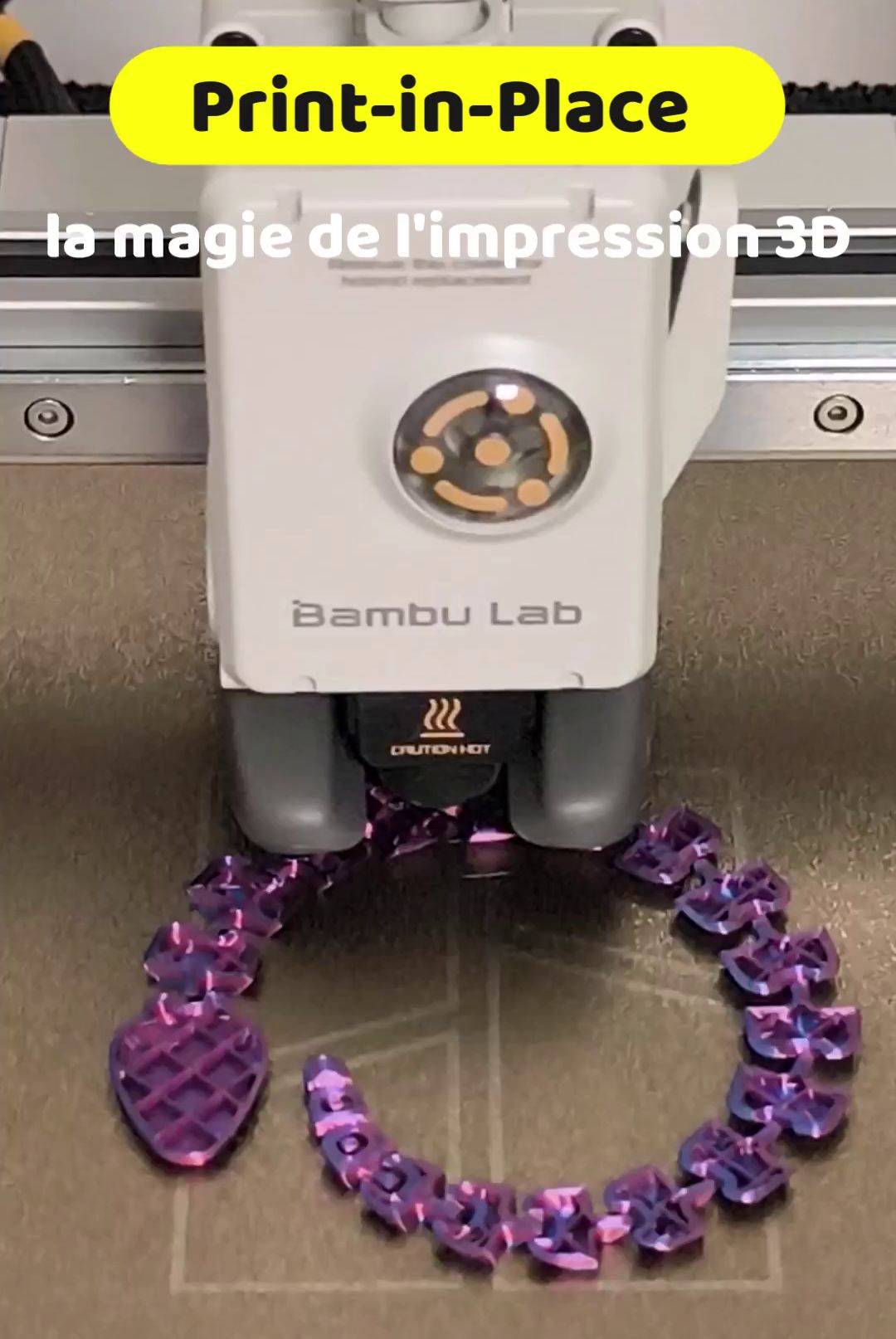
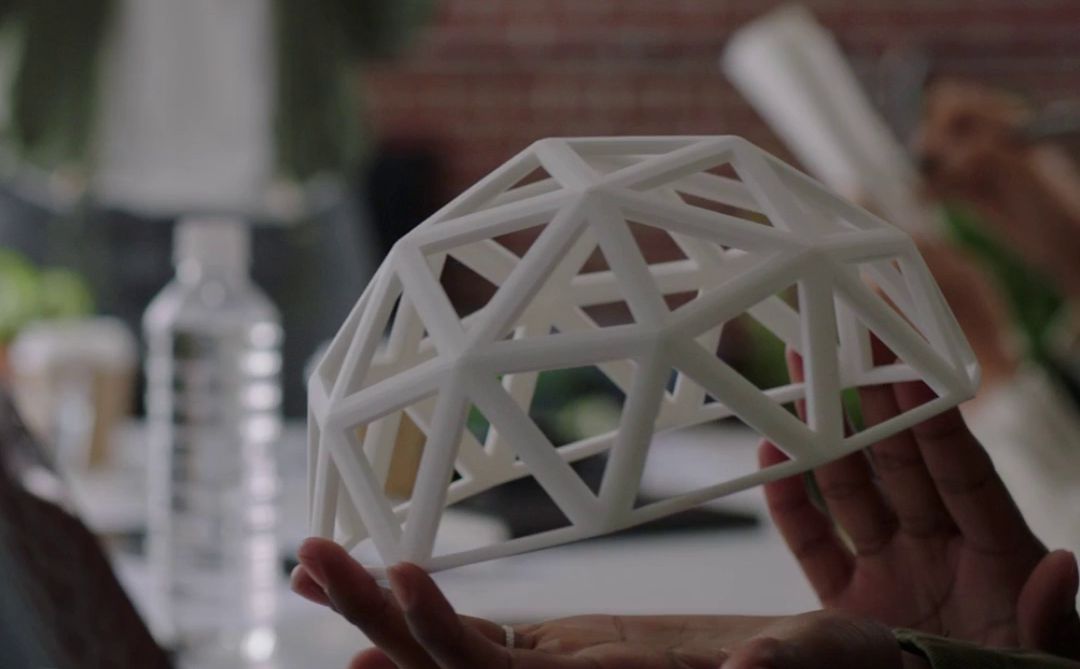
Print a Rotating Part in One Single Piece: The Magic of 3D Printing
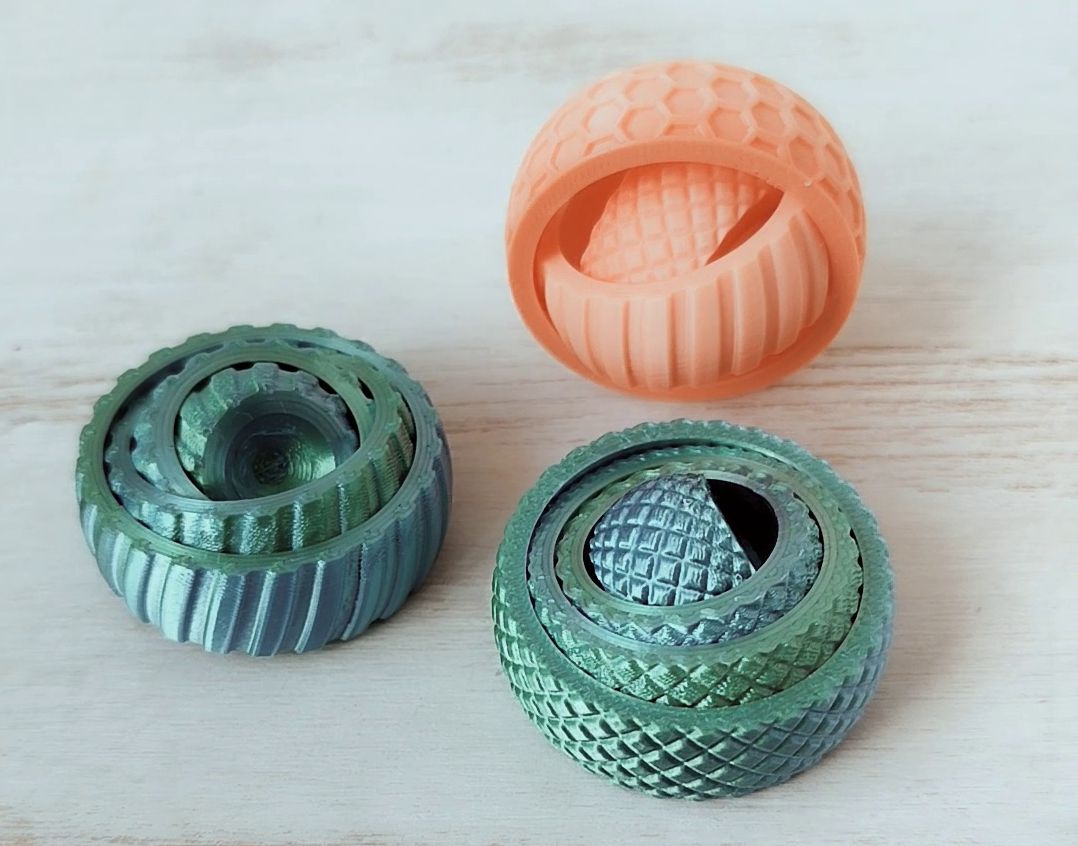
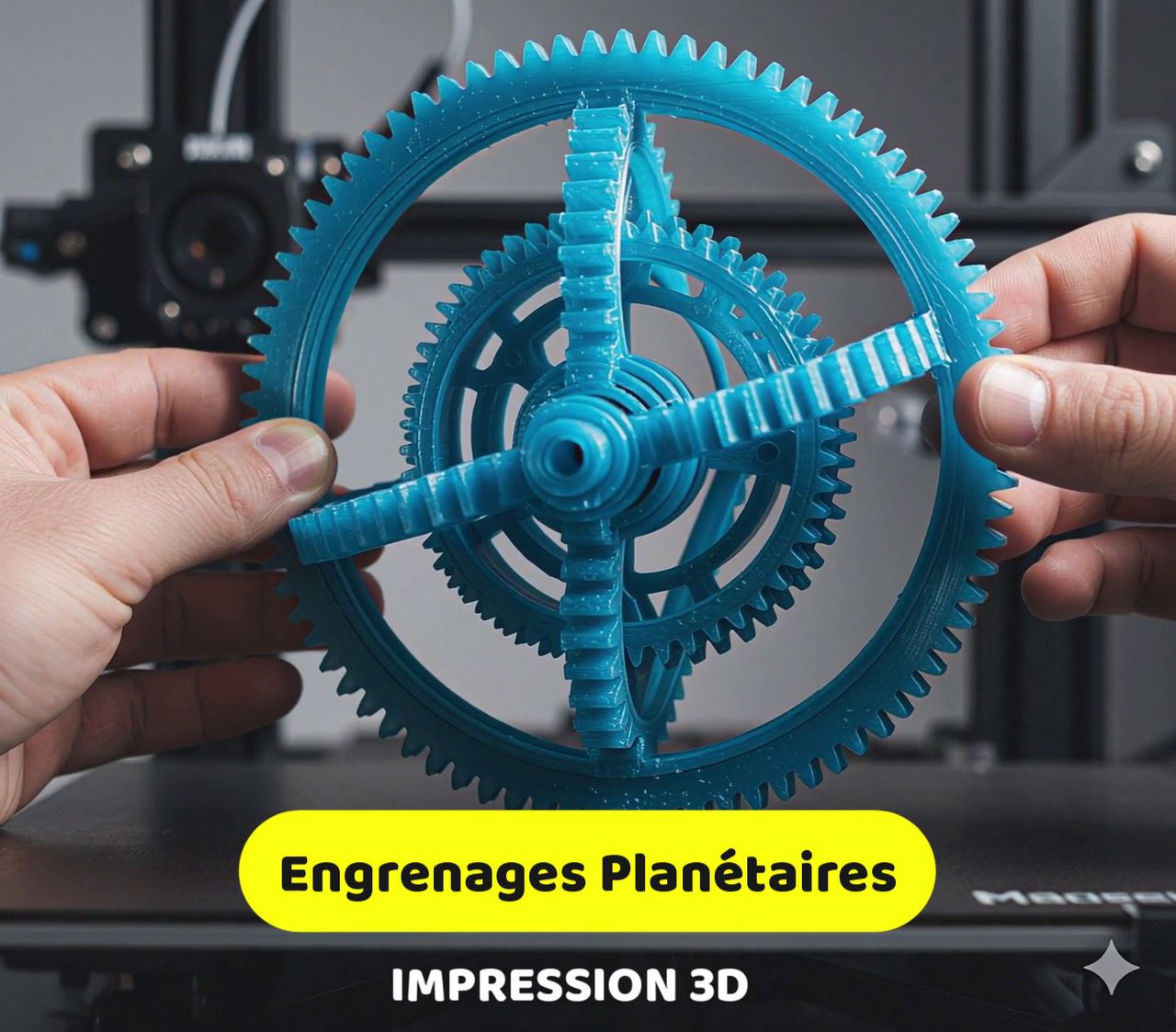
3D printing continues to push the boundaries of manufacturing, and one of its most fascinating achievements is the ability to create moving or rotating parts in a single block, without any assembly. What was once the domain of complex machining or assembling multiple components has now become, thanks to additive manufacturing, a reality in one single operation.

(3D File Source: GlennovitS 3D via MakerWorld)
How Is This Possible? The Secret of Tolerances and Supports
The concept of printing rotating parts as a single piece may seem counterintuitive. How can two parts be integral without being fused together? The key lies in the precision of the 3D printer and intelligent management of tolerances and supports:
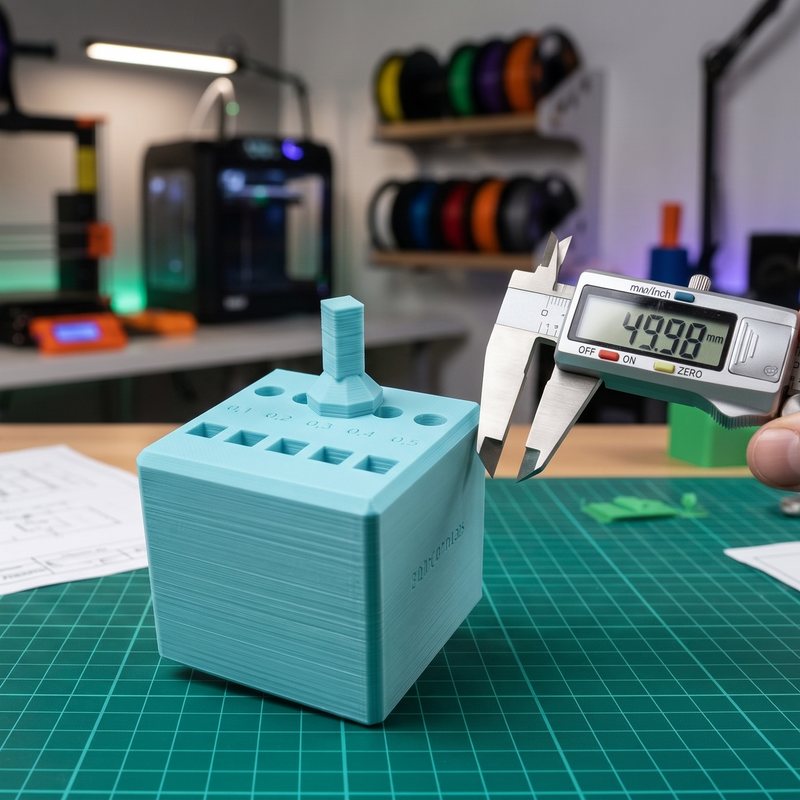
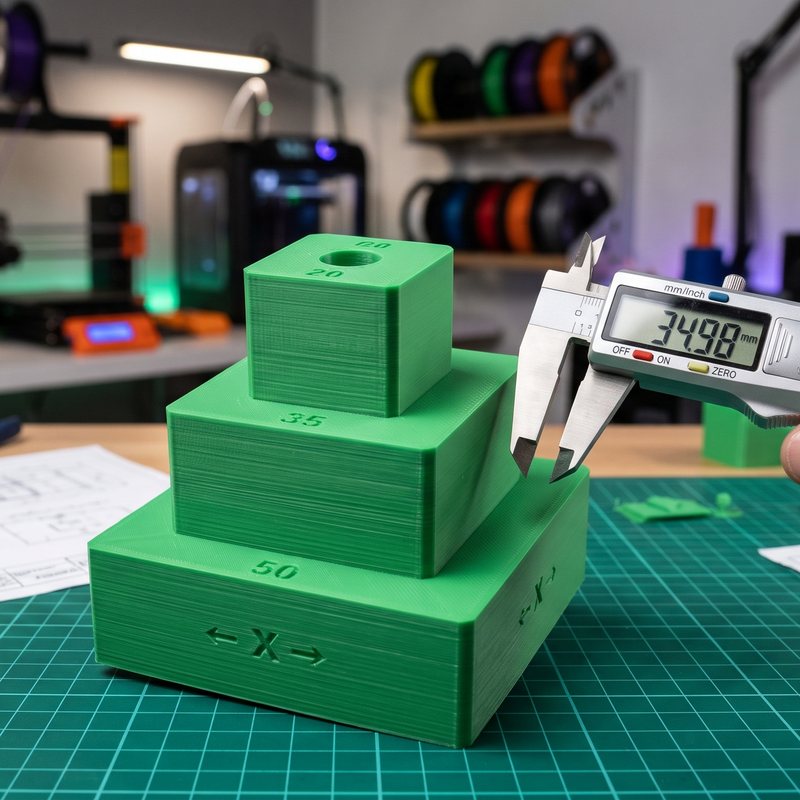
- Minimal Tolerances: Modern 3D printers are capable of printing with extremely high precision. For a rotating part, this means that an axis and its housing are designed with an infinitesimal space between them – a microscopic tolerance. This space is enough to prevent the two surfaces from fusing during printing, while being small enough to keep the part stable.
- Support Management: During printing, temporary support structures can be used to hold the overhanging parts of the rotating piece (for example, the underside of the axis or gear). Once printing is complete, these supports are removed. The magic happens when these supports are designed not to stick to the functional surfaces of the joint, or when they are made from a soluble material that can be dissolved after printing.
- Materials: Filament choice is crucial. Materials like PLA or PETG are often preferred for their good printing properties and their ability to maintain the fine details necessary for proper tolerance execution.
The Revolutionary Advantages of Single-Block Printing
Printing a rotating part in one go offers considerable benefits:
- Drastic Simplification of Assembly: This is the biggest advantage. No more time spent assembling multiple parts, inserting bearings or pins. The part comes out of the printer ready to use, which reduces labor costs and production times.
- Increased Reliability: Fewer parts means fewer failure points. Without assembly, there are no loose screws, slipping pins, or accumulating assembly tolerances. The part is inherently more robust and durable.
- Optimized Design and Complex Shapes: Engineers are freed from the constraints of traditional manufacturing methods. They can design complex internal rotating mechanisms, gears integrated into sealed housings, or geometries optimized for performance that would be impossible to machine or mold in a single block.
- Reduced Manufacturing Costs and Lead Times: In one printing operation, you save on manufacturing multiple components, transporting, storing, and assembling them. This makes producing prototypes or small batches much faster and more cost-effective.
- Rapid Functional Prototype Creation: For design and testing phases, being able to print a complete functional mechanism in a single step allows for much faster iteration. You can go from an idea to a physical test in just a few hours.
Concrete Applications
This capability opens doors in many fields:
- Robotics: Joints, integrated gears, compact movement systems.
- Prototyping: Rapid testing of complex mechanisms without requiring tooling or assembly.
- Toys and Gadgets: From fidget spinners to planetary gears, the possibilities are endless for fun objects.
- Functional Parts: Integrated hinges, rotary locks, adjustment systems.
- Education: Demonstrating complex mechanical principles in a tangible and interactive way.
Challenges to Consider
While powerful, this technique requires some skill:
- Printer Precision: A well-calibrated printer with good tolerances is essential.
- Rigorous Design: The 3D model design must be very precise, with correct tolerances calculated for the material and printer being used.
- Support Removal: For complex parts, removing supports can be tricky and require some dexterity to avoid damaging the piece. Using soluble support materials greatly simplifies this step.
In conclusion, 3D printing of rotating parts in one single piece is an eloquent demonstration of the power of additive manufacturing. It transforms the way we design and manufacture objects, making mechanisms simpler, more reliable, and faster to produce. It's a key innovation that continues to democratize complex engineering.