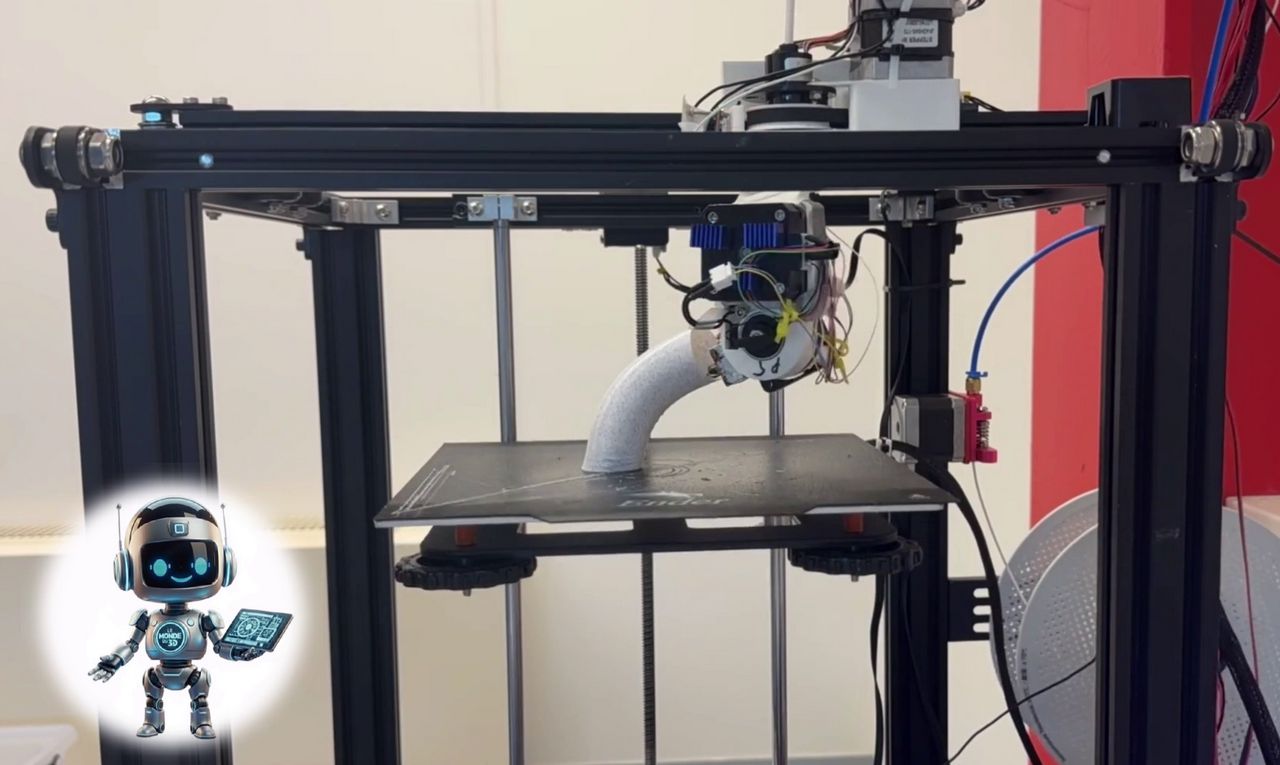
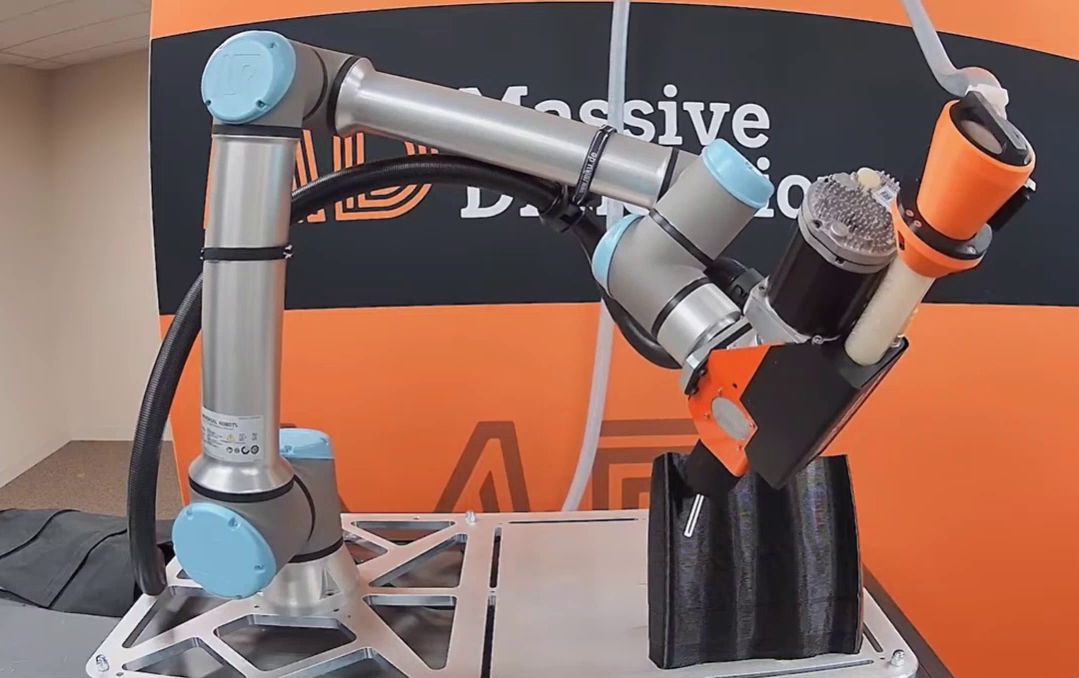
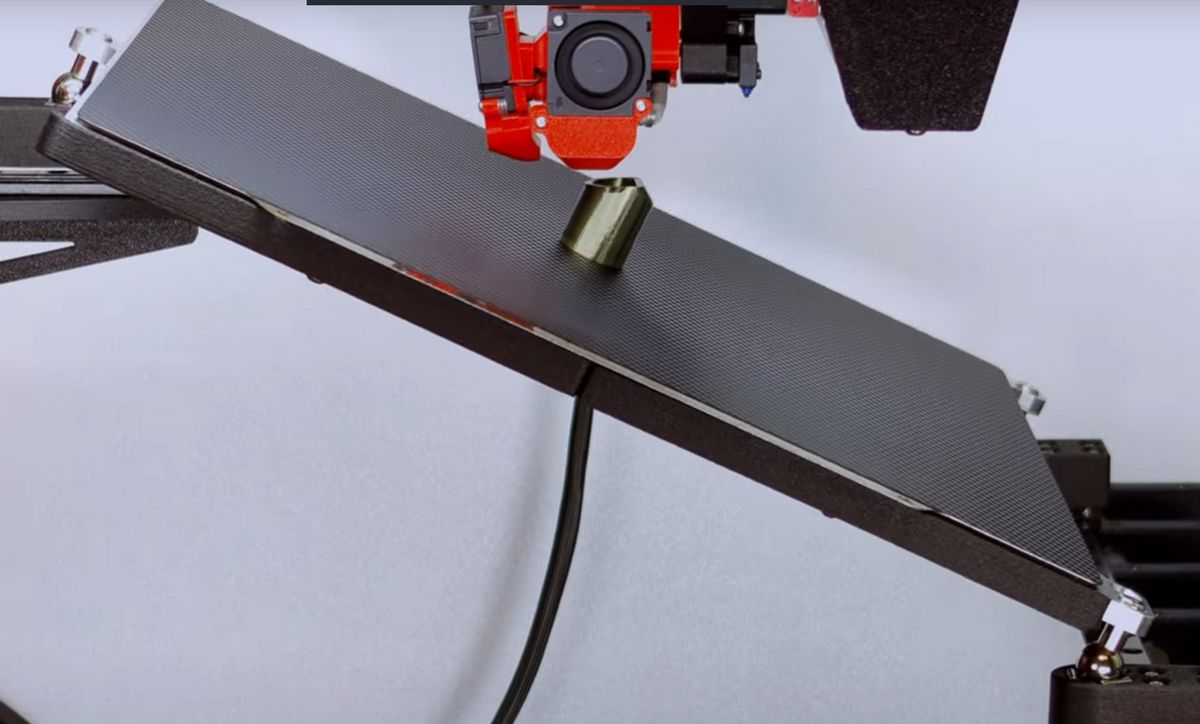
The Open5x Project: Democratizing 5-Axis 3D Printing
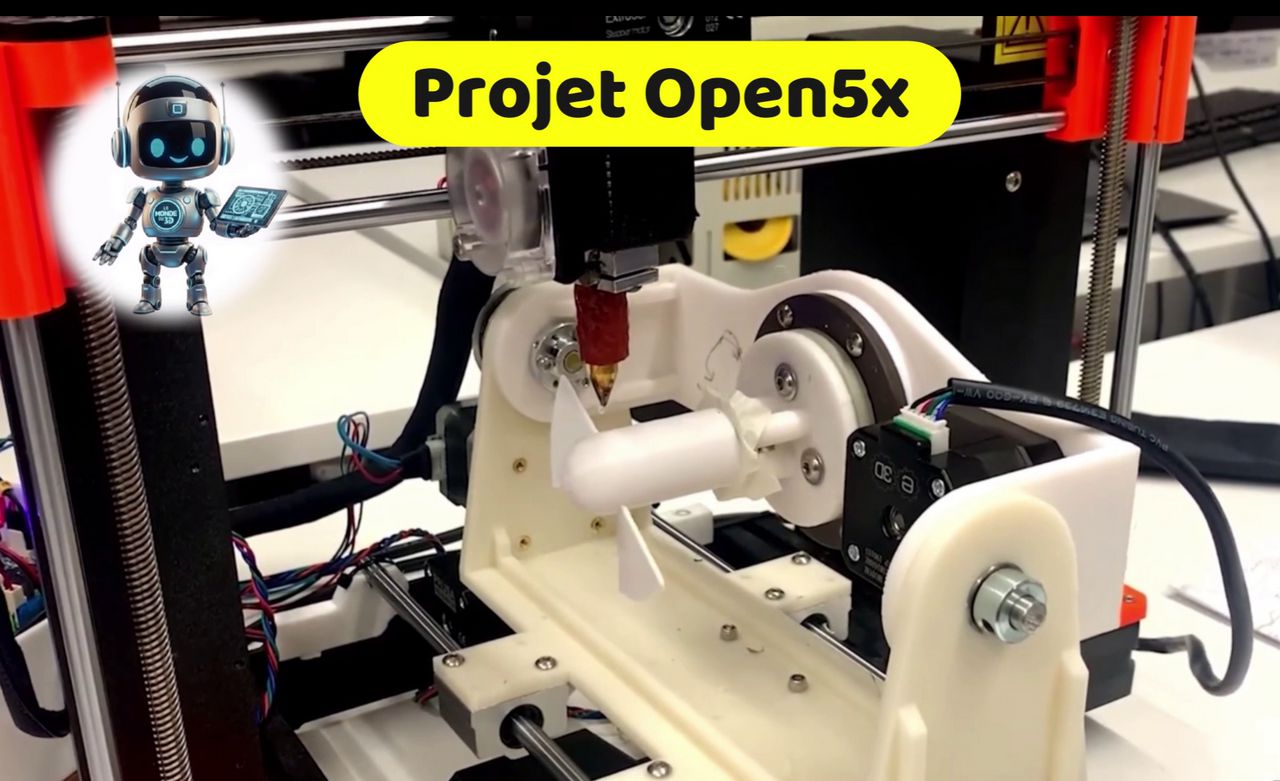
The Open5x project is a fascinating initiative that sits at the intersection of mechanical engineering, additive manufacturing, and open-source culture. Its primary goal is to democratize access to 5-axis 3D printing, a technology traditionally reserved for heavy industry and extremely expensive machinery.
Here's a structured analysis of what this project represents:

✅ The Concept: Why 5 Axes?
Unlike standard 3D printers (called 3-axis machines) that deposit material layer by layer on a horizontal plane (Z fixed for each XY layer), Open5x adds two rotation axes (usually named A and C).
-
Non-planar printing: You're no longer limited to flat "slices." The print head can orient itself to follow complex curves.
-
Support removal: By tilting the part or the print head, you can print overhangs without needing removable or soluble support structures.
-
Increased strength: Parts are often stronger because filament layers can be oriented according to the mechanical stresses the object will experience.
✅ The Origin and Philosophy
The project was largely popularized by engineer and researcher Freddie Hong. The idea is to offer a backward-compatible solution:
-
Modifying existing machines: Rather than building a machine from scratch, Open5x often proposes kits or plans to modify popular printers (like the Creality Ender series or Voron machines).
-
Open-source software: The project relies on modified "slicing" tools to generate complex movement trajectories that standard slicers can't handle.
✅ Technical Components
To transform a standard printer into an Open5x machine, the project generally relies on:
| Component | Role |
| Tilting head or rotating build plate | Adds the rotation axes needed for movement. |
| Duet3D or Klipper | Firmware capable of managing more than 3 motors simultaneously with precise synchronization. |
| Grasshopper / Rhino | Often used to generate trajectories (G-Code) via algorithmic scripts, since slicers like Cura or PrusaSlicer are limited to 3 axes. |
✅ Current Challenges
While revolutionary for makers, Open5x faces some obstacles:
-
Software complexity: This is the "heart of the matter." Calculating collision-free trajectories between the print head and moving part is mathematically demanding.
-
Calibration: Aligning 5 axes requires surgical precision to prevent layer shifts.
Important note: This project is primarily aimed at advanced users with solid knowledge of programming and mechanics. It's not yet a "Plug & Play" solution.