Non-Planar 3D Printing: Pushing the Limits of Additive Manufacturing

Since its inception, 3D printing has been built on a simple principle: constructing an object layer by layer, on a horizontal plane. This mode of operation, called "planar printing," is the standard. But what if you could break free from this rule? That's where non-planar 3D printing comes in—a cutting-edge technique that promises to revolutionize the quality and strength of your parts.
What is non-planar 3D printing?

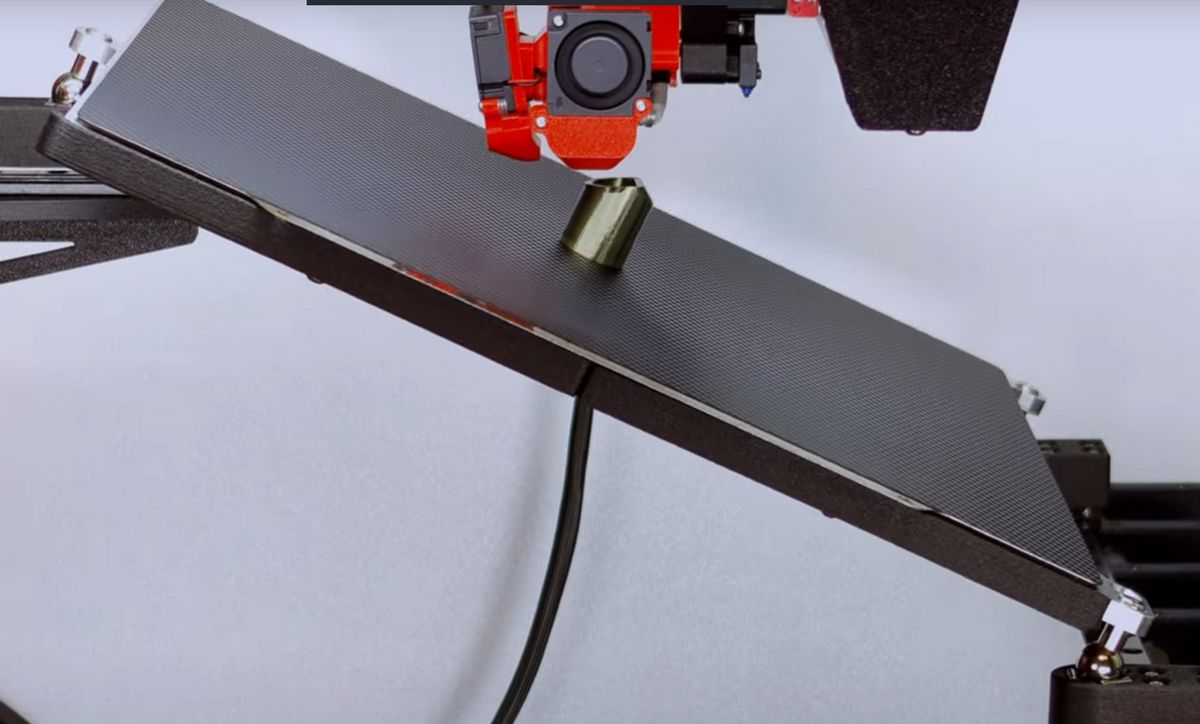
Unlike conventional printing where the nozzle moves only on the X and Y axes at a fixed Z height, non-planar printing allows the nozzle to follow the contours of the part across all three axes (X, Y, and Z) simultaneously.
Instead of stacking flat layers like a layer cake, the nozzle follows the shape of the object, tilting to match curves and angles. It's almost like sculpting an object with a stream of material rather than building it with rigid layers.
What are the advantages of non-planar 3D printing?
While complex, non-planar printing offers benefits that justify its development:
- Unmatched surface quality: This is the main advantage. By following the curves of the part, non-planar printing eliminates visible layer lines on sloped surfaces, delivering an exceptionally smooth and polished finish without requiring post-processing.
- Improved mechanical strength: By layering material according to the part's angle, the filament bonds better to the previous layer. This strengthens the bond between layers, making the object more robust, especially on curved sections that are often weak points in planar printing.
- Reduced support structures: By following the part's geometry, the printer can handle overhangs that would normally require support structures. This reduces material consumption and post-processing time.
Challenges to overcome
Despite its promise, non-planar printing is still an experimental and demanding technique.
- Slicing software: Most consumer-level software (Cura, PrusaSlicer) doesn't natively support this type of printing. This requires specialized software or experimental plugins, limiting the technique's accessibility.
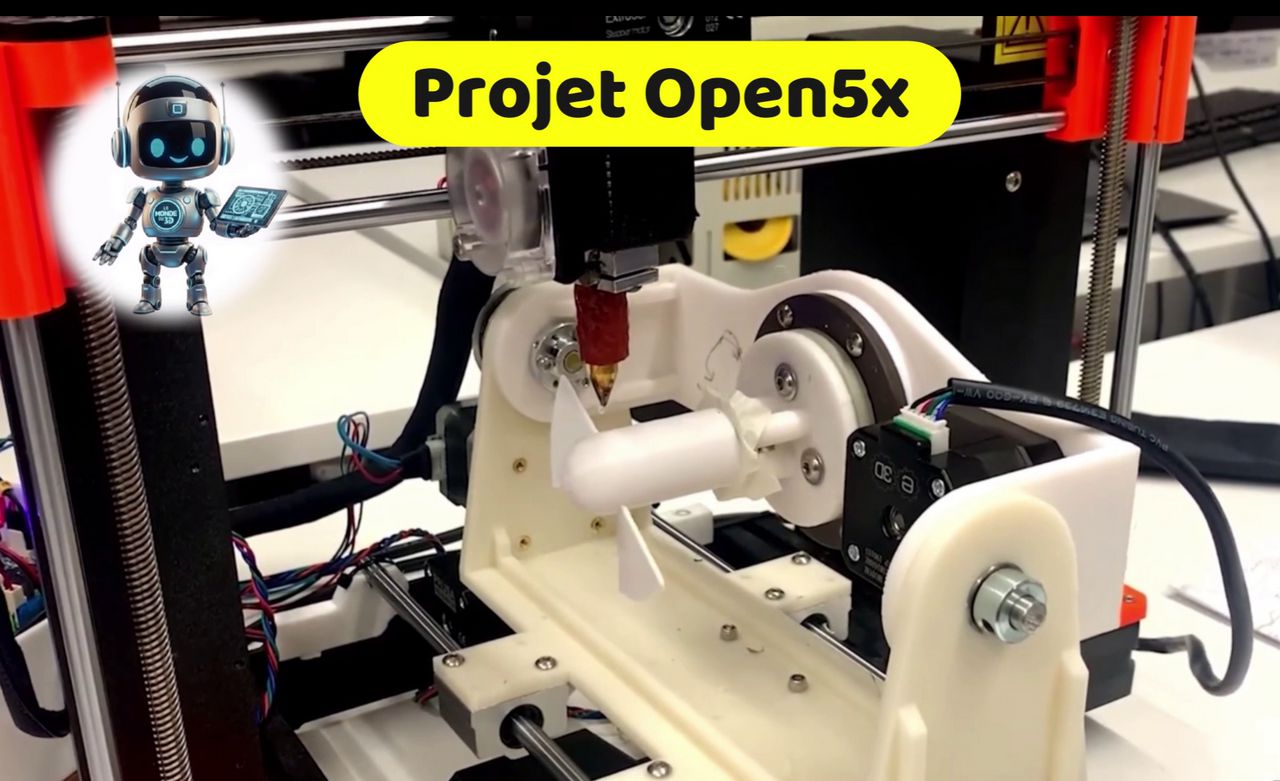
- Hardware constraints: To print this way, the nozzle must get very close to already-printed layers without damaging them. The geometry of the print head and Z-axis stability are crucial and can be a barrier for many desktop printers.
- Complexity: This is a highly advanced technique that requires expertise and precise adjustments to achieve good results. It's intended for experienced users looking to optimize specific parts.
Non-planar 3D printing isn't ready to replace planar printing yet, but it represents a fascinating direction for the future of additive manufacturing. It demonstrates that 3D printing can break free from its own rules to create parts that are both more beautiful and more performant. It's further proof that the technology's potential is far from fully realized.