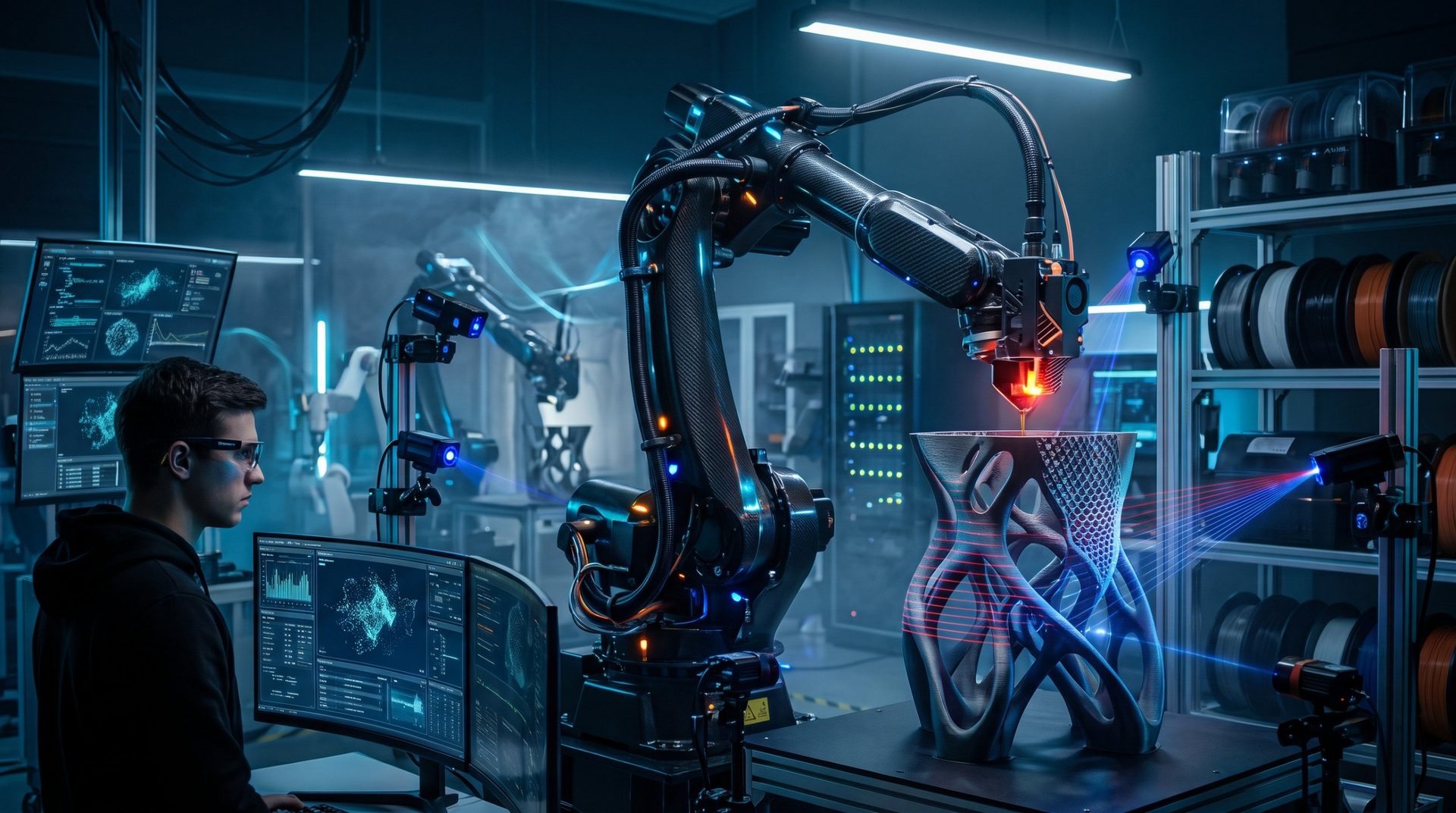
6-Axis Robotic Arms: The Future of 3D Printing
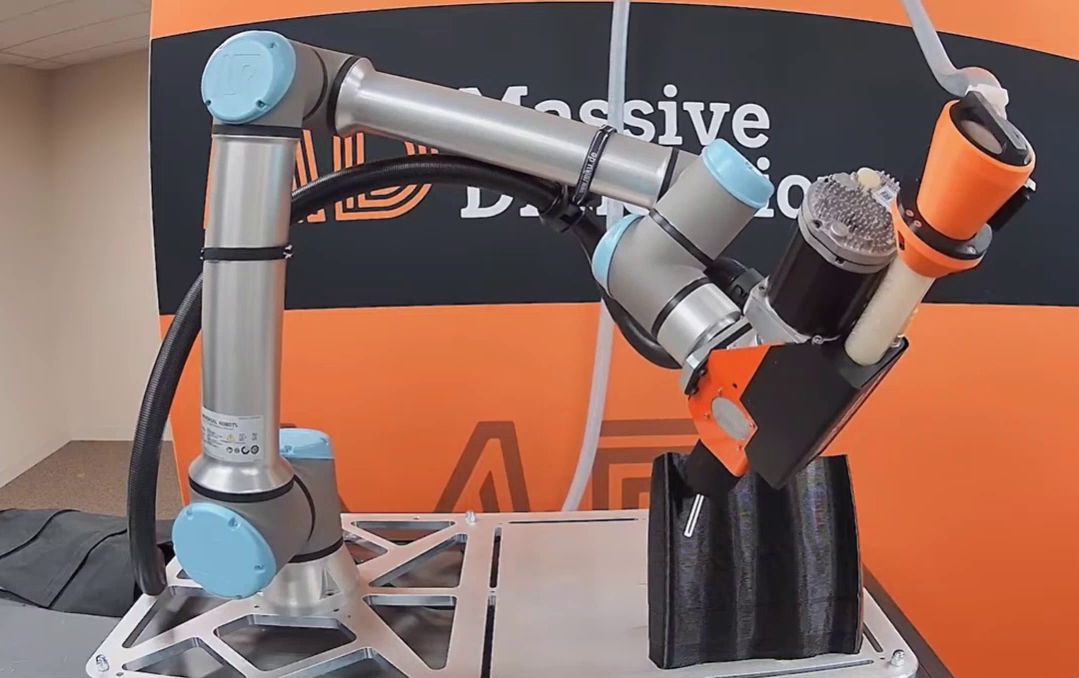
3D printing on 6 axes using a robotic arm represents the pinnacle of industrial additive manufacturing. Unlike traditional "Cartesian" printers (which move on the X, Y, and Z axes), the robotic arm frees printing from the constraints of flat horizontal layers.
Here's an overview of this technology transforming the Industry 4.0 factory.

🚀 Why Switch to a Robotic Arm?
The major advantage isn't just freedom of movement, but the elimination of print supports.
-
Multidirectional printing: The arm can tilt the nozzle to print on curved surfaces or overhangs without needing sacrificial support structures.
-
XXL build volume: An industrial arm (KUKA, ABB, or Fanuc type) can reach several meters in radius, allowing you to create car body parts, furniture, or architectural components in a single piece.
-
Waste reduction: By printing only where needed and without supports, you can save up to 40% of material.
🛠️ System Composition
A robotic 3D printing system generally breaks down into four pillars:
| Component | Role |
| The Robotic Arm | The mechanical unit that provides 6 degrees of freedom. |
| The Effector (Extruder) | The print head mounted at the end of the arm (FDM for plastic, WAAM for metal). |
| The Controller | The computer that translates code into precise joint movements. |
| 6-Axis Slicing Software | Specialized software (e.g., RoboDK, Rhino/Grasshopper) capable of generating non-planar toolpaths. |
💡 Materials Used
-
Polymers & Composites: Use of granules (more economical than filament) or continuous carbon fibers for maximum structural strength.
-
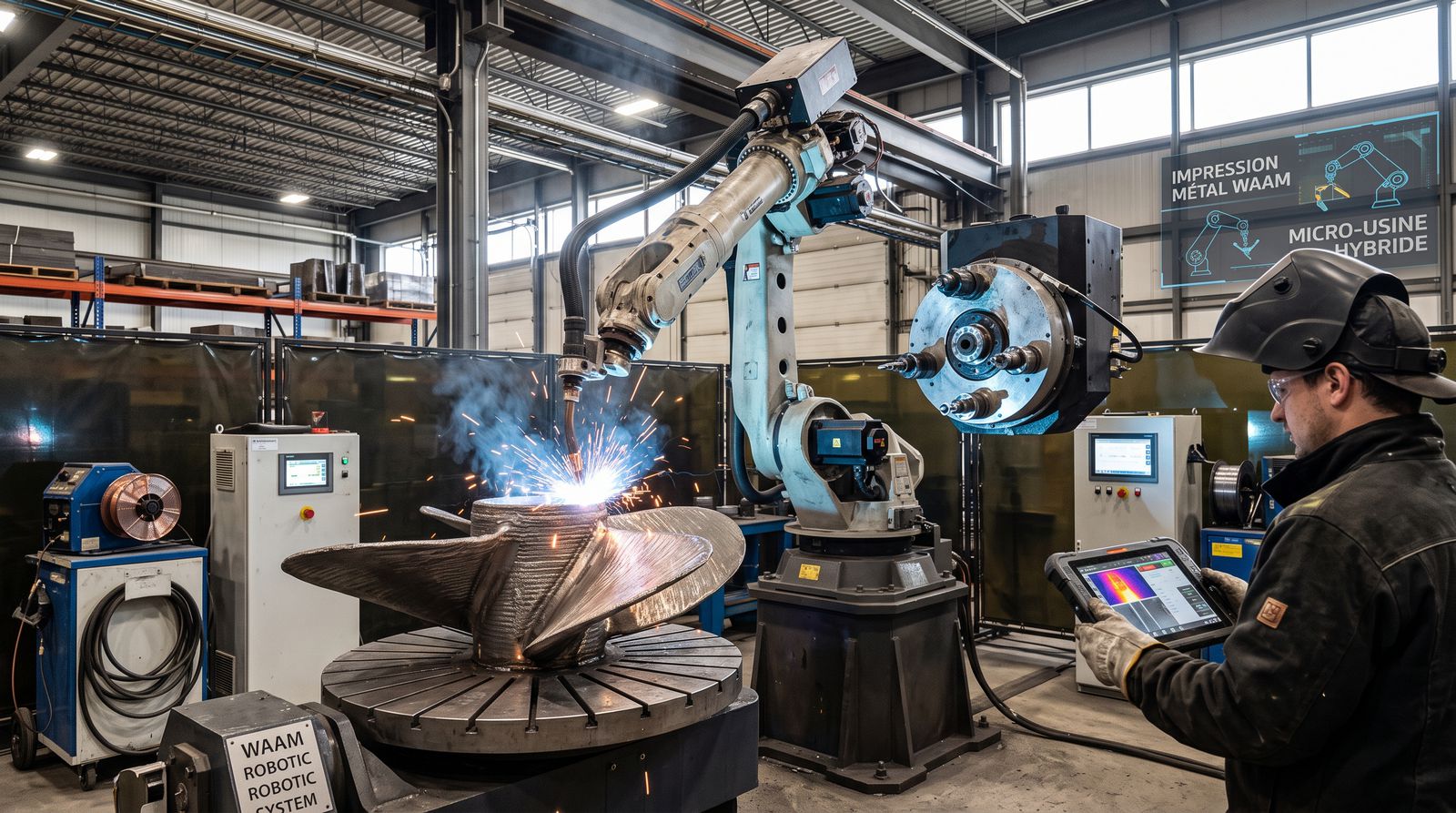
WAAM (Wire Arc Additive Manufacturing): The arm uses a welding torch to fuse a metal wire. This is the preferred method for aerospace and marine applications.
-
Concrete: Widely used in construction to print walls with complex organic shapes directly on site.
⚠️ Technical Challenges
Not everything is straightforward in the 6-axis world. The main challenge remains gravity. When printing "in mid-air" with the arm tilted, managing cooling and material viscosity must be precise to prevent the part from sagging.
Additionally, the geometric precision of a robotic arm (often around 0.1 mm) is sometimes lower than a high-end CNC printer, which may require post-processing (machining).