Creality: The Brand That Democratized FDM 3D Printing
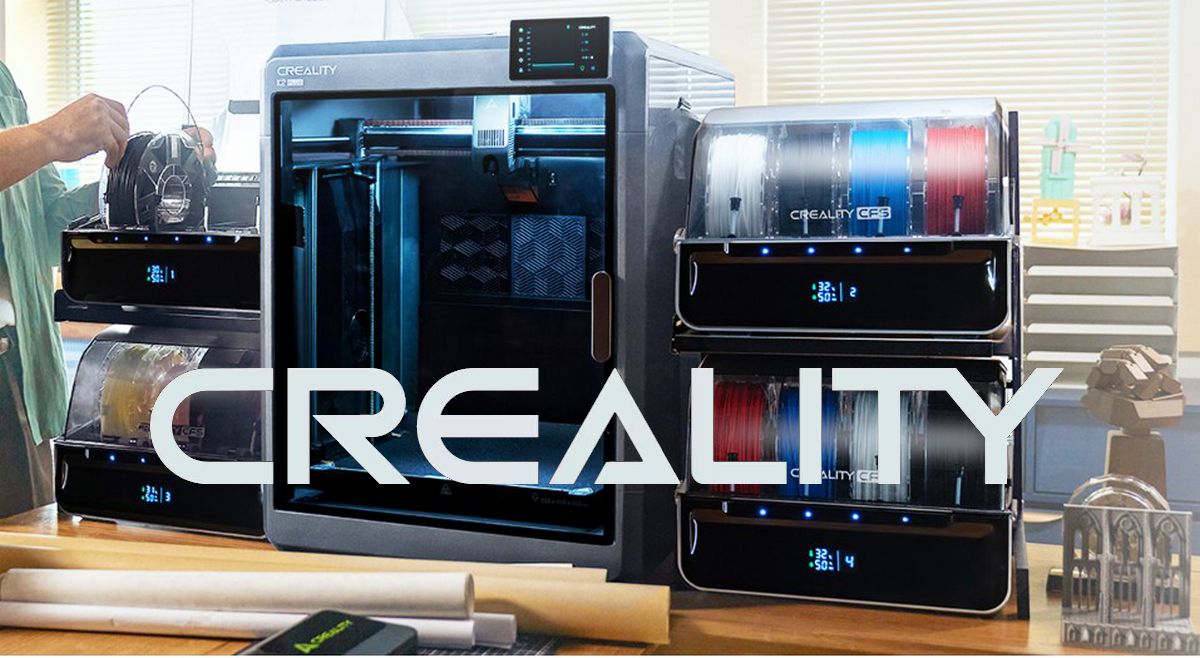
Since its founding in 2014 in Shenzhen, China, Creality has established itself as a major and essential player in the 3D printing market. Known worldwide, the brand has played a decisive role in democratizing FDM additive manufacturing (Fused Deposition Modeling), making this technology accessible to a wide audience, from hobbyists to professionals.
Creality's Philosophy: Quality, Affordability, and Community
Creality has distinguished itself through several pillars that have shaped its reputation:
- Accessibility and Affordable Pricing: This is undoubtedly Creality's greatest strength. The brand has made it its mission to make 3D printing accessible to all budgets, offering machines at highly competitive prices, which has enabled millions of people to get started in this hobby or activity.
- Quality and Reliability (for the price): Although positioned in the entry and mid-range market, Creality strives to offer robust printers capable of producing good-quality prints, especially if the user is willing to do some "tinkering" (adjustments and upgrades).
- User-Friendly Design: Creality printers are often designed to be relatively easy to assemble and use, even for beginners, although some models require more attention for optimal performance.
- Strong Community Support: Thanks to the popularity of its machines, Creality has benefited from a huge online community. Forums, Facebook groups, and YouTube channels are filled with tutorials, tips, and modifications, offering unparalleled support to users. This de facto "open-source" approach has allowed many to learn and progress.
- Continuous Innovation: Although often criticized for initial shortcomings on certain models, Creality constantly innovates, launching new versions of its machines and integrating advanced technologies to remain competitive in the market.
Creality's Iconic 3D Printer Lines
Creality offers a wide range of printers, but two series have particularly stood out:
1. The Ender Series: The Flagship of Mainstream 3D Printing
The Ender-3 and its many variants (V2, V3 SE, V3 KE, V3 Plus, S1, S1 Pro, etc.) are undoubtedly Creality's most iconic models. These "bed slinger" printers (where the build plate moves in Y) have become the reference for beginners and hobbyists thanks to their:
- Unbeatable Price: Often the cheapest entry point into the world of 3D printing.
- Easy Assembly: Shipped as kits, they're quick to put together.
- Upgrade Potential: Their "open-source" nature has encouraged thousands of modifications and improvements by the community.
- Good Print Quality: Capable of producing very satisfying results once properly calibrated.
Recent versions like the Ender-3 V3 SE and V3 KE integrate modern features (automatic leveling, direct drive extruder, touchscreen) that make them even more user-friendly and performant right out of the box. The Ender-3 V3 Plus stands out with increased build volume and speed.
2. The K1 Series: The Race for Speed
Launched more recently, the K1 series (K1, K1 Max, K1C, K2 Plus) marks Creality's entry into the market for high-speed 3D printers, often comparable to premium CoreXY machines.
- Impressive Speed: Reaching speeds of 600 mm/s or more, these machines aim to drastically reduce print times.
- Robust Structure: They often adopt CoreXY design or more rigid chassis to handle these high speeds.
- Advanced Features: They integrate features such as auto-leveling, high-performance direct drive extruder, AI (on the K1 Max), WiFi connectivity, and sometimes closed chambers for printing technical materials. The K1C is notably optimized for carbon fiber-reinforced filaments.
- Versatility: Some K series models (like the K2 Plus Combo) offer multi-color systems (CFS) for complex prints with multiple filaments.
3. Other Series: CR, Halot, and Scanners
- CR Series: Historically, the CR-10 series was Creality's premium range, offering larger build volumes and more advanced features than the Ender models.
- HALOT Series: Creality has also ventured into the resin 3D printer market (SLA/DLP) with the HALOT series, offering affordable machines for printing highly detailed models.
- 3D Scanners: The brand is diversifying its offering with 3D scanners, allowing you to digitize physical objects for printing or modification.
Challenges and Creality's Evolution
Although a leader, Creality has sometimes faced criticism, particularly regarding the need for users to "tinker" with their machines to get the best results, or quality control issues on certain batches. However, the brand has demonstrated an ability to listen and improve, incorporating feedback from its community into new versions of its products.
With the arrival of competitors offering "ready-to-use" and ultra-fast machines like Bambu Lab, Creality continues to innovate to offer increasingly powerful and affordable solutions. It remains a major player for anyone looking to get started or progress in the 3D printing adventure.