What Is a Textured Build Plate?

3D printing has come a long way since the days of frantically covering your build plate with blue tape or glue stick. Today, textured build plates (typically made of PEI - Polyetherimide) have become the standard for many makers seeking professional-quality finishes.
Here's an overview of what these surfaces bring to your creations.

✅ What Is a Textured Build Plate?
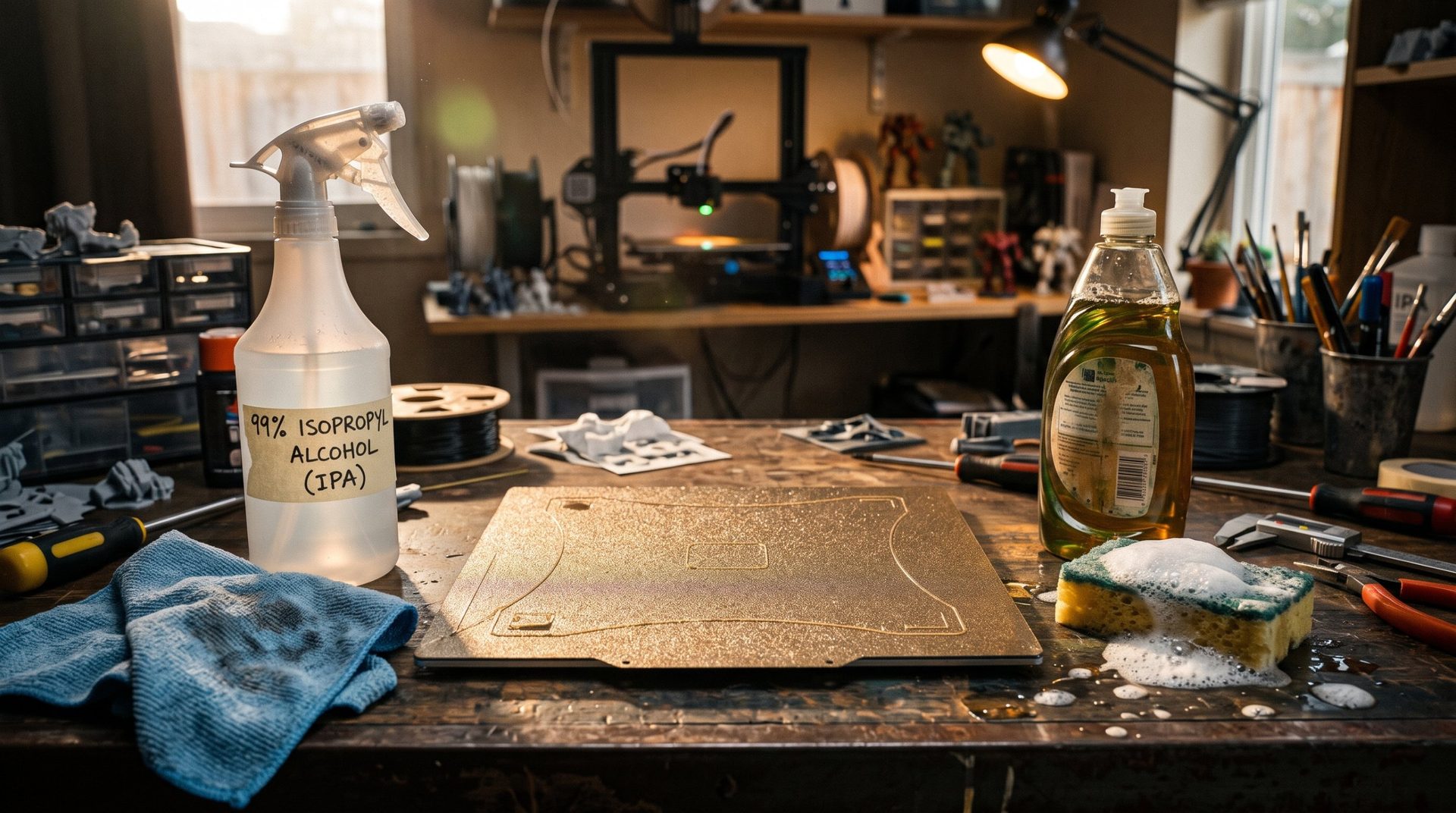
Most modern build plates are flexible spring steel sheets coated with a layer of sprayed PEI. Unlike smooth PEI sheets (which are adhesive), the textured version has a grainy surface, similar to "hammerite" paint or very fine sand.
Why Choose Textured?
-
Pro Aesthetic: It hides the layer lines on the first side (the bottom layer). Instead of a striated plastic look, you get a matte, granular finish that resembles industrially injected parts.
-
Adhesion and Release: When hot, plastic grips firmly in the micro-grooves. When cool, the part often detaches on its own thanks to thermal shrinkage.
-
Durability: They're far more resistant to scratches and leveling errors (nozzle crashes) than a smooth PEI sheet.
✅ Comparison: Textured vs Smooth
| Feature | Textured Plate | Smooth Plate |
| Surface Finish | Grainy / Matte | Mirror / Glossy |
| PLA Adhesion | Good (requires proper squish) | Excellent (sometimes too much) |
| PETG Adhesion | Perfect (no adhesive needed) | Risk of plate tearing |
| Maintenance | Very minimal | Frequent cleaning required |
| Z-Offset Tolerance | Very sensitive | More forgiving |
✅ Secrets to Success with a Textured Plate
If you're switching from a smooth to a textured plate, you may encounter adhesion issues at first. Here's how to avoid them:
1. Z-Offset Adjustment
This is the critical point. On a smooth surface, the nozzle can afford to be slightly high. On a textured surface, the nozzle must squish the filament into the texture's grooves. Don't be afraid to lower your nozzle a few microns more than your usual settings.
2. Cleaning (Goodbye Isopropyl, Hello Soap)
Isopropyl alcohol (IPA) is useful for quick cleaning, but on textured surfaces, finger oils tend to lodge in the grain valleys.
Tip: Once a month, wash your plate with warm water and dish soap using a clean sponge. It's remarkably effective at restoring adhesion.
3. Build Plate Temperature
The textured surface dissipates heat differently. It's often recommended to increase the bed temperature by 5°C compared to your smooth plate settings to ensure good plastic flow into the texture.
✅ New Horizons: Patterned Plates (PEY, PEO, PET)
Recently, plates with "holographic" or geometric textures (carbon fiber, prisms, stars) have started appearing.
-
The principle: These plates transfer a microscopic physical pattern onto your part.
-
The effect: Light reflects off the printed part, creating rainbow effects or eye-catching visual textures without any post-processing.
In summary, the textured build plate is the ideal tool for those printing lots of PETG or wanting to give their objects a premium look without sanding and painting. It's an affordable investment that dramatically changes the user experience, especially for easy part removal.
✅ Partner Links