The Right Lubricant for Your 3D Printer: Essential Maintenance for Perfect Prints

To keep your 3D printer running at its full potential and lasting for years to come, regular maintenance is essential. At the heart of this maintenance lies the lubrication of moving parts. Choosing the right lubricant is crucial, because the wrong product can not only be ineffective, but also damage your machine's components.
Why Lubricate Your 3D Printer?

FDM 3D printers (filament deposition) contain many mechanical parts that move constantly:
- Smooth rods: On which linear bearings slide.
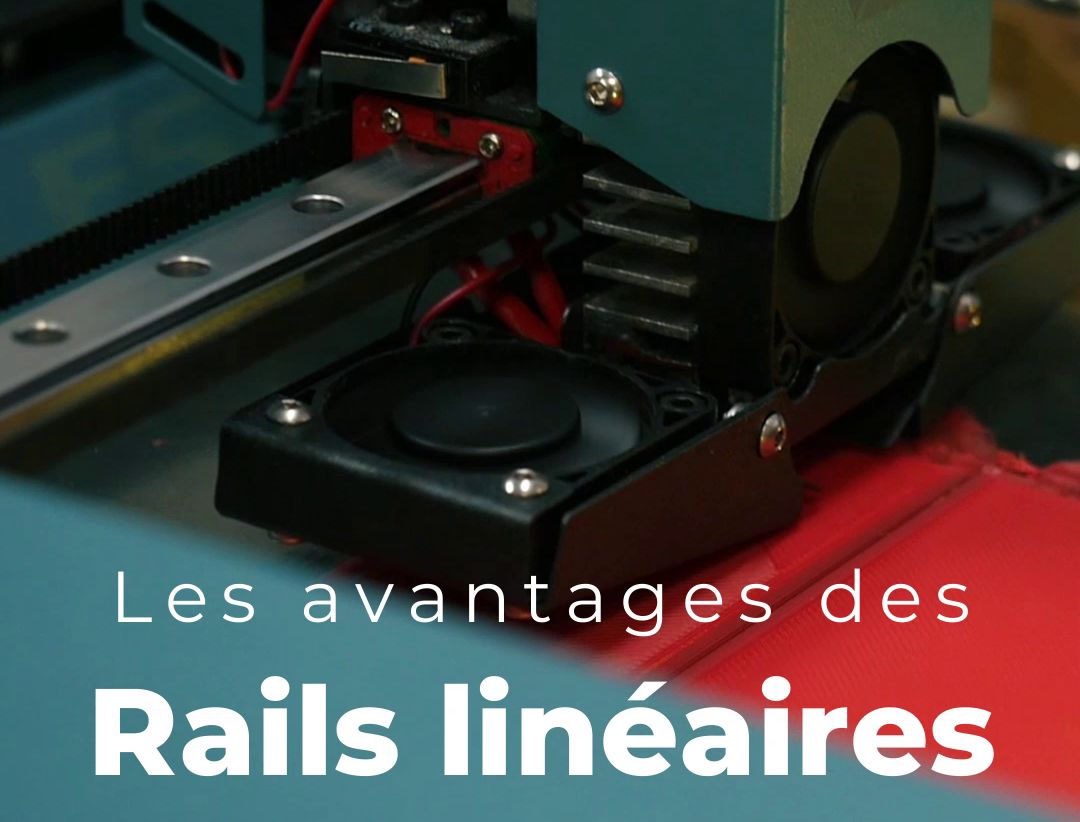
- Linear rails: Often found on higher-end machines or CoreXY setups.
- Lead screws or threaded rods: Mainly on the Z-axis, they manage the rise and fall of the build plate or extruder.
Lubrication reduces friction, minimizes wear on parts, ensures smooth and precise movement (essential for print quality) and reduces noise.
Recommended Lubricant Types for 3D Printing
The choice of lubricant depends mainly on the type of component to maintain. Here are the most common options and their uses:
- White Lithium Grease
- Use: Very popular for lead screws (Z-axis) and linear rail bearings (MGN type). It offers good adhesion and durable lubrication.
- Advantages: Good load resistance, protects against moisture and corrosion.
- Note: Apply sparingly to avoid excessive dust attraction.
- Synthetic PTFE Grease or Oil (Polytetrafluoroethylene - Teflon™)
- Use: An excellent option for smooth rods, linear bearings (LM8UU, for example) and sometimes lead screws. The Super Lube brand is highly recommended in the 3D community for its PTFE-based products.
- Advantages: PTFE offers an extremely low coefficient of friction, making movement incredibly smooth. It's often a clean lubricant that doesn't leave residue. Some versions are even food-grade, which is a bonus.
- Note: PTFE oil penetrates better but must be applied more frequently than grease. PTFE grease lasts longer.
- Sewing Machine Oil / Light Multi-purpose Oil
- Use: For small joints, pivots, or sometimes smooth rods if the manufacturer specifies. Products like "3-in-1" oil (note: not classic WD-40, which is a penetrating spray) can be used.
- Advantages: Very fluid, penetrates well.
- Note: Generally less durable than grease, requires more frequent applications.
Partner links for lubricants we use:
- Superlube - Premium synthetic grease and oil: https://amzn.to/4lWbAKw
- Synthetic lubricant: https://amzn.to/3IOBGAs
- WD-40 Specialist • Silicone Lubricant: https://amzn.to/44QxpVF
- WD-40 Specialist • White Lithium Grease: https://amzn.to/4f8C7kZ
What to Avoid and Why?
Some products should never be used on your 3D printer:
- WD-40 (classic multi-purpose version): It's not a durable lubricant—it's a penetrating spray and cleaner. It will dry out parts over time and attract dust. Note: WD-40 makes other products (like white lithium grease) that can be used.
- Silicone oil: While it is a lubricant, it's very difficult to clean if it contaminates print surfaces (build plate) and can cause filament adhesion problems. Additionally, it can damage certain plastics or rubbers over time.
- Non-specific vegetable or mineral oils: They can go rancid, become sticky, or fail to provide necessary protection against wear.
- Thick automotive or industrial greases: Too viscous, they can slow printer movement and clog bearings.
Application Frequency and Method
- Check your printer's manual! It's the most reliable source of information. Each manufacturer has its own recommendations.
- Frequency: This varies based on usage intensity. Generally, every 50 to 100 printing hours or every 1 to 3 months for regular use. Notice if movements become less smooth or noisier.
- Before applying: Always clean old grease and dirt with a clean cloth and, if necessary, a bit of isopropyl alcohol. Apply a small amount of lubricant and spread it evenly. Move the axes to distribute the product well.
By choosing the right lubricant and applying it correctly and regularly, you ensure the longevity of your 3D printer and consistency in print quality. It's a small gesture with a big impact!