
Linear Rails on 3D Printers: Integration & Benefits
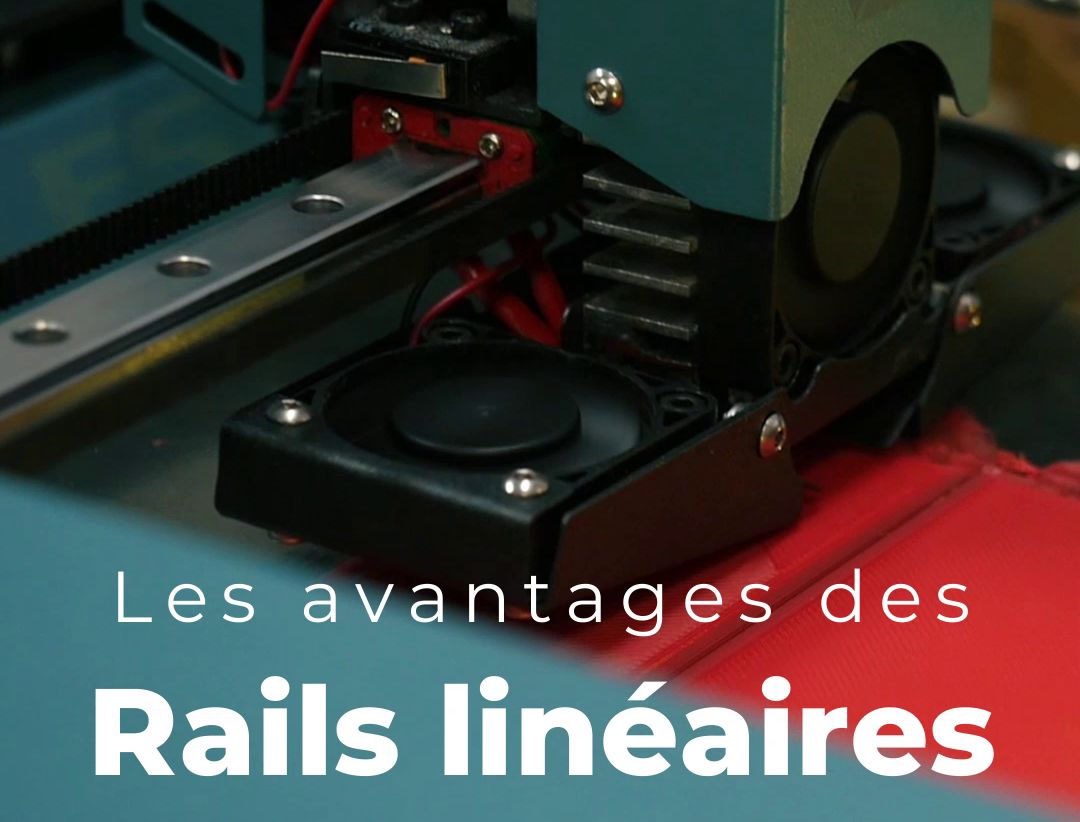
3D printing is experiencing a true performance revolution, with printing speeds doubling or tripling year after year. This evolution isn't due to motor speed alone, but to fundamental improvements in machine structure. At the heart of this transformation is the linear rail, a component that has replaced the V-wheel system to become the standard for high-end machines.

How it works: beyond the simple wheel
The traditional 3D printer system relies on plastic wheels that roll in a V-slot. While simple and economical, this system generates friction and wears over time, creating play in the movement.
A linear rail, by contrast, is a precision engineering solution. It consists of a hardened steel rail and a carriage that moves along it thanks to a series of recirculating ball bearings. This system converts sliding friction into rolling friction, which has a major impact on performance.
Different sizes exist (MGN, HGR series, etc.), chosen based on the load and precision required for each axis (X, Y, or Z).
Technical benefits in detail
Using linear rails delivers concrete advantages that directly translate into better print quality, greater durability, and improved reliability.
- Micrometric precision and rigidity: The carriage balls are pre-loaded to eliminate any play or "wobble". The carriage is thus locked to the rail, allowing movements with sub-millimeter precision. This rigidity is crucial for high-quality printing because it reduces vibrations and oscillations that cause artifacts like "ghosting" or "ringing" on part walls.
- Endurance and wear resistance: Plastic wheels in V-slot systems eventually flatten or wear out over time, requiring adjustment or replacement. Hardened steel linear rails are designed to support millions of movement cycles with minimal wear. Simple periodic lubrication is enough to guarantee constant durability and performance long-term.
- Speed and acceleration: Rolling friction is significantly lower than sliding friction. This low resistance to movement not only allows greater speed, but especially more aggressive acceleration and deceleration without loss of precision. This is what enables modern printers to print at speeds once thought impossible while maintaining high quality.
- Load resistance: Linear rails support loads in all directions (lateral, vertical, horizontal), making them ideal for heavy print heads (Direct Drive extruders) or large build plates.
Installation: a delicate but worthwhile operation
Installing linear rails, whether for an upgrade or DIY assembly, requires careful attention. Even a slight misalignment of a few microns can lead to friction and premature wear. This is why special care must be taken when positioning the rails, often with the help of precision tools.
Once properly installed and lubricated, the rails require only minimal maintenance.
Linear rails are not simply an aesthetic option, but an essential technical component that has allowed 3D printing to take a major leap forward in speed, precision, and reliability. They represent the standard choice for professional printers or machines for enthusiasts looking to push their equipment to its limits.


