3D Print Your Own Electric Guitar 🎸

Electric guitar manufacturing has long been the domain of skilled woodworkers, but it's entering a new era thanks to 3D printing. Beyond its innovative appeal, this technology enables the creation of fully customized instruments, offering a level of design freedom and DIY approach never before seen in lutherie. Printing your own guitar is the ultimate DIY project for any musician.

The advantages of 3D printing for guitar making
3D printing is revolutionizing traditional manufacturing methods in several key ways:
- Unlimited customization: The shape, color, and texture of your guitar body are limited only by your imagination. From an exact replica of a legendary instrument to a completely futuristic design, anything is possible.
- Lightweight and ergonomic: 3D printing allows you to design hollow bodies or complex internal structures. This significantly reduces the instrument's weight, making it more comfortable to play for extended periods.
- Acoustic optimization: By controlling the internal geometry of the body, you can experiment to influence sound resonance.
- Cost reduction: Printing a plastic guitar body can cost a fraction of the price of a custom hardwood body.
Technical challenges to overcome
This is an ambitious project that requires careful planning:
- Rigidity and strength: The guitar body must be rigid enough to withstand string tension. It's strongly recommended to use a wood or metal internal frame to which the 3D printed parts attach. This internal skeleton ensures the instrument's stability and playability.
- Assembly and precision: The neck, pickups, bridge, and electronics must integrate perfectly into the printed body. Precise modeling and calibration of your printer are essential.
- Surface finishing: For a professional result, layer lines must be sanded down and the print treated before painting.
Materials and manufacturing process
- Design and modeling: You can design your own model using CAD software (Blender, Fusion) or download a pre-existing model from specialized platforms.
- Filament choice:
- PETG is a solid choice for its strength and durability.
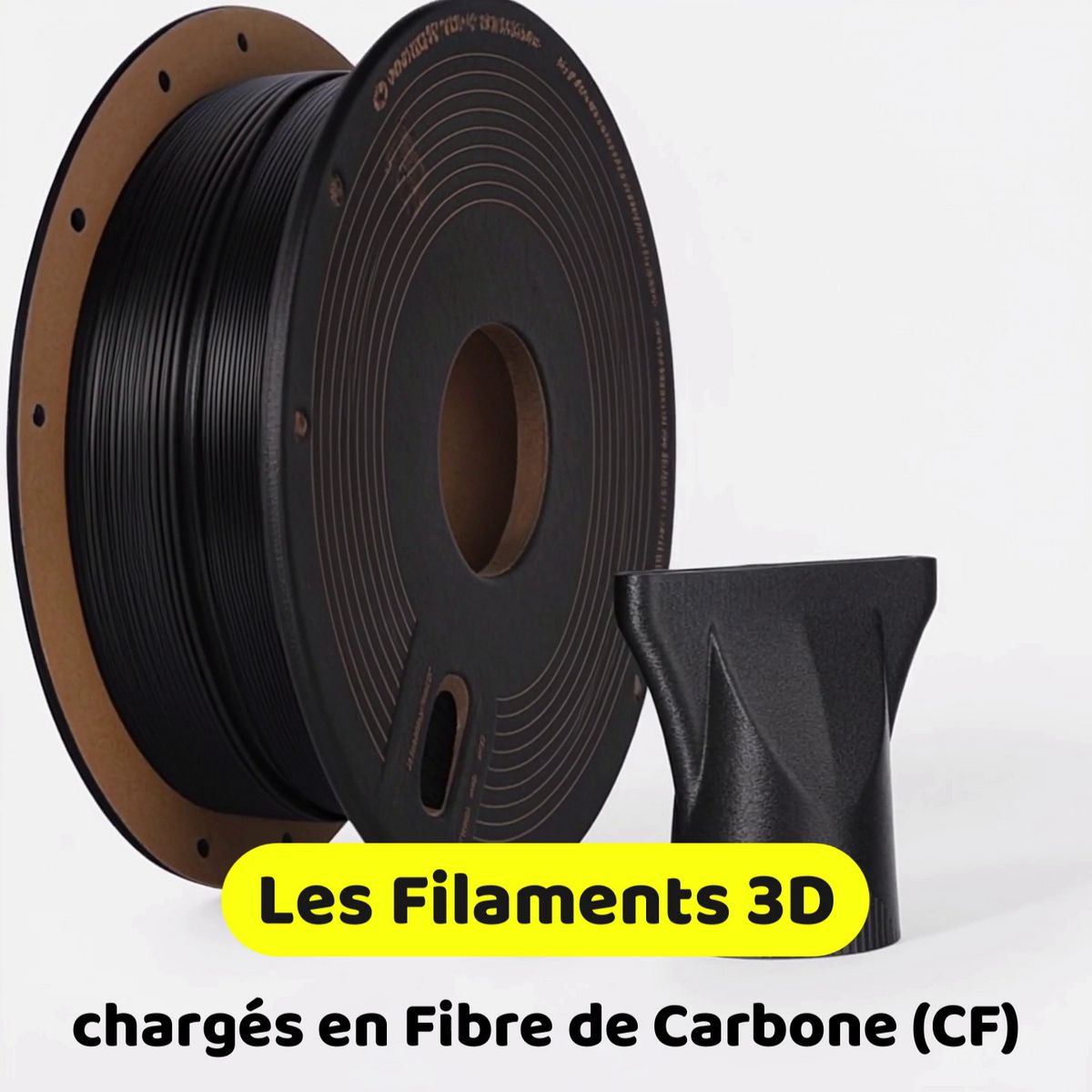
- Carbon fiber-reinforced filaments offer increased rigidity and strength, ideal for critical areas.
- PLA is a good option for prototyping or decorative projects.
- Printing and internal structure: The guitar body is typically printed in several segments that are later assembled. To ensure overall strength, the section receiving the neck and pickups should be printed with 100% infill or, as mentioned, reinforced with a wood insert.
- Final assembly: Once the parts are printed, sanded, and painted, final assembly can begin. Electronic components are installed and soldered, and the neck and strings are mounted to bring the instrument to life.
In conclusion, 3D printing an electric guitar is a challenging but incredibly rewarding project. It's a perfect fusion of art, technology, and passion that results in a unique musical instrument with its own story and soul.