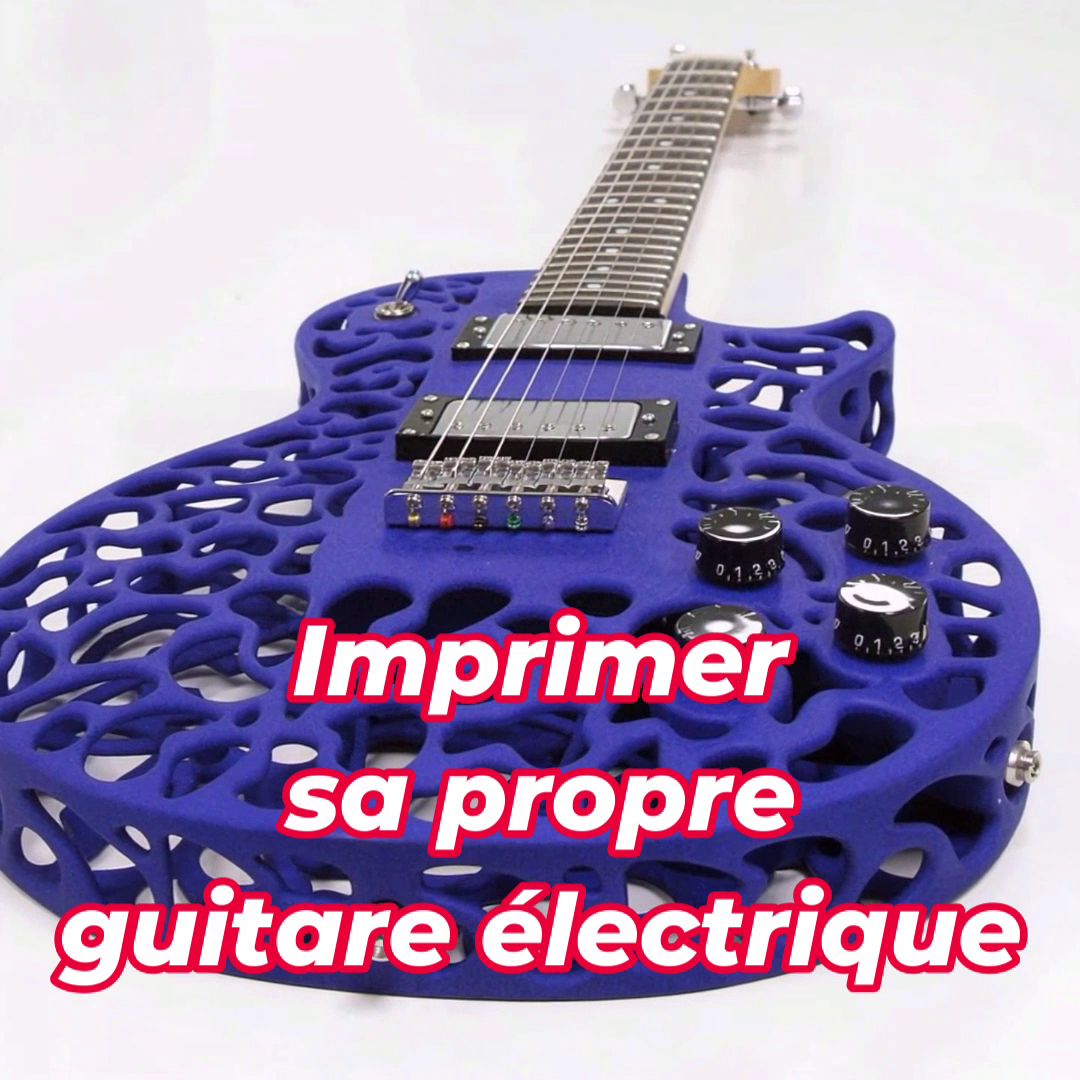
3D Printing: The New Musical Revolution? 🎶

Lutherie, that centuries-old craft of working wood and metal, is undergoing a radical transformation today. Far from replacing traditional craftsmanship, 3D printing (or additive manufacturing) is establishing itself as a powerful complementary tool, opening doors to unprecedented sounds, extreme customization, and increased accessibility.
How is this technology transforming the way we create and play music?

✅ The Reinvention of Instruments
The most spectacular application of 3D printing is the creation of complete instruments. This technology makes it possible to overcome the physical constraints of wood or brass.
-
The Electric Violin: The most famous example is the 3Dvarius, an electric violin printed in a single piece, inspired by the shape of a Stradivarius but with a futuristic and minimalist design. The absence of a traditional sound box allows engineers to focus on ergonomics and visual design.
-
"Impossible" Guitars: Brands like ODD Guitars create guitar bodies with honeycomb structures or moving gears inside. These complex shapes would be impossible to carve manually from wood without the instrument collapsing.
-
Wind Instruments: Flutes, trombones, and even saxophones are now being printed. While the sound of brass is still difficult to match with plastic, 3D printing allows prototyping experimental acoustic shapes to test new airflow patterns.
✅ Sound Customization: The Example of Reeds
It may be in accessories that the revolution is most tangible for everyday musicians.
The Syos Case: French startup Syos (Shape Your Own Sound) has revolutionized the market for saxophone and clarinet reeds.
Thanks to 3D printing, they can modify the internal geometry of the reed (the chamber and palate) down to the centimeter. A musician can request a "brighter" or "mellower" sound, and the algorithm generates a unique reed printed in ABS (a durable polymer). This democratizes customization, once reserved for the elite.
✅ Accessibility and Disability
This is the most human aspect of this technology. 3D printing allows for the production of adapters or modified instruments for musicians with disabilities at lower cost.
-
Musical prosthetics: Creation of supports to hold a bow or drumstick for a person who has lost a limb.
-
Adapted ergonomics: Modification of instrument keys for a person suffering from arthritis or reduced finger mobility.
✅ The Acoustic and Material Challenges
Not everything is perfect. 3D printing in music faces two major obstacles:
-
The Material: Plastic (PLA, ABS) does not have the same resonance properties as spruce, maple, or brass. For acoustic instruments, the sound can seem more "flat" or less rich in harmonics. This is why 3D printing excels especially in electric instruments or accessories.
-
Durability: Printed instruments can be sensitive to heat or humidity, though new composite materials (blends of plastic with wood or carbon powder) are improving the situation.
3D printing won't kill the traditional luthier. On the contrary, it offers a new palette of tools. It allows you to create the visually impossible, personalize sound scientifically, and make music accessible to everyone physically. We're only at the beginning of the "digital lutherie" era.
What's your verdict?
Would you be ready to swap your traditional instrument for a creation from a 3D printer? Do you think an instrument's soul lies in the nobility of aged wood, or is it born only from the musician's fingers, regardless of the material?
The debate is open: fleeting gadget or genuine revolution in lutherie? Share your thoughts in the comments!