Carbon Fiber Filled 3D Filaments (CF): Performance, Lightweight & Challenges

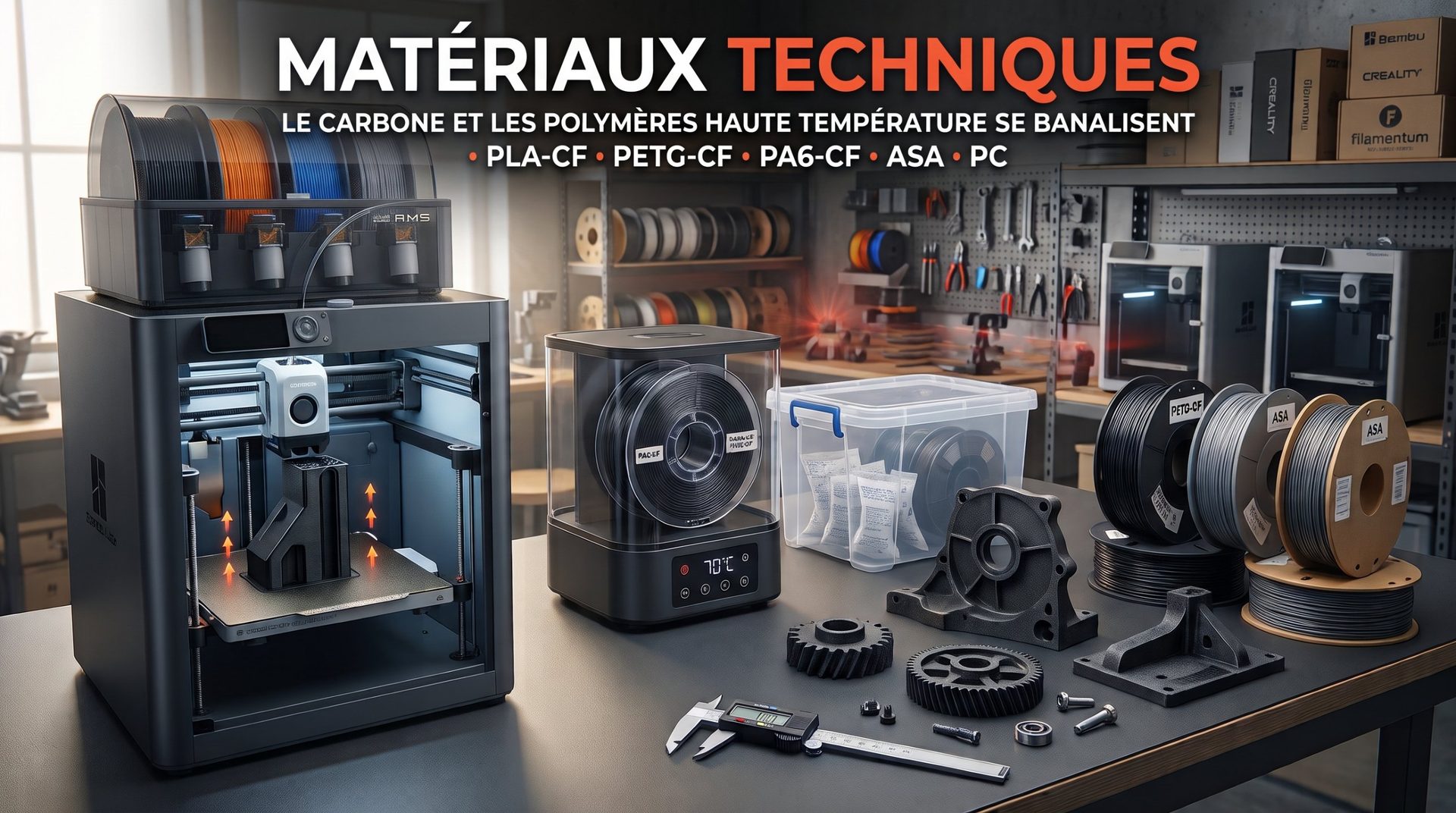
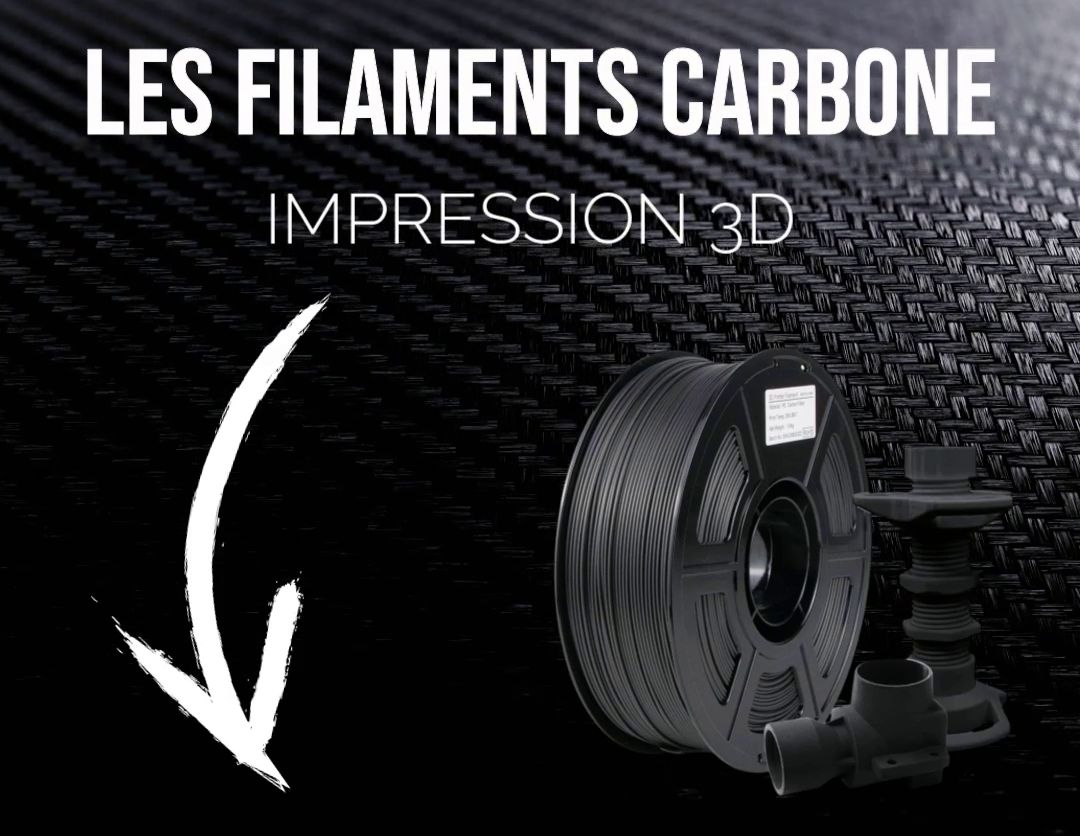
Carbon fiber filled filaments (CF), often designated by the CF suffix (like Nylon-CF, PLA-CF), represent one of the major breakthroughs in transforming FDM 3D printing from a hobbyist tool into a source of functional engineering parts. By incorporating chopped carbon microfibers into a base polymer, you get a material with exceptional mechanical properties.

1. Why Carbon? The Advantages of the Fiber
Adding carbon fiber isn't just an aesthetic choice; it fundamentally transforms the material's physical properties.
- Increased Rigidity and Strength: This is the main benefit. Carbon dramatically increases the elastic modulus (stiffness) of the polymer. Parts are far less prone to flexing under load, making them ideal for structural components.
- Lightweight: Parts remain relatively light in weight, a major advantage for applications where mass must be minimized (robotics, drones, aerospace).
- Dimensional Stability: Carbon fibers act as an internal skeleton that reduces thermal expansion and contraction in the material. This translates to a significant reduction in warping (deformation) during printing, a considerable advantage for technical filaments like Nylon or Polycarbonate.
- Aesthetic Finish: CF filaments often deliver a matte, slightly textured finish that is highly valued for its professional, premium appearance.
2. The Challenges and Hardware Requirements
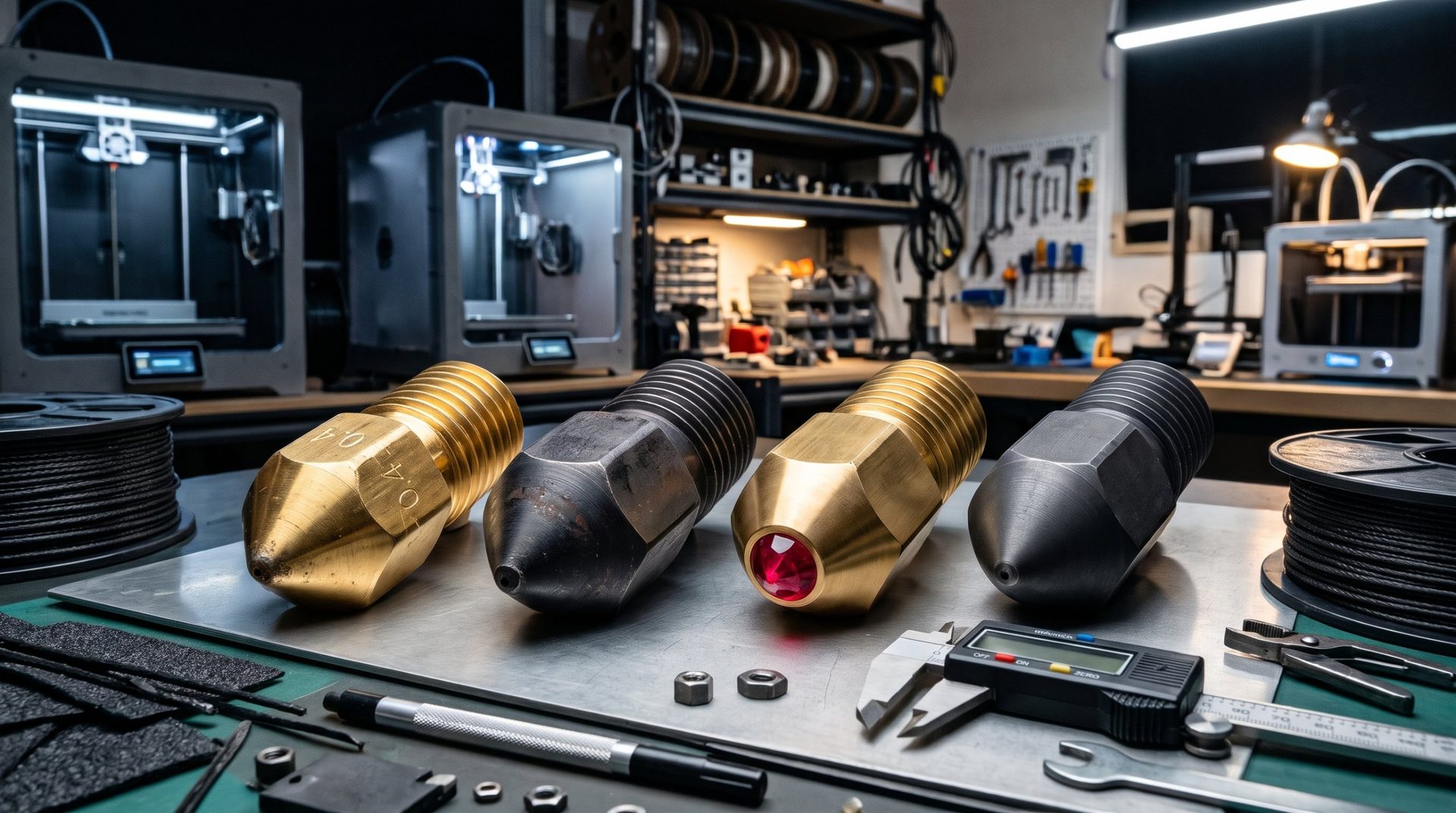
Printing with carbon fiber filled filaments is demanding and requires specific hardware upgrades.

CAUTION: Never print carbon fiber filled filaments with a standard brass nozzle, as it will become unusable after just a few hours of printing.
3. Practical Applications: From Workshop to Industry
CF filaments bridge desktop 3D printers and high-performance part manufacturing.
- Tooling and Fixtures: Creating robust, lightweight tools, fasteners, and assembly fixtures capable of withstanding tension and repeated workshop use.
- Automotive and Drone Parts: Manufacturing lightweight, highly durable fairings, camera mounts, or chassis components for competition vehicles or drones.
- Functional Prototyping: Building prototypes that can be tested in real-world conditions (high heat, high stress) with maximum dimensional reliability.
Carbon fiber filled filaments are a game-changer that allows makers and small businesses to produce, on FDM machines, components whose performance was once reserved for complex industrial processes.
Still hesitant? Our filament comparison tool guides you in just a few clicks.