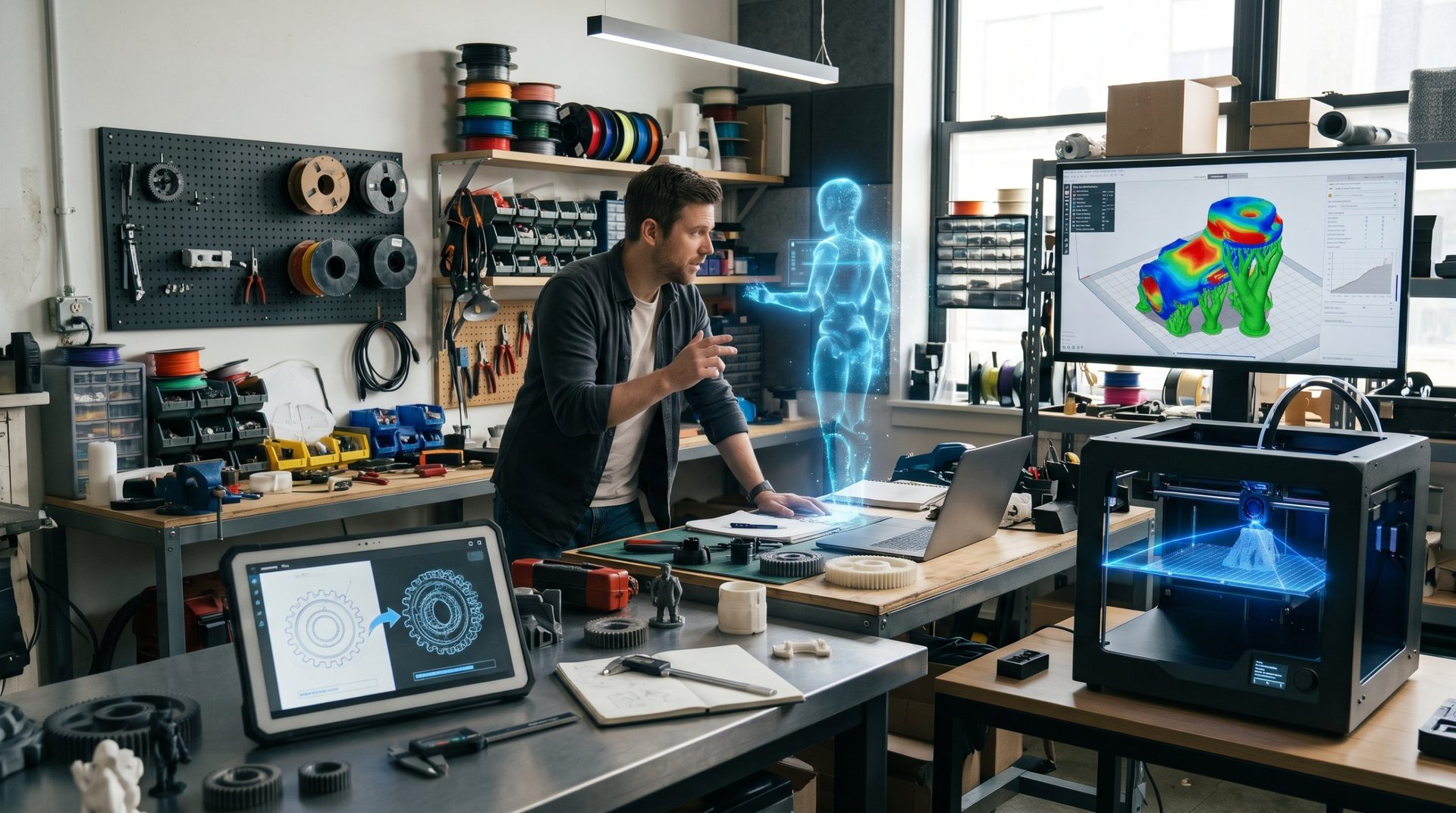
Will AI Kill 3D Modeling? Why CAD Designers Aren't Safe (And Why That's a Good Thing)
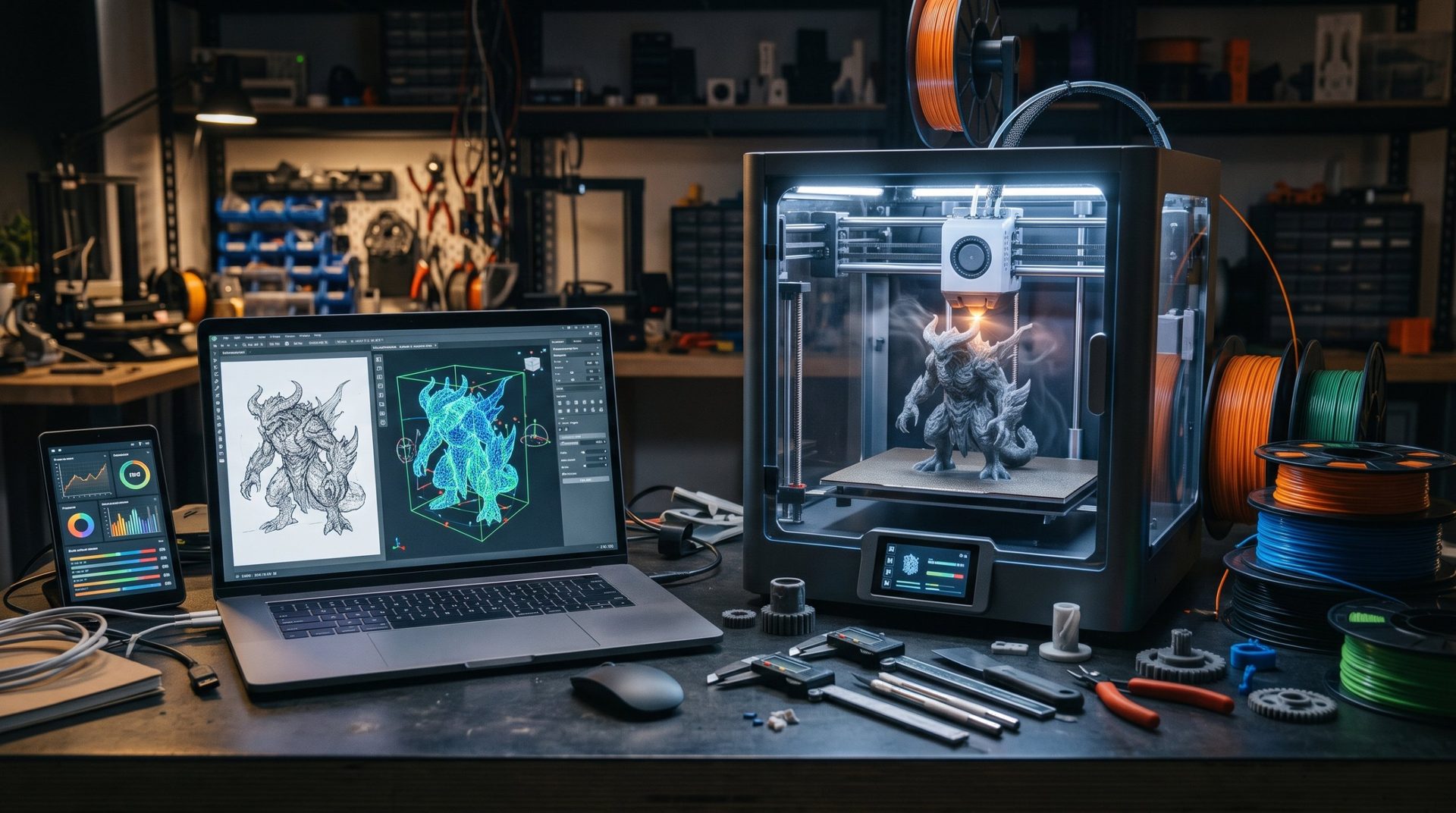
Just two years ago, generating a 3D object from a simple text prompt produced shapeless polygon blobs that were unusable on a print bed. Today, generators like Tripo AI or Meshy, or tools built into platforms like MakerWorld, deliver textured figurines, bas-reliefs, and organic sculptures in under a minute—all exportable as STL or 3MF files.
This speed is sparking heated debate among makers and 3D modelers: is artificial intelligence draining the 3D designer profession of its value, or is it simply changing the rules of the game?
1. Model libraries drowning in AI-generated files
The first friction point is already visible across major online model repositories. The technical barrier to digital sculpting (Blender, ZBrush) has collapsed, with two direct consequences:
- Inflation of decorative models: thousands of AI-generated files land in catalogs every day, sometimes burying original creations that took dozens of hours of work.
- Devaluation of the 3D file: when anyone can generate their own figurine from a photo in two minutes, the market value of a standard decorative model trends mechanically toward zero.
2. The wall of physics: where AI still fails
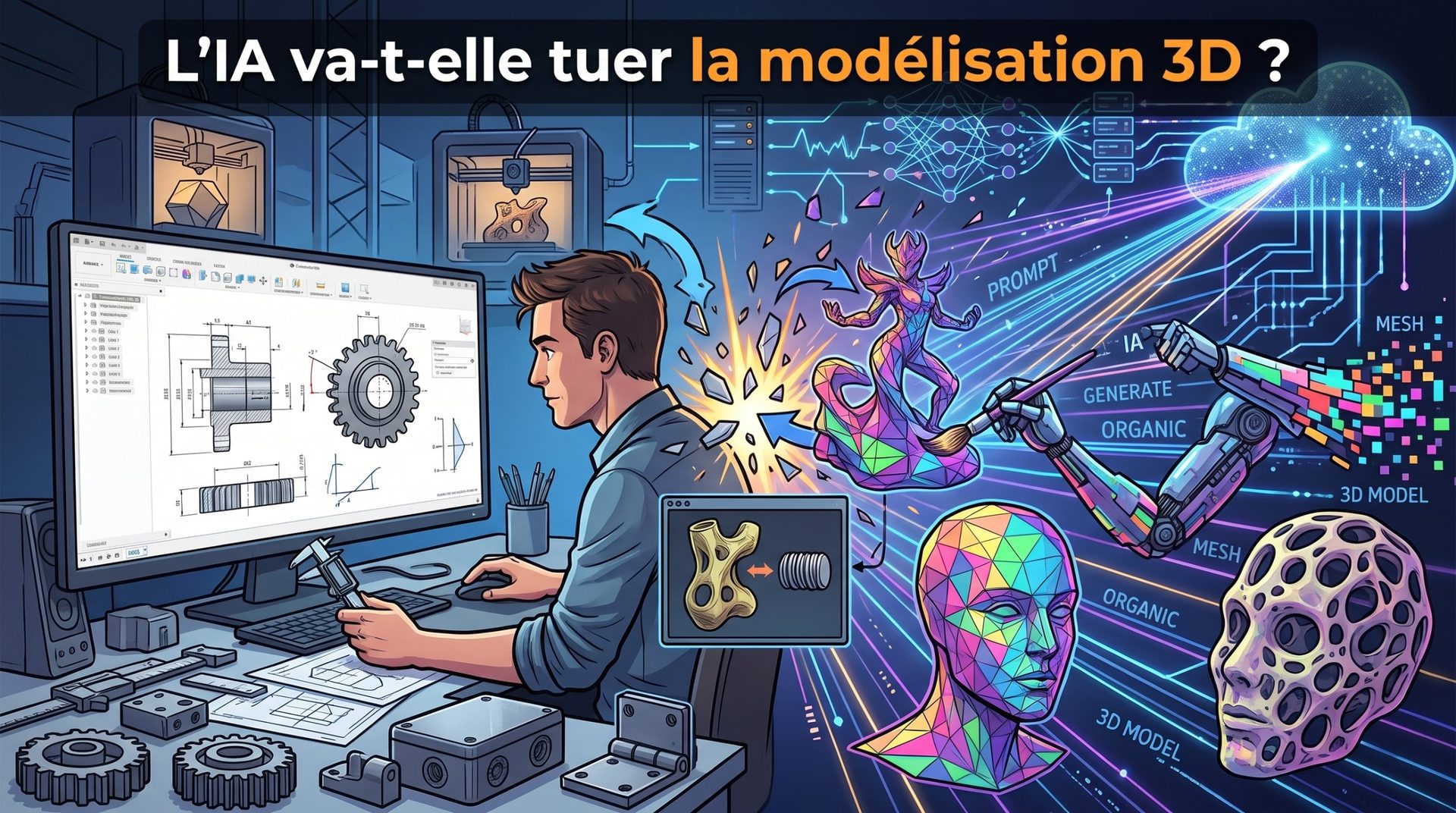
Despite enthusiasm around mesh generation, generative AI hits a real bottleneck: mechanical and functional constraints. A generator reasons in visual appearance and aesthetic probabilities, not in materials science or assembly:
| Criterion | AI-Generated Model (mesh) | Parametric CAD (STEP) |
|---|---|---|
| Dimensional accuracy | Approximate: triangle mesh without dimensions | Exact: every dimension is defined and editable |
| Clearances and tolerances | Impossible to guarantee 0.2 mm play between parts | Controlled by dimensions and constraints |
| Strength | Random wall thickness, unforeseen weak points | Wall thickness chosen for the application and perimeter count |
| Modifications | Tedious: destructive polygon editing | Instant thanks to design history |
Ask a 3D generator for a 1.5-module helical gear, a waterproof enclosure with an O-ring groove, or a hinged bracket capable of supporting 15 kg in cantilever: the result will look convincing from a distance, but it won't work mechanically.
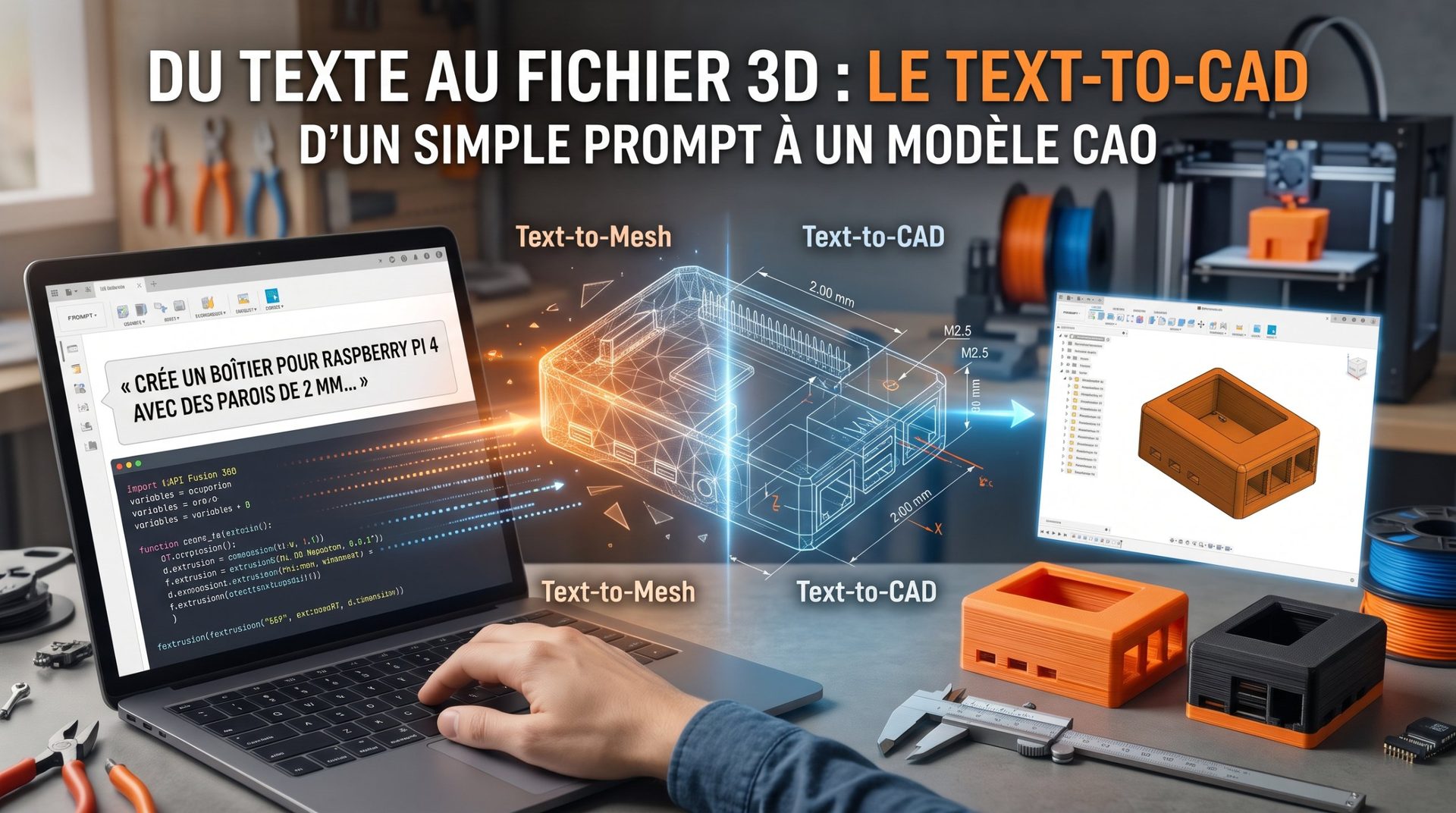
That wall is starting to crack, though: a new class of tools called "text-to-CAD" produces real dimensioned parametric parts from a text description. They're still limited to simple shapes and always need a human eye to validate dimensions, clearances, and strength.
3. The rise of the "hybrid maker": the real revolution
Pitting human against algorithm is a misreading. The near future belongs to those who can blend both approaches:
- AI for organic forms and ideas: rapidly generate complex shapes, natural textures, ergonomic handles, or decorative elements—the kind that take forever to draw in traditional CAD.
- CAD for structure and assembly: import that mesh into CAD software to cut screw bosses, plan locations for brass threaded inserts, dial in fit tolerances, and ensure a part prints without excessive supports.
Real expertise shifts toward print engineering
AI doesn't replace 3D creators: it eliminates the blank page and automates basic decorative modeling. A designer's added value no longer lies in aligning triangles with a mouse, but in mastering the physical rules of 3D printing: orienting the part to handle loads, predicting material shrinkage, designing glue-free assemblies, and optimizing the part's mechanics.
How do you see this shift playing out on your print bed? Are you already using AI for your designs, or do you believe "real" 3D design is still the domain of CAD and technical mastery?