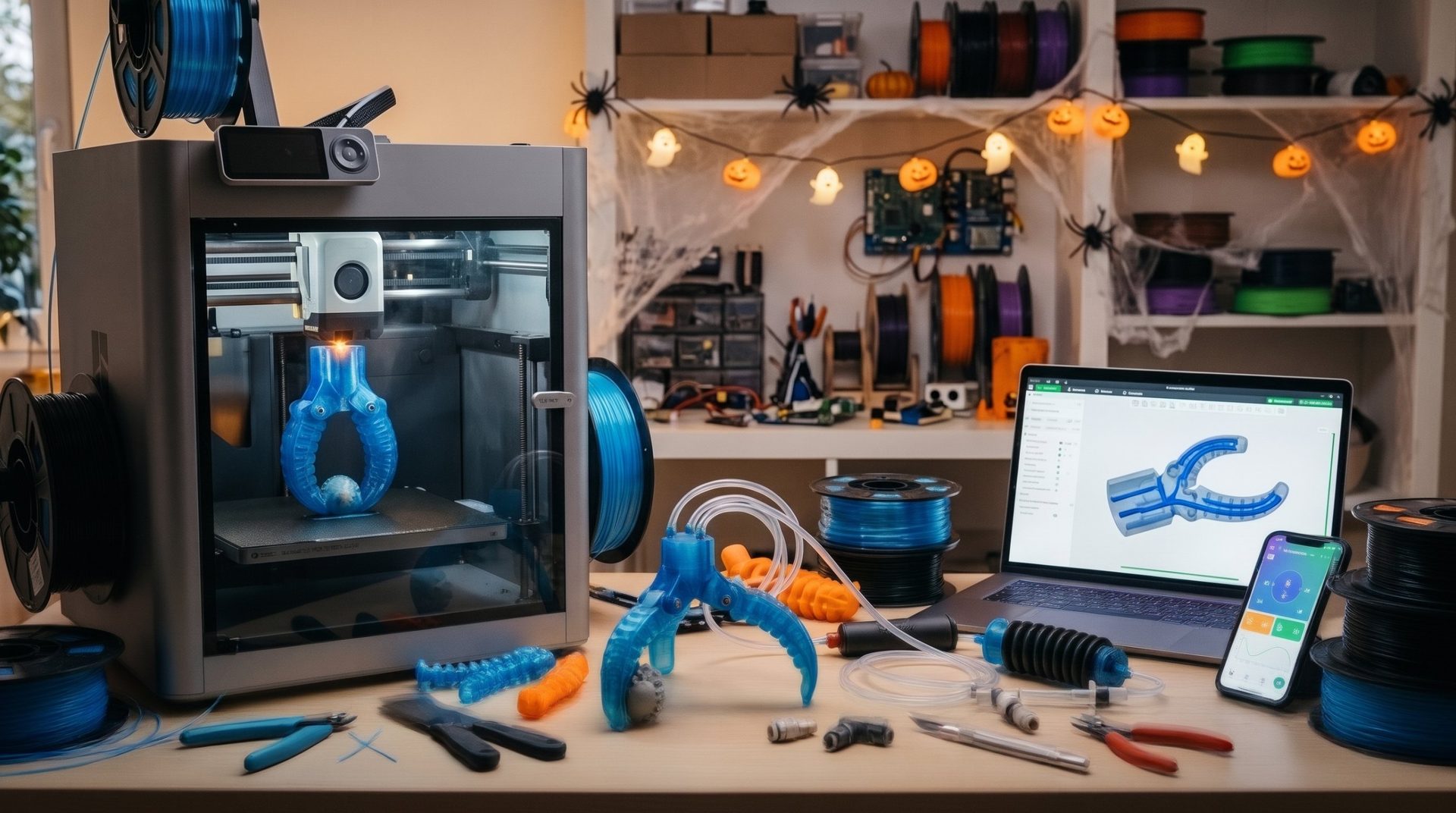
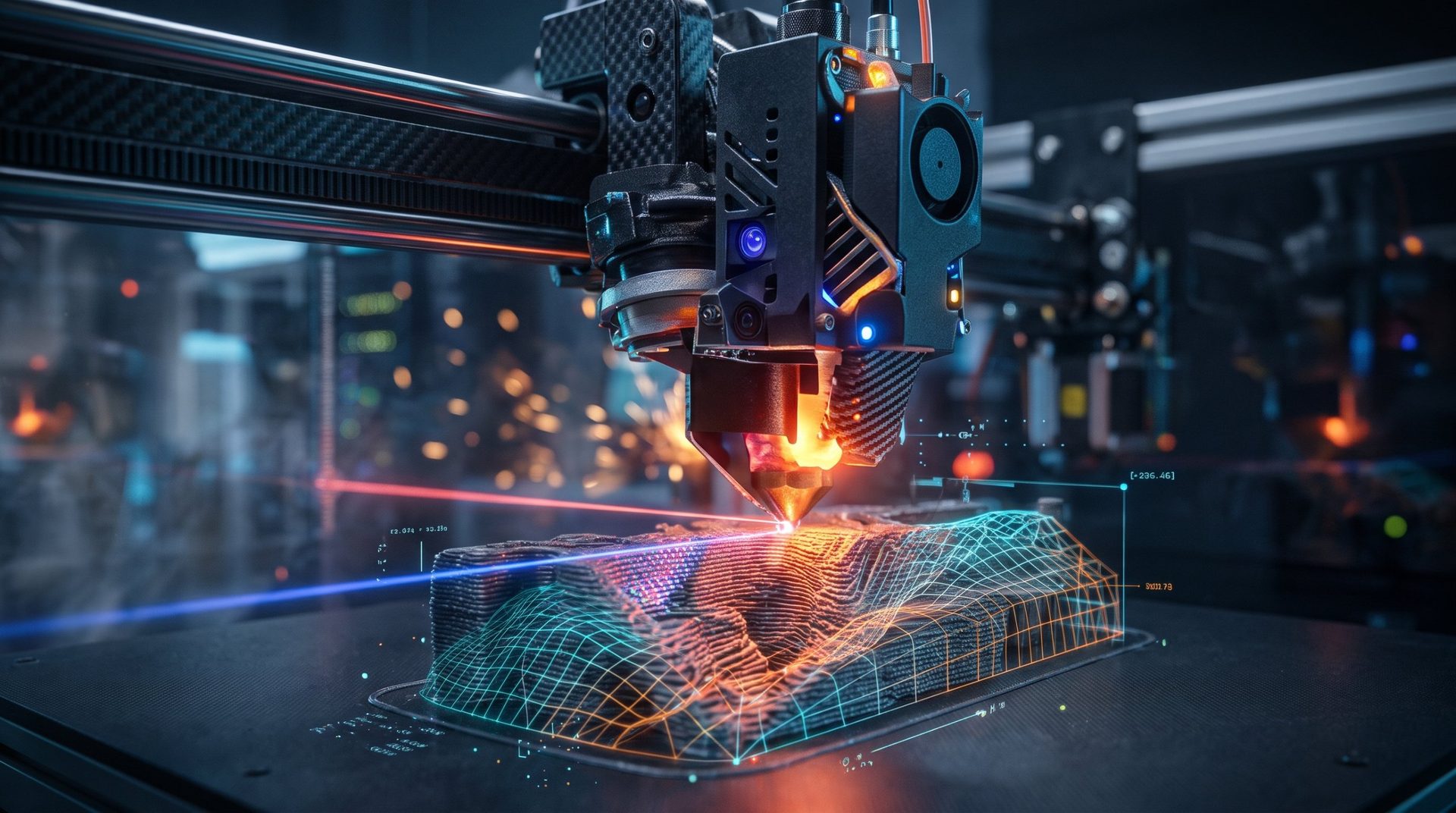
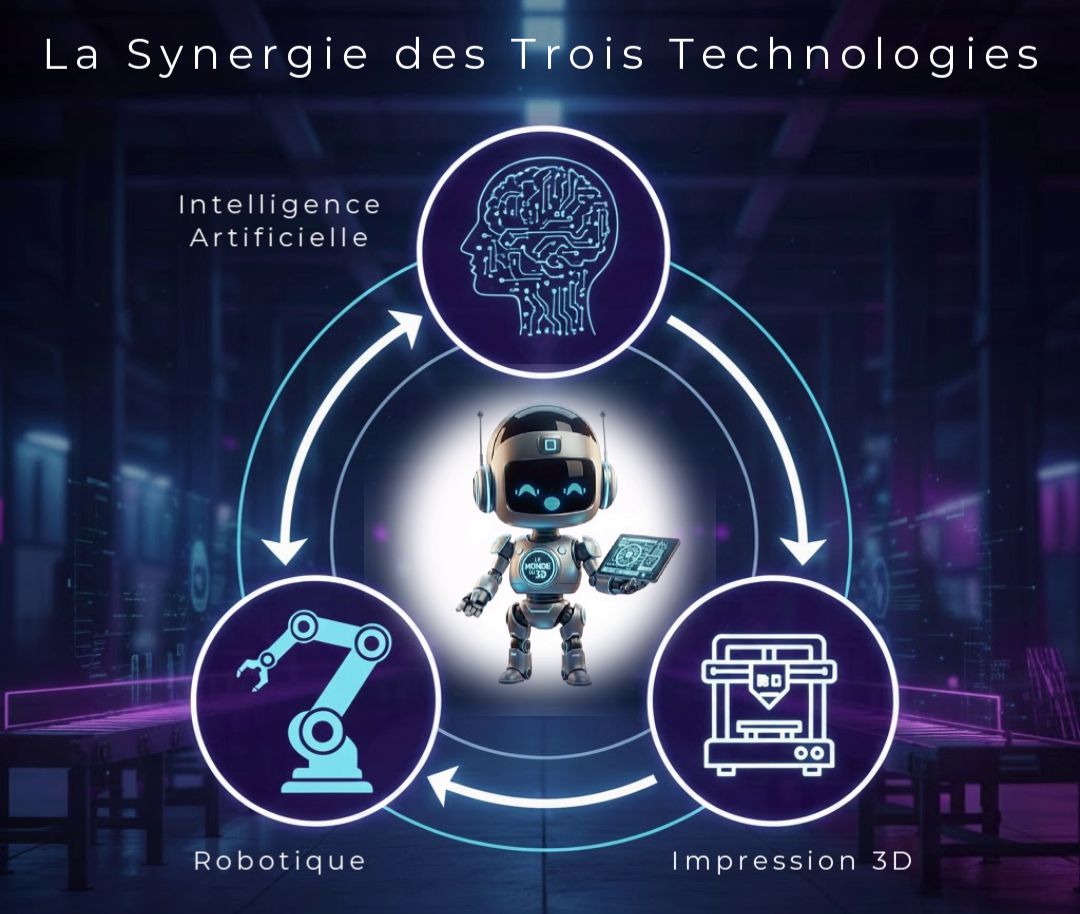
Why We Study AI, Robotics, and 3D Printing: The Three Pillars of Creative Autonomy
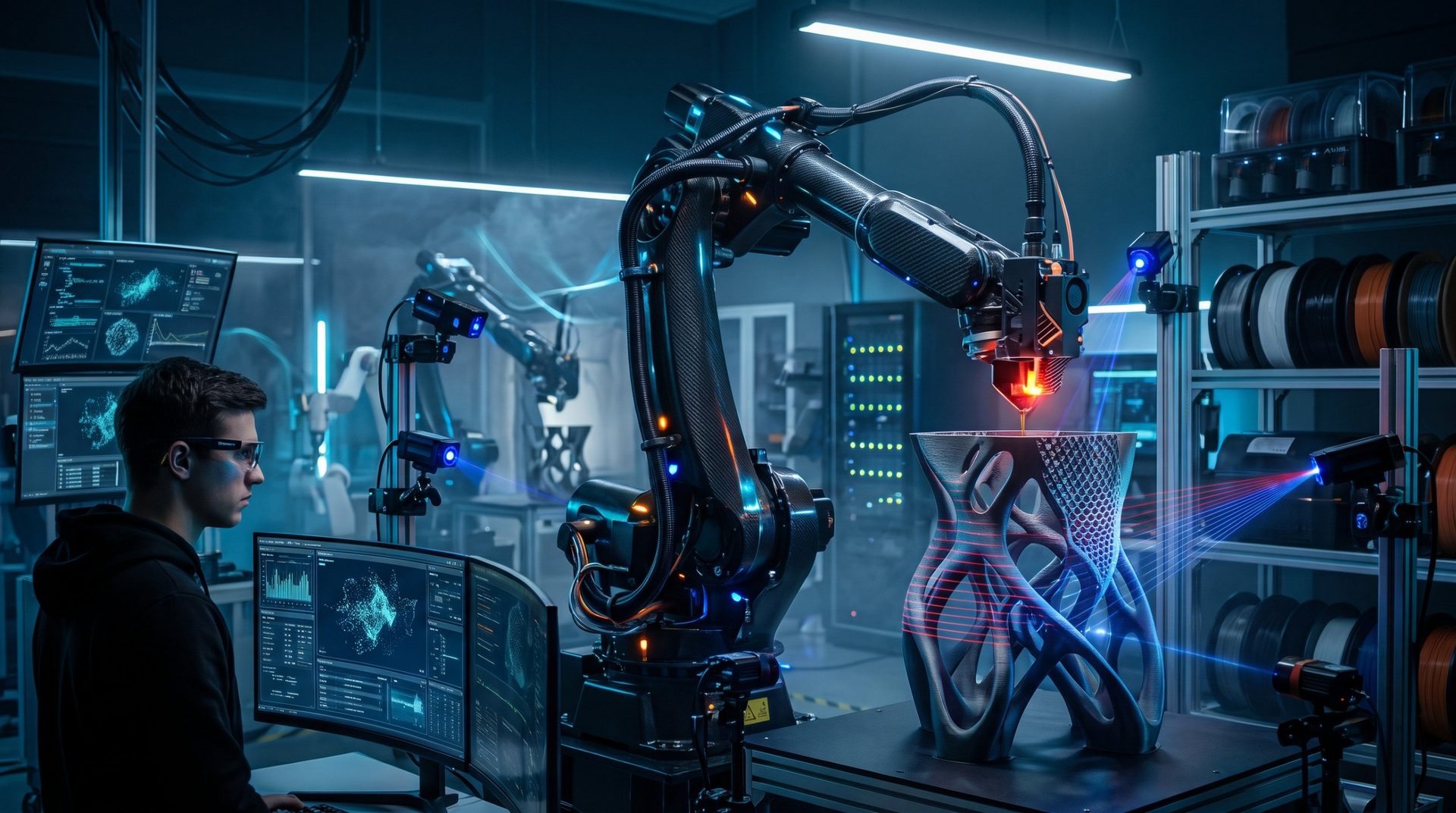
Artificial intelligence, robotics, and 3D printing are not simply neighboring fields: they are the three organs of a single production organism. Taking an interest in one inevitably leads to the other two, because each one solves the major limitation of the previous one. That's why we follow them closely and talk about them so often here (see also our analysis of this convergence).
1. The Brain, the Muscle, and the Tool of Creation
To bring a project to life or transform the physical world, you need three fundamental capabilities:
- AI is the brain: it analyzes, makes decisions, optimizes complex mathematical structures, and designs unprecedented geometries (generative design, visual defect recognition).
- Robotics is the muscle: it ensures movement in space, repeatability, kinematic precision, and manipulation of tools or objects in the real world. Even printing itself, like 6-axis robotic arms.
- 3D printing is the matter: it's the ability to quickly fabricate a solid shape, without an industrial mold costing tens of thousands of euros or subtractive machining.
Isolated, these tools have frustrating limitations: an AI without arms remains locked inside a screen; a robot without a rapid fabrication method depends on slow supply chains; a 3D printer without smart sensors or automation remains a manual machine, dependent on human intervention.
2. A Complete Feedback Loop
What makes their union fascinating is the continuous loop they create:
- Autonomous design: AI invents a part optimized for a specific task.
- Immediate fabrication: the 3D printer materializes this part in just a few hours, using technical materials.
- Physical interaction: the robot tests, assembles, or manipulates this part.
- Real-time learning: through cameras and sensors, AI detects the mechanical weaknesses of the tested part, adjusts the modeling parameters, and launches a new printing iteration.
This is the shift from prototyping that took six months to material evolution happening in a weekend.
3. Democratizing Industrial Independence
The real reason for this interest is the shift of industrial power toward the individual or small workshop:
- Twenty years ago, designing and manufacturing an automation system required a design office, a foundry, and a team of specialized engineers.
- Today, a maker or small business has on their desk a design algorithm, a high-precision prototyping machine, and programmable microcontrollers in just a few lines of code. Projects like LeRobot from Hugging Face prove it: you can print and train your own robotic arm at home.
This trio redefines what it means to "manufacture": it is no longer the exclusive domain of mega-factories, but that of those who know how to orchestrate code, matter, and motion.
Do you have a project that combines design, robotics, or technical parts? We can support you with our on-demand 3D printing service.