The Convergence of AI, Robotics, and 3D Printing
We're living in an era where the boundary between the digital and physical worlds is dissolving. Three major technologies—Artificial Intelligence (AI), Robotics, and 3D Printing (additive manufacturing)—are no longer simply evolving in parallel. They're converging to create an autonomous, flexible, and ultra-personalized production ecosystem.

✅ Artificial Intelligence: The Brain
AI is the maestro. In this trio, it doesn't just process data; it anticipates and designs. Through Generative Design, AI can propose optimized structures that a human engineer would never imagine, reducing part weight while increasing their strength.
✅ Robotics: The Arm
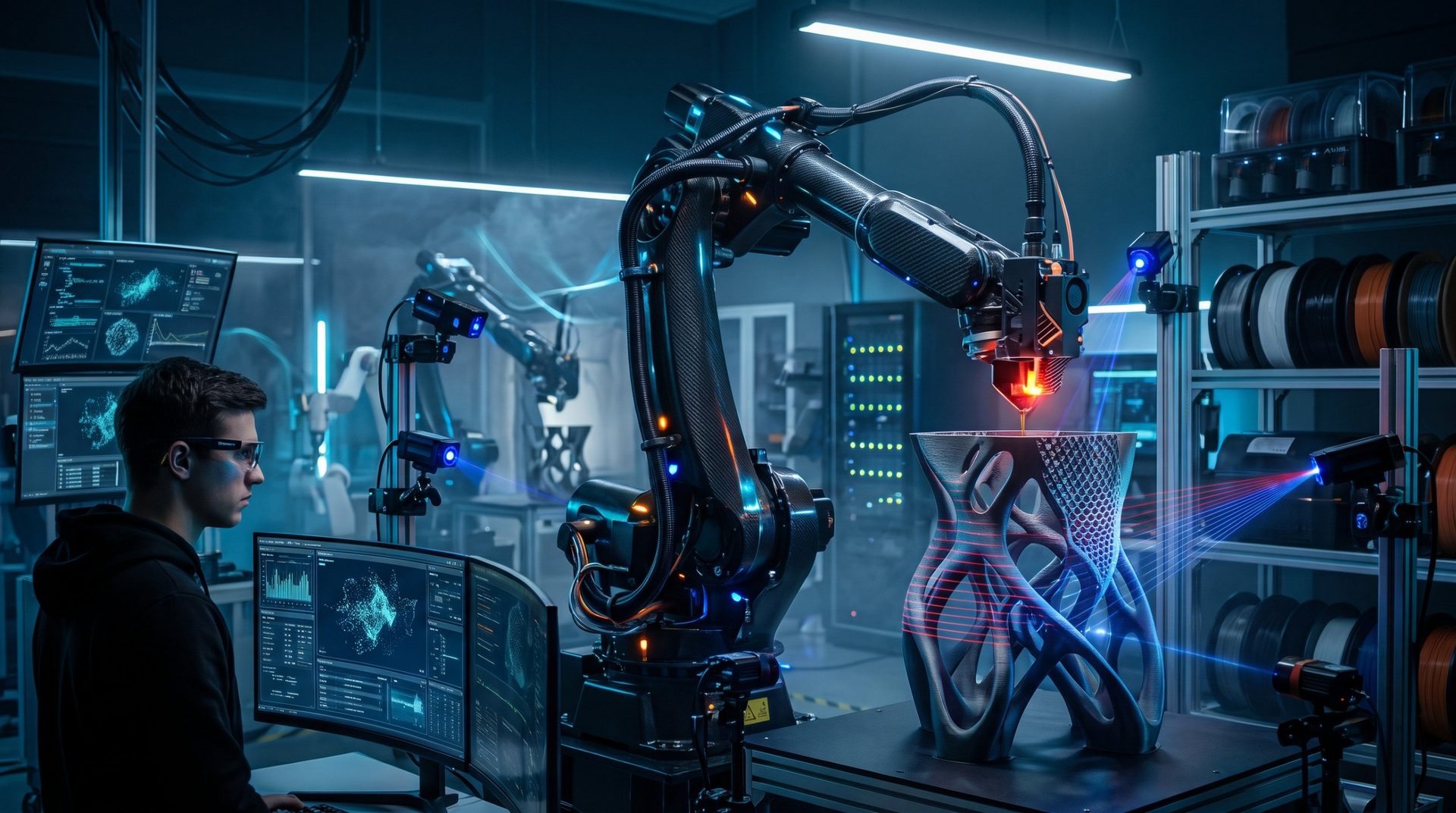
If AI thinks, the robot executes. Modern robotics has become collaborative (the "cobots"). Equipped with sensors and guided by AI, robots now manipulate objects with millimeter precision, adapting to environmental changes in real time.
✅ 3D Printing: The Body
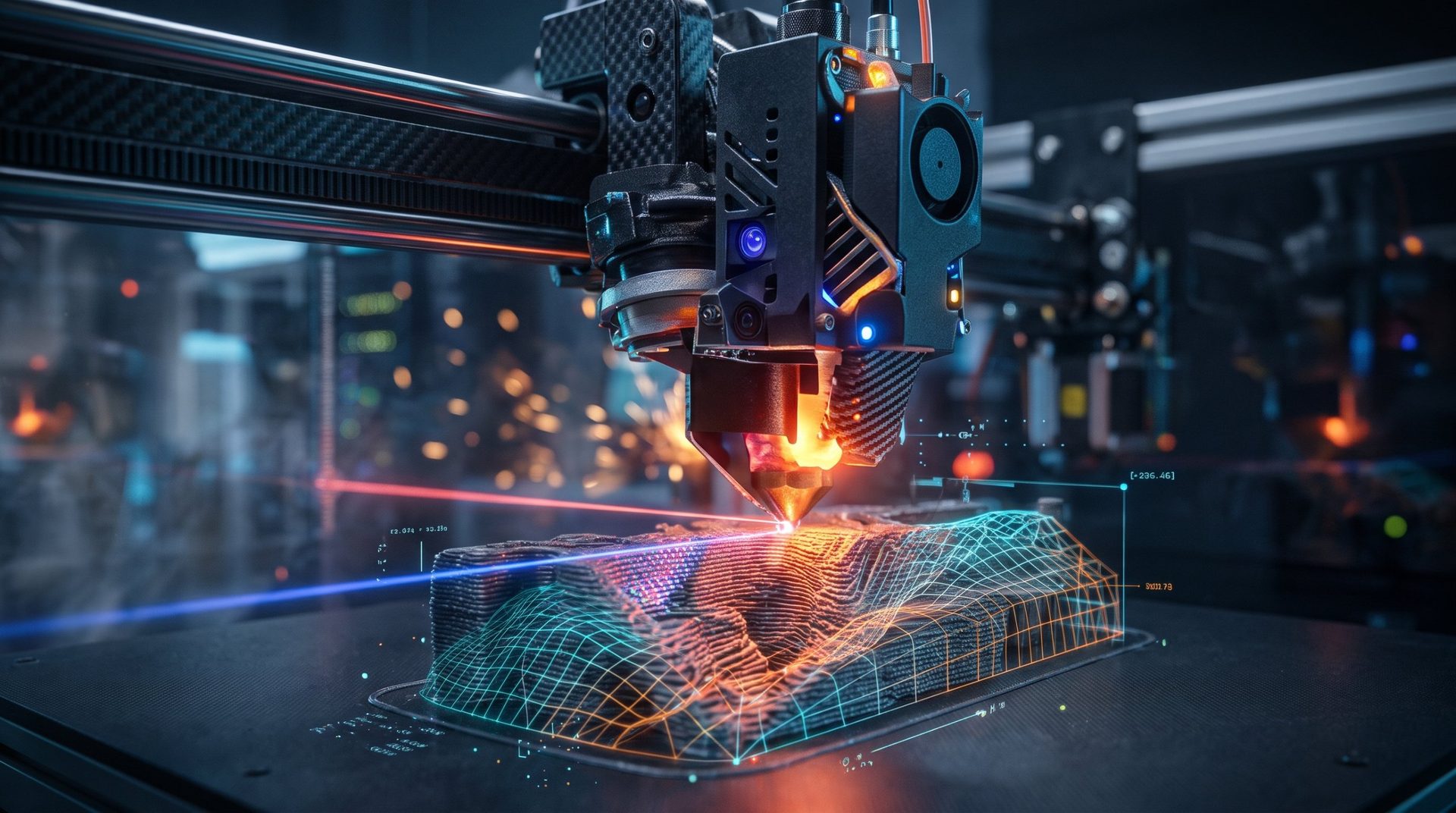
3D printing is the means of realization. Unlike traditional machining, which removes material, it layers it. This enables creating complex geometric shapes, using innovative materials (polymers, metals, living tissues), and producing locally on demand.
✅ The Synergy of All 3 Technologies
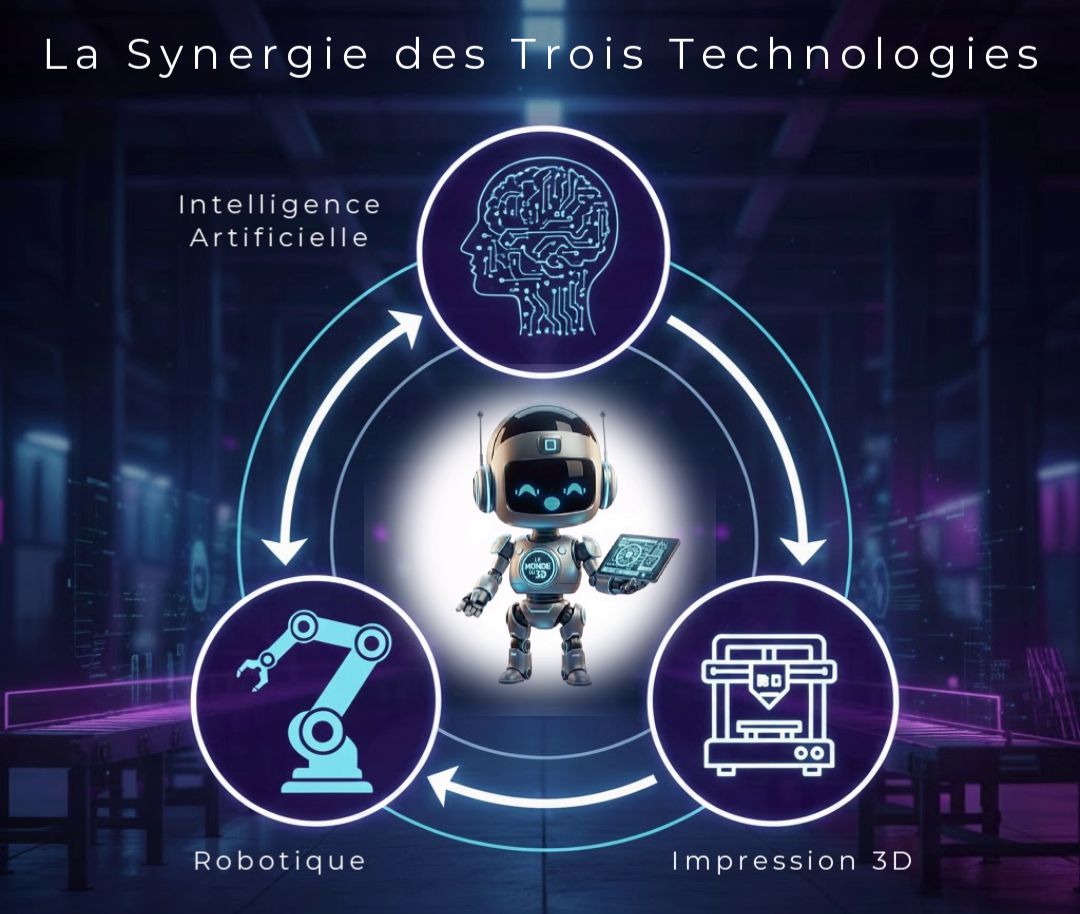
The diagram below illustrates how these technologies interact in a modern production cycle:
-
AI ➔ 3D Printing: AI generates optimized design files and corrects printing errors in real time.
-
AI ➔ Robotics: AI enables robots to learn from their movements (Machine Learning) to gain efficiency.
-
Robotics ➔ 3D Printing: Robotic arms are now used as mobile "print heads," allowing the printing of giant structures (bridges, houses) without being limited by the size of a closed machine.
✅ The Stakes of This Convergence
This alliance is radically transforming several sectors:
-
Medicine: Printing personalized prosthetics with robots guided by AI analyzing a 3D scan.
-
Aerospace: Creating lighter engine parts, printed in one go without welding.
-
Logistics: Local micro-factories capable of manufacturing any replacement part instantly, eliminating the need for global stockpiles.
Conclusion: We're moving from an era of mass production to an era of mass personalization. The object is no longer just manufactured; it's "computed" by AI, "printed" by materials, and "assembled" by robots.