AI and Robotics: The Future of Autonomous 3D Printing Farms

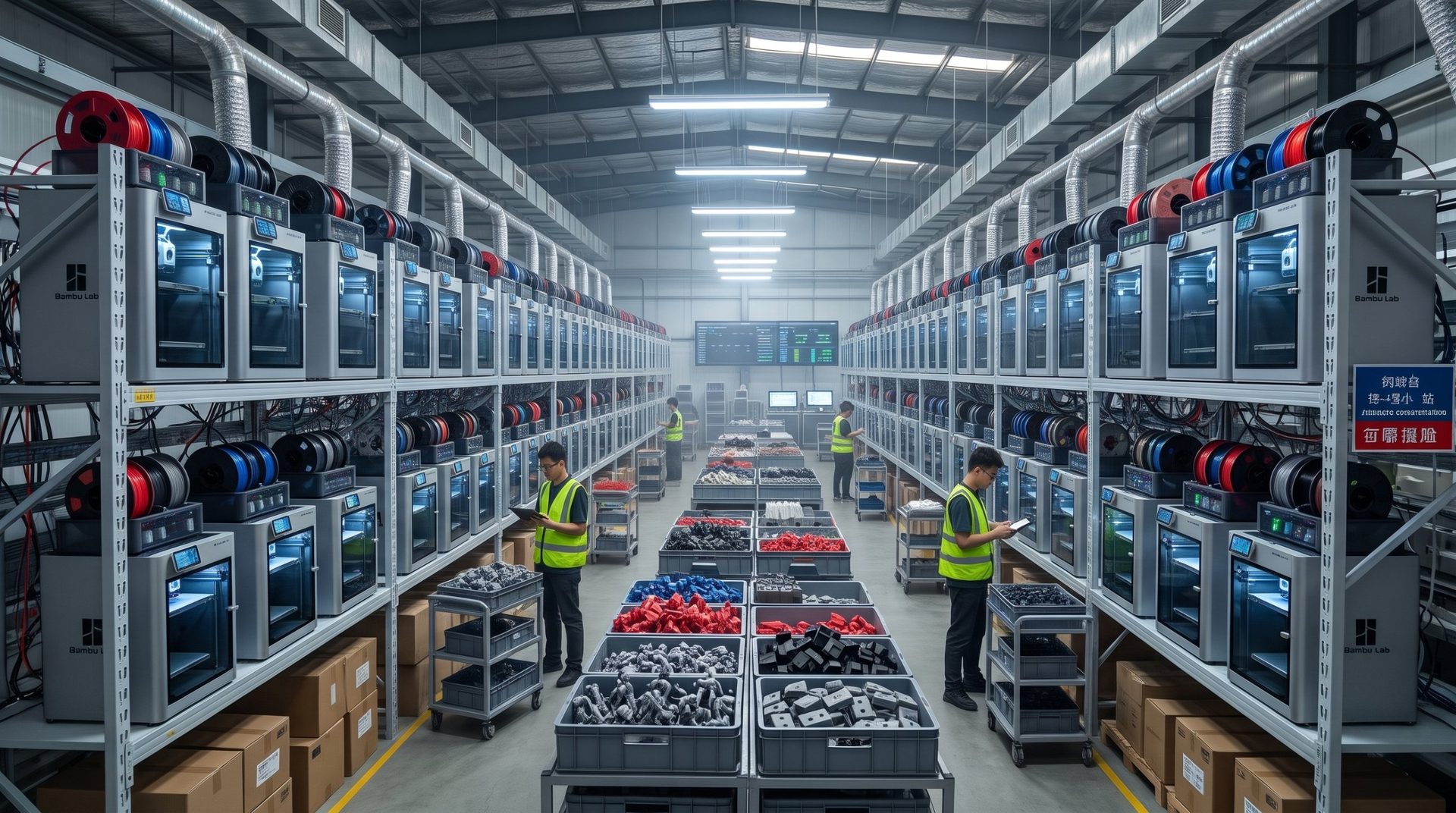
Until recently, a 3D printer farm required constant human presence to launch machines, remove parts, and prepare new build plates. Today, a new generation of collaborative robots (cobots) is transforming these workshops into fully autonomous production units, capable of running 24/7 without any manual intervention.

✅ The Robotic "Conductor"
In a modern printing farm, the robot (often an articulated arm mounted on a rail) acts as a mobile supervisor.
-
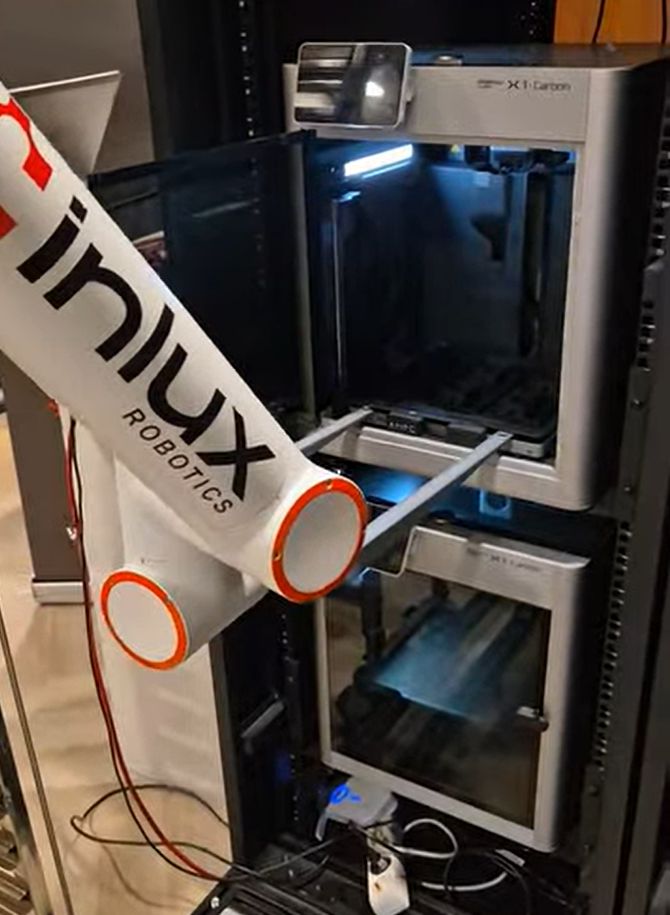
Automatic launch: The robot communicates with management software to identify which machine is available and places a blank build plate on it.
-
Part harvesting: Once printing is complete, the robot removes the part (or entire build plate) and places it in a storage bin before cleaning the surface for the next job.
✅ The end of repetitive and grueling tasks
The evolution of robotics offers a solution to the logistical bottlenecks that have held back large-scale 3D printing:
-
Automated post-processing: The robot can move parts to washing stations (for resin) or chemical polishing baths without operators handling hazardous materials.
-
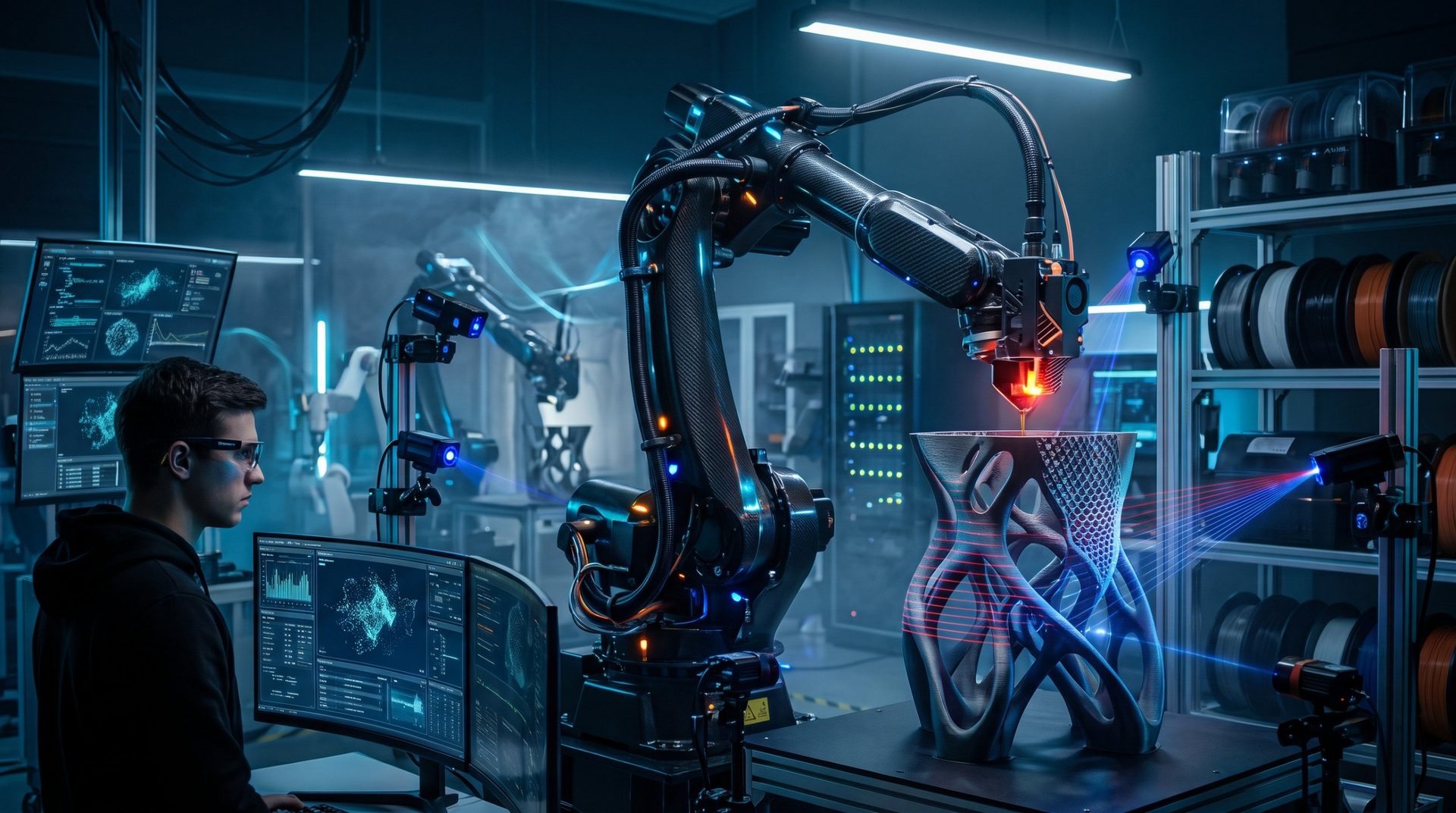
Preventive maintenance: Equipped with smart cameras, these robots inspect nozzles and printer belts. If they detect an anomaly, they take the machine offline and alert a technician, preventing wasted material.
✅ Profitability: Produce more, at night, for less
Replacing humans with robots in these farms isn't just about technology—it's an economic imperative:
-
The "Lights-Out" concept: Farms can operate in complete darkness, without heating or human air conditioning, drastically reducing energy costs.
-
Scalability: It's simpler to add 10 printers and program a robot to manage them than to hire and train staff for night shifts.
✅ Comparison: Traditional Farm vs. Robotic Farm

✅ Toward "one-click" manufacturing
The ultimate goal of this evolution is total integration: a customer orders a part online, the file is sent to the farm, a robot handles printing, cleaning, and packaging, and the finished product is ready for shipment without a human hand ever touching it.
Did you know? Some companies already use mobile robots (AGVs) that move from machine to machine to collect bins of finished parts and deliver them directly to the shipping department.
❓This technological revolution marks a turning point: in your view, is total automation a necessary advance for the industry, or should we preserve a central role for human expertise? Share your thoughts and leave us your comments!