What is a 3D Printing Farm?

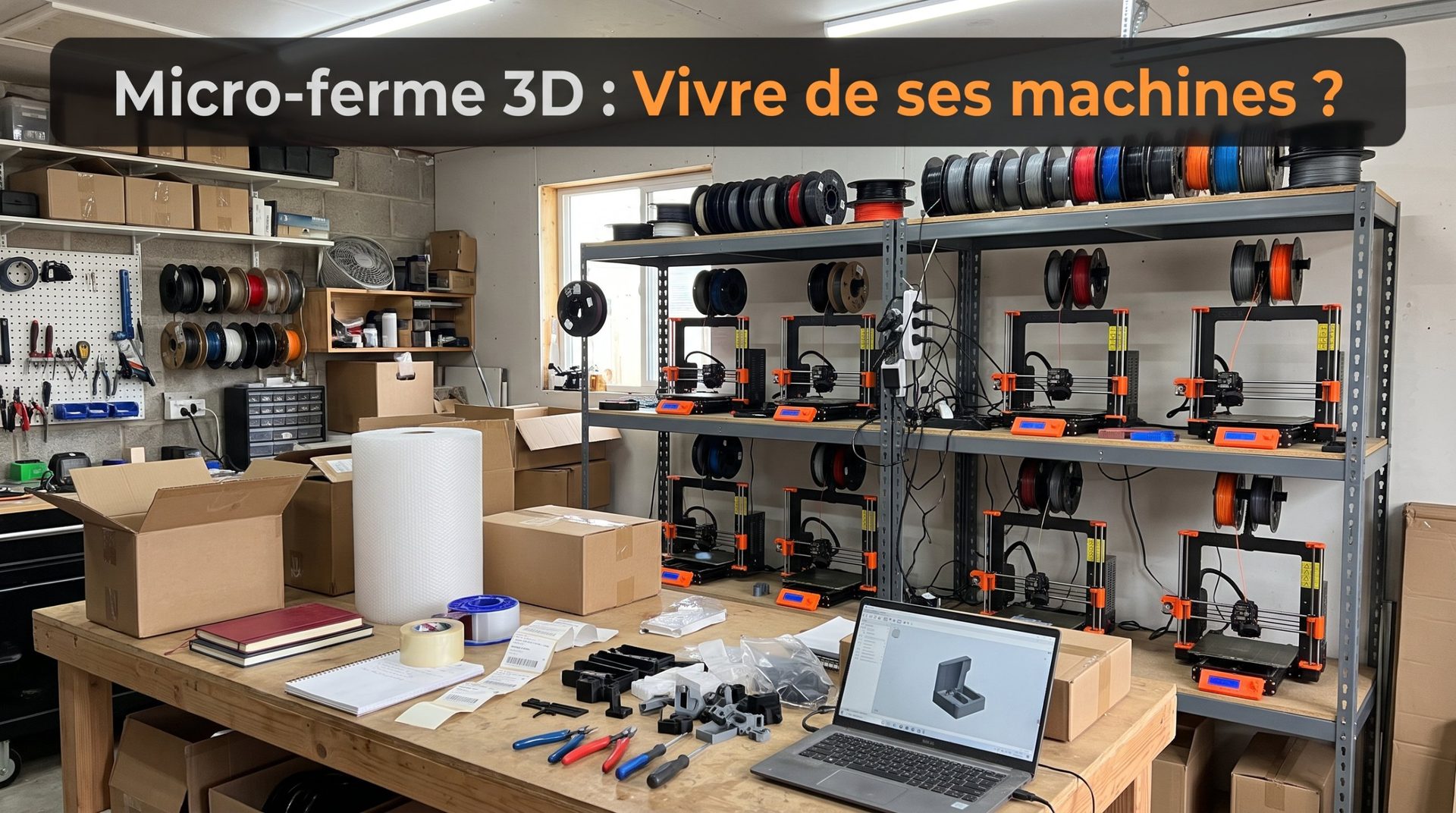
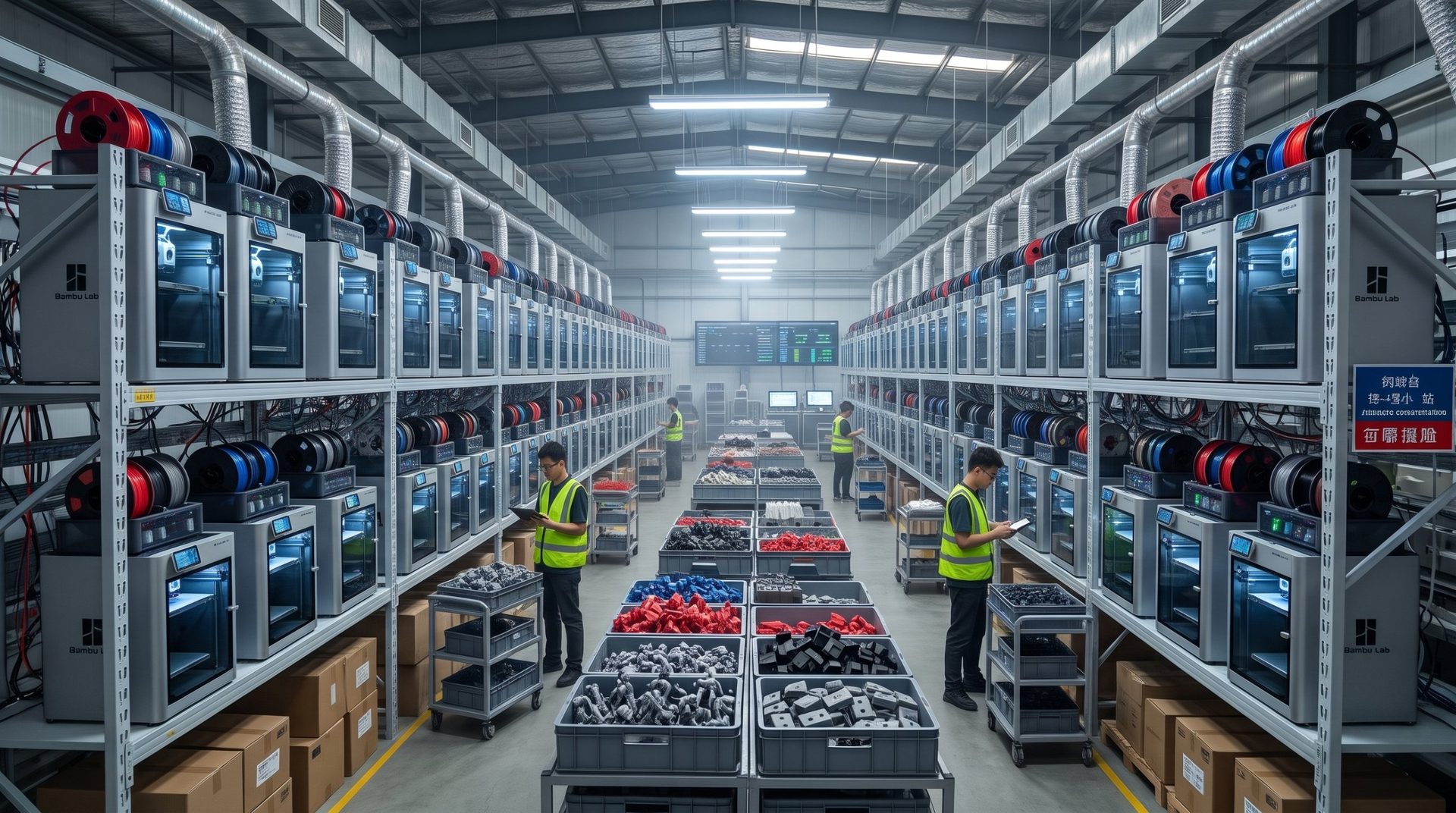
In the world of additive manufacturing, the term "3D printing farm" is becoming increasingly common. Far from the image of a farm with agricultural equipment, a 3D printing farm is an organized collection of multiple 3D printers, often networked, working simultaneously and continuously. This concept represents the missing link between printing a single object as a hobbyist and industrial mass production.

Why Build a 3D Printing Farm?
The main objective of a printer farm is to increase productivity and production capacity. It addresses several key needs:
- Series production: To manufacture hundreds or even thousands of identical parts faster and more economically than printing on a single machine.
- On-demand production: It enables custom manufacturing services. Companies can fulfill diverse orders without investing in expensive industrial machinery.
- Rapid prototyping: In design and engineering, a printer farm allows simultaneous testing of multiple prototype versions, dramatically accelerating the development cycle.
Key Components of a Printing Farm
An efficient farm is more than just a collection of printers. It relies on organizational and technological elements that ensure smooth operation.
- Printers: They can be identical models to simplify maintenance, or a mix of different machines (FDM, resin, large-format) for greater versatility.
- Management Software: This is the farm's backbone. Software like OctoFarm, built on OctoPrint, lets you control, monitor, and manage all printers from a single dashboard. This includes launching prints, tracking progress, and detecting errors.
- Automation: The most advanced farms integrate automation solutions for repetitive tasks. This ranges from automatic bed leveling to part ejection systems (like OTTOeject) for uninterrupted print cycles.
- Environment: A well-ventilated space with controlled temperature is essential to maintain consistent print quality and protect operators from particulate emissions and VOCs.
Advantages and Challenges of Series Production
Advantages:
- Cost-effectiveness: Initial investment is often lower than a single high-end industrial machine.
- Scalability: It's easy to add new machines as demand grows.
- Redundancy: If one printer fails, the rest of the farm can keep running, minimizing production downtime.
- Versatility: The ability to use different machines for different materials and part sizes.
Challenges:
- Management complexity: Operating and maintaining multiple machines requires rigorous organization and significant time investment.
- Maintenance: Cleaning, calibration, and repairs are recurring tasks that multiply with the number of printers.
- Reliability: A farm of 50 printers statistically has a higher failure rate than a single machine, so good management systems are essential to handle these issues.
In conclusion, the 3D printing farm is an agile and powerful solution that democratizes production. It enables individuals and small businesses to compete with industrial players, transforming 3D printing from a simple hobby into a real manufacturing business.