Stereolithography (SLA): Pioneer and Precision in 3D Printing

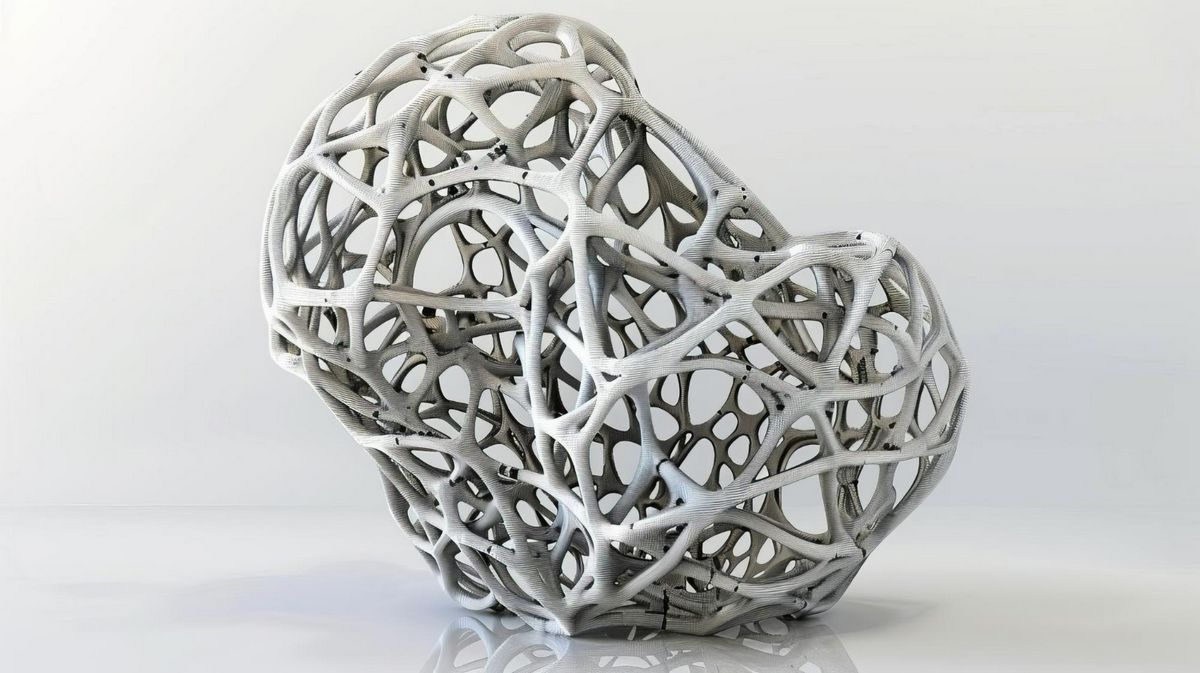
Stereolithography (SLA) is one of the oldest and most established 3D printing technologies. Patented in the 1980s, it is recognized for its ability to produce parts with exceptional precision and unmatched surface quality, making it essential in sectors like dentistry, jewelry, and precision engineering.

What is Stereolithography (SLA)?
Stereolithography is a 3D printing technology that uses the process of photopolymerization. It consists of selectively solidifying layers of liquid resin that is sensitive to light (photopolymer) using an ultraviolet (UV) light source, typically a laser or projector (for DLP technology, which is a variant).
The Key Principle
The heart of the process lies in the transition from liquid to solid state: when liquid resin is exposed to UV light at a specific wavelength, it hardens (polymerizes) instantly.
⚙️ How Does the SLA Process Work?
The process typically unfolds in five key steps:
1. Model Preparation
-
The 3D model is first digitally sliced into thin layers (slicing) by dedicated software.
-
Support structures are added to hold the overhanging parts of the piece.
2. The Resin Bath
-
The build platform, initially placed at the top, descends into the resin tank, leaving a thin layer of resin on its surface.
3. Exposure and Polymerization
-
A UV laser scans the pattern of the first layer onto the resin.
-
The resin exposed to the laser hardens, adhering to the platform or previous layer.
4. Layer-by-Layer Construction
-
The platform rises slightly, allowing a new layer of liquid resin to cover the already-solidified part.
-
The process repeats until the complete piece is formed.
5. Post-Processing (Curing)
-
Once printing is complete, the part is removed from the tank, cleaned in a solvent bath to remove excess liquid resin, then placed in a UV chamber (post-curing) for complete final polymerization, thus increasing its mechanical strength.
✅ Advantages and Disadvantages
Advantages
-
High Precision and Detail: SLA achieves very fine resolutions (down to 25 microns), ideal for complex parts and small elements.
-
Exceptional Surface Finish: SLA parts have the smoothest and most aesthetic surface of all 3D printing technologies.
-
Production Speed (DLP): Machines using DLP technology (projecting an entire image) can print full layers much faster than a point laser.
-
Wide Range of Materials: There is a large variety of resins (standard, flexible, rigid, heat-resistant, dental, etc.).
Disadvantages
-
Limited Mechanical Properties: SLA parts are often more fragile and brittle than those produced by FDM (filament deposition) or SLS (selective laser sintering).
-
Resin Cost: Photopolymers are generally more expensive than FDM filaments.
-
Mandatory Post-Processing: Washing and post-curing are necessary steps that can be lengthy and involve chemicals.
-
UV Sensitivity: Parts can degrade or continue to harden if exposed to sunlight over a long period.
Major SLA Applications
Thanks to its precision, Stereolithography is favored in fields requiring very tight tolerances and high detail fidelity:
-
Aesthetic Prototyping: Creation of high-end visual and marketing models.
-
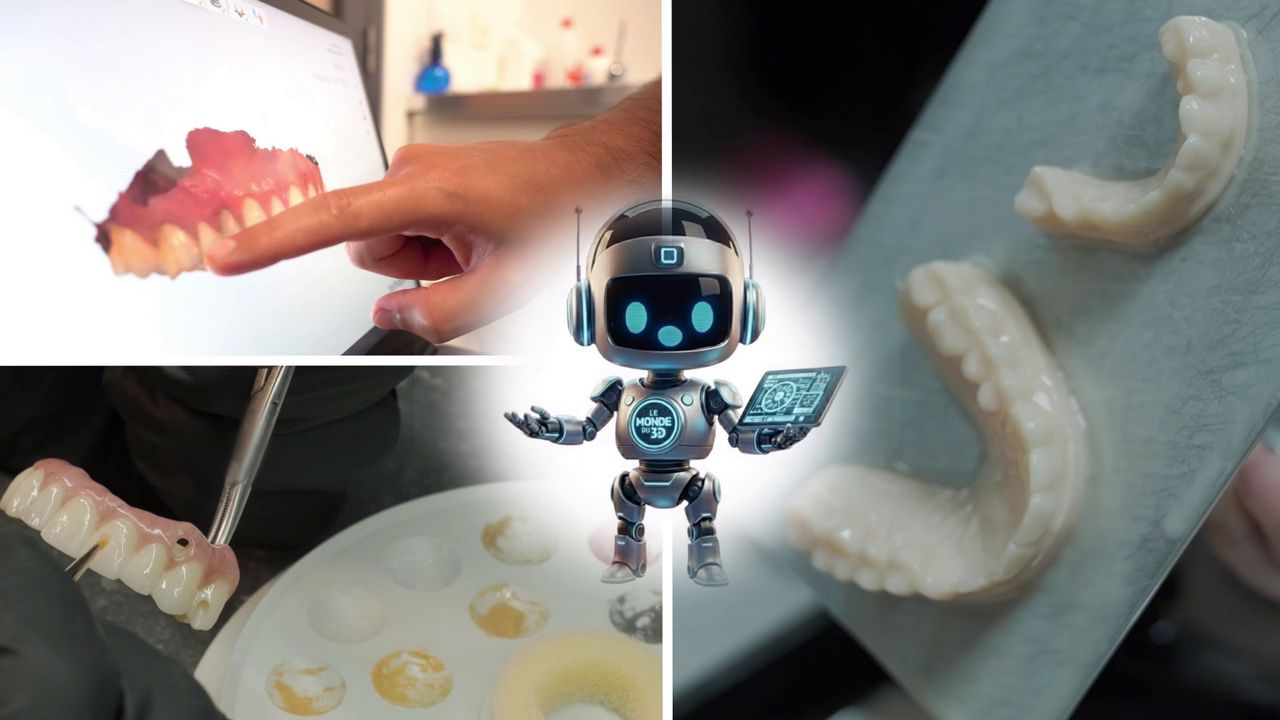
Dentistry: Surgical guides, aligner models, trays, and crowns.
-
Jewelry: Manufacturing master models (mockups) for lost-wax casting (castable resins).
-
Hearing Aids: Production of personalized hearing aid shells.
-
Microfluidics: Design of channels and complex, precise internal structures.
Stereolithography remains a pillar of additive manufacturing for all projects where surface finish and precision are the absolute criteria.