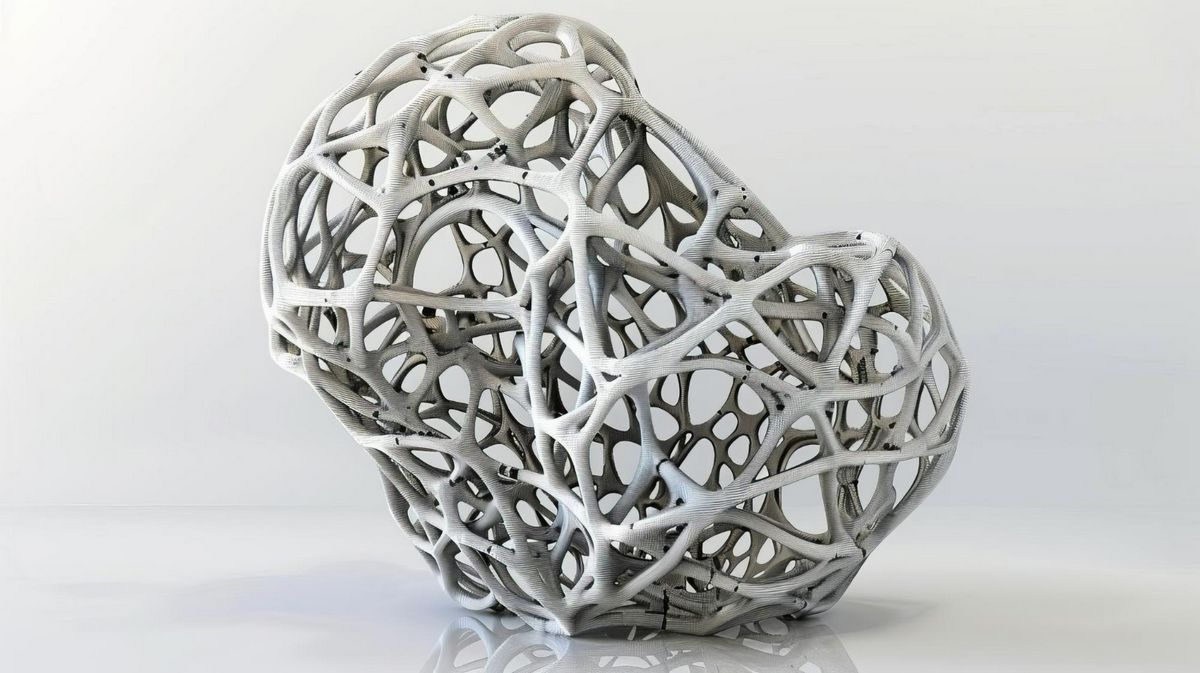
Resin 3D Printing: When Precision and Detail Become Accessible

Resin 3D printing, a generic term encompassing several technologies such as Stereolithography (SLA), Digital Light Processing (DLP), and LCD printers (or MSLA), has revolutionized additive manufacturing by offering unparalleled detail levels and surface quality compared to FDM printing (filament deposition). Using a liquid photosensitive resin hardened by UV light, this method has become the preferred choice for applications requiring high precision and flawless aesthetic finishing.

How Does It Work? The Main Technologies
The fundamental principle of resin 3D printing is photopolymerization: ultraviolet (UV) light interacts with liquid resin to selectively solidify it, layer by layer. The differences lie in the light source and how it is projected:
SLA (Stereolithography): The Pioneer
-
- Principle: A UV laser sweeps across the surface of a vat of liquid resin, tracing the shape of each layer. The laser hardens the resin precisely where it passes.
- Characteristics: Great precision, excellent surface quality. Can be slower since the laser must trace each point of the layer.
DLP (Digital Light Processing): Speed Through Projection
-
- Principle: A digital projector (DLP) projects the entire image of a layer all at once onto the resin. The entire layer hardens simultaneously.
- Characteristics: Very fast since the entire layer is exposed at once, regardless of how many objects are on the build plate. Resolution depends on the projector and print size.
LCD / MSLA (Masked Stereolithography): Democratized Accessibility
-
- Principle: Similar to DLP, but uses an LCD screen as a mask that lets UV light from a light source (often LEDs) pass through to the resin vat. The screen pixels act like micro-shutters.
- Characteristics: The most affordable and popular technology for desktop printers. Resolution is fixed and determined by the size and resolution of the LCD screen.
In all cases, once the layer hardens, the build platform lifts slightly (or descends, depending on the machine), and a new layer of resin is introduced, allowing the process to repeat until the complete object is formed.
The Major Advantages of Resin 3D Printing
Resin printing stands out for key advantages that make it essential for certain applications:
- Unmatched Detail and Precision: The tiny size of the laser point or projected pixel allows reproduction of extremely fine details and complex geometries with great fidelity.
- Smooth Surface: Objects printed in resin have incredibly smooth surfaces without the characteristic layer lines of FDM, significantly reducing the need for post-processing for aesthetics.
- Speed (for DLP/LCD): The ability to polymerize an entire layer at once (for DLP and LCD) makes these technologies very fast for printing multiple small parts simultaneously.
- Variety of Specialized Resins: There is a vast range of resins with diverse properties: rigid, flexible, heat-resistant, transparent, biocompatible (for medical/dental), castable (for jewelry), water-washable, and more.
Challenges and Considerations
Despite its strengths, resin 3D printing presents aspects to consider:
- Material Cost: Resin is generally more expensive per liter than plastic filament.
- Post-Processing: Resin-printed parts require mandatory post-processing:
- Cleaning: Remove excess liquid resin (often with isopropyl alcohol).
- UV Post-Curing: Expose the part to additional UV light to finalize polymerization and achieve optimal mechanical properties.
- Support Removal: Supports are necessary for overhangs and must be removed after printing.
- Safety and Handling: Liquid resin is a chemical substance that can irritate skin and respiratory passages. Good ventilation, gloves, and safety glasses are essential.
- Brittleness: Some standard resins can be more brittle than FDM thermoplastics.
- Build Volume: Desktop resin printers often have a smaller build volume than their FDM counterparts.
Key Applications of Resin 3D Printing
Thanks to its precision and finishing, resin 3D printing has become indispensable in many fields:
- Miniatures and Figurines: For tabletop games, models, scale models, where every detail matters.
- Jewelry: Creating master models for lost-wax casting.
- Dentistry: Dental models, surgical guides, temporary crowns, aligners.
- Medical: Medical device prototyping, anatomical models for surgical planning.
- High-Fidelity Prototyping: For product designers who need prototypes visually identical to the final product.
- Modeling and Art: For complex sculptures and detailed artworks.
Resin 3D printing is a powerful technology that continues to evolve, making high precision and detail accessible to an increasingly broad audience. If your projects demand exceptional surface quality and great fidelity to details, resin is undoubtedly the choice to prioritize.