The Speed Race in 3D Printing: The Era of Fast Prints

3D printing, once perceived as a slow and tedious process, is undergoing a major transformation. Print speed has become one of the most sought-after criteria, revolutionizing not only rapid prototyping but also small-series production. Gone are the days of waiting overnight for a simple part; today, the latest machines are pushing the limits to deliver objects in record time.
Why Has Speed Become Critical?

The acceleration of 3D printing responds to several fundamental needs:
- Increased Productivity: For businesses, time is money. Faster printing means more parts produced in the same timeframe, improving profitability.
- Iterative Prototyping: Designers and engineers can test and validate design iterations much faster, reducing development cycles.
- Responsiveness: The ability to produce parts on demand in hours rather than days or weeks is a major competitive advantage.
- User Comfort: For hobbyists, waiting less time to see the results of their work makes the experience much more enjoyable and encourages experimentation.
The Pillars of High-Speed 3D Printing
Achieving high speeds without sacrificing quality is a complex challenge that relies on several simultaneous innovations:
- Advanced Motion Kinematics (CoreXY and Delta):
- CoreXY: CoreXY printers (like Bambu Lab X1/P1, Creality K1, or Voron projects) keep motors fixed to the frame, reducing print head inertia. Movement is smoother and allows for lightning-fast accelerations and decelerations.
- Delta: Delta printers (FLSUN Super Racer, V400) also excel in speed thanks to an extremely lightweight print head and coordinated movements on three arms, ideal for tall objects.
- High-Flow Extruders (High-Flow Hotends):
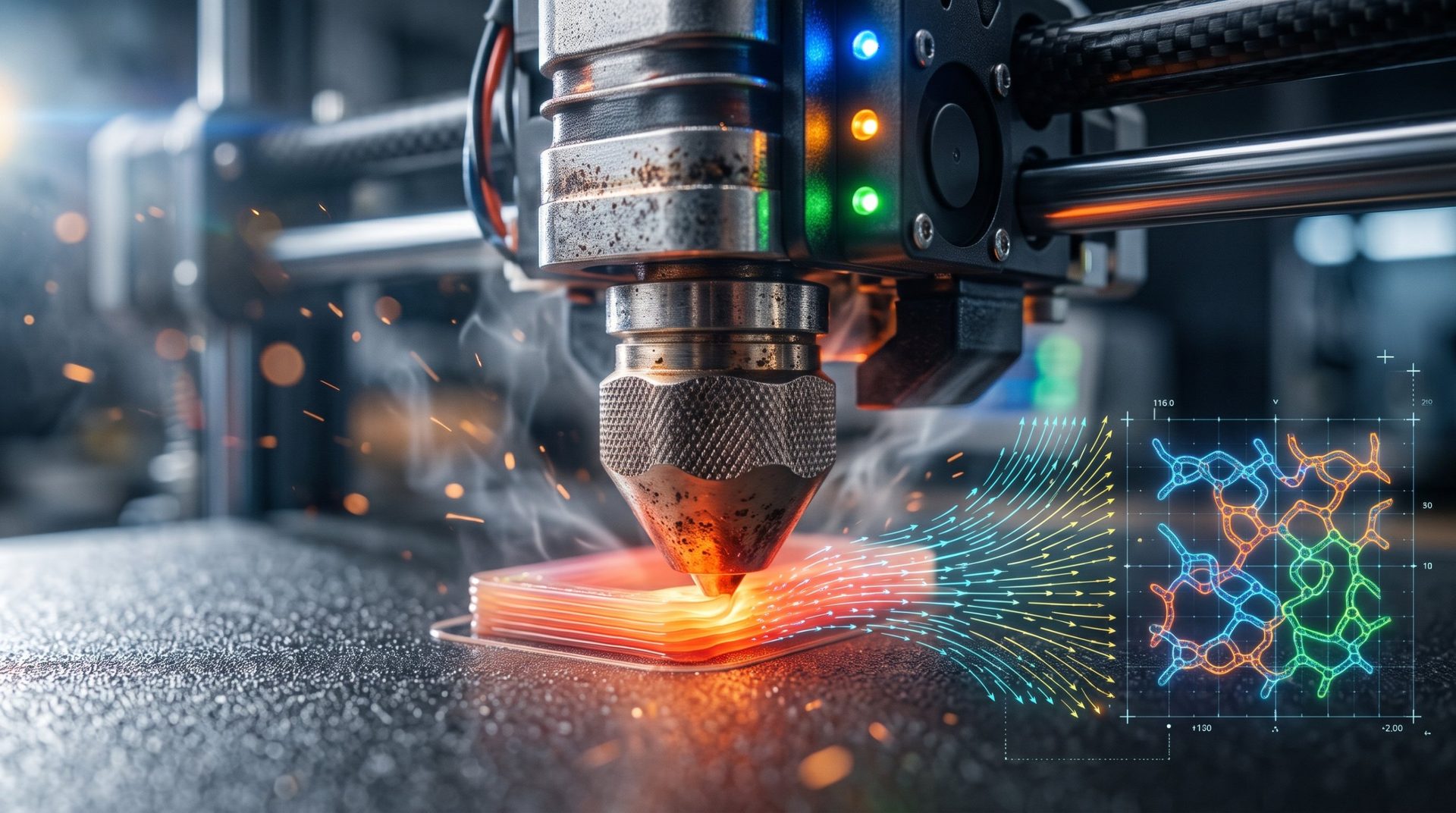
- To print fast, you need to melt filament fast. High-speed extruders are equipped with more powerful heaters and longer melt zones or large-orifice nozzles, allowing for much higher filament flow without under-extrusion.
- Optimized Materials and Filaments:
- Some filaments are formulated to perform better at high speeds, with melting and cooling properties adapted for this. High-quality filaments are essential to avoid jams or layer delamination.
- Motor Control and Powerful Electronics:
- 32-bit motherboards and advanced motor drivers (like TMC2209 or force sensors) have become standard. They enable more precise movement control, better acceleration management, and noise reduction.
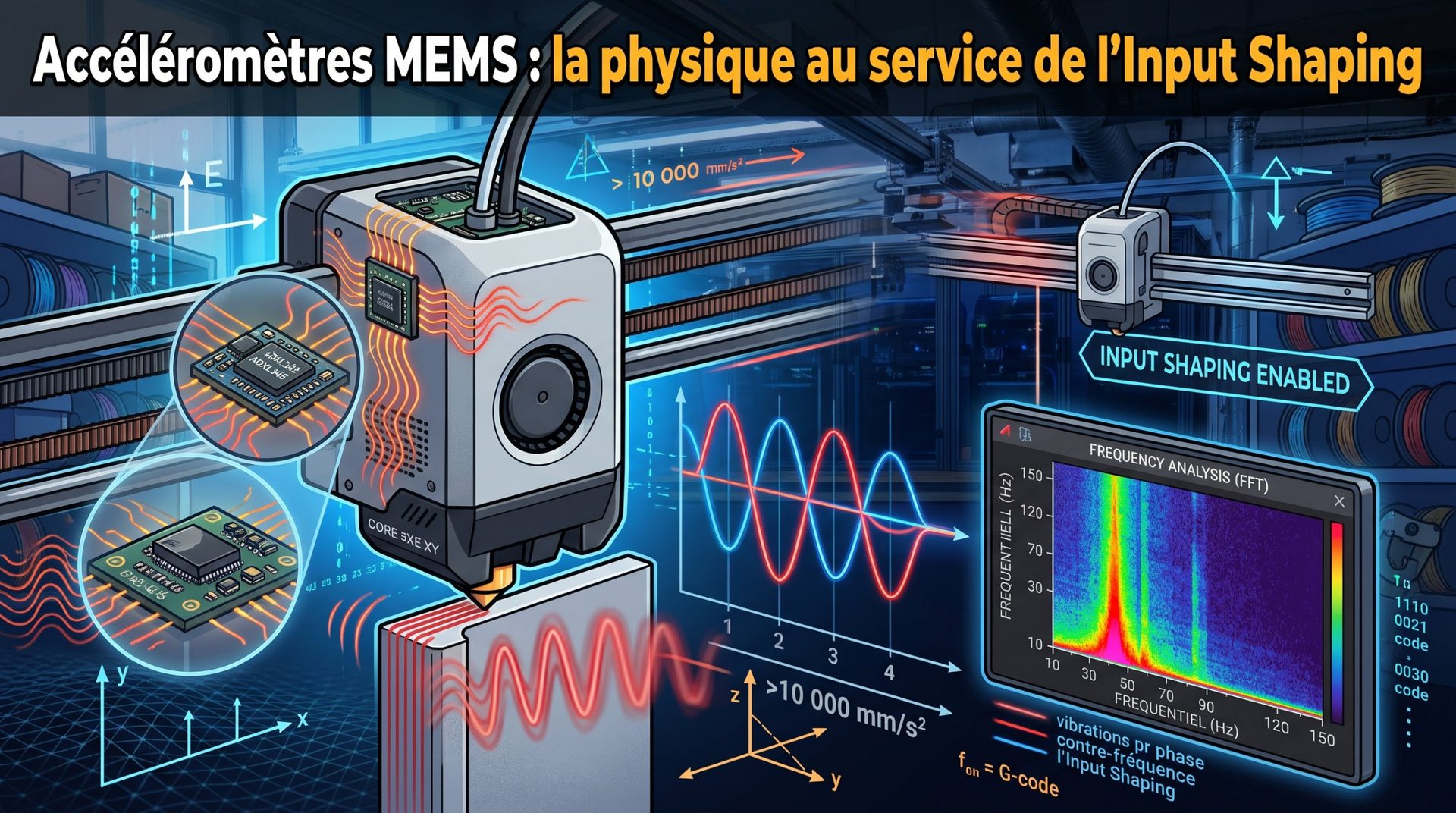
- Vibration Compensation (Input Shaping/Resonance Compensation):
- This is a major breakthrough, particularly popularized by the Klipper firmware (often used on Bambu Lab, Prusa XL, and Voron). This technology analyzes and compensates for machine vibrations and resonances at high speed, eliminating "ghosting" and "ringing" artifacts on prints.
- Increased Cooling Airflow:
- At higher speeds, each layer must cool faster to prevent warping. Fast printers integrate much more powerful part cooling fans.
The Impact on the Market
The arrival of players like Bambu Lab has disrupted the market by offering "ready-to-use" printers reaching speeds once reserved for industrial machines or complex DIY projects. This pushed established brands like Creality (with its K1 series) and Prusa (with the MK4 and especially the XL) to accelerate their own development to stay competitive.
Today, it's common to see print speeds of 200 mm/s to 500 mm/s for movements, and even beyond for non-printing moves. The FLSUN S1 Pro boasts speeds reaching up to 1200 mm/s, pushing the boundaries even further.
The speed race in 3D printing isn't just about impressive numbers. It's a quest to make additive manufacturing more efficient, more accessible, and more productive. By combining intelligent mechanical architectures, high-performance extruders, cutting-edge electronics, and smart software, today's 3D printers transform patience into productivity, opening new perspectives for professionals and makers alike. The future of 3D printing is decidedly fast.