Bambu Lab: The Rising Star Redefining 3D Printing

Updated November 9, 2026: X1 series discontinued, P2S, X2D, and H3C now available.
In the ever-evolving landscape of 3D printing, few brands have experienced as meteoric a rise and made as significant an impact as Bambu Lab. Emerging on the scene with a promise of speed, ease of use, and advanced features, this company quickly captured the imagination of enthusiasts and professionals alike, shaking up the established giants of the industry and redefining expectations for desktop 3D printers.
Strategic Origins and Meteoric Rise
Founded by a team of former DJI engineers (the world leader in drones), Bambu Lab emerged with a clear philosophy: apply precision engineering principles, user-centered design, and mass production practices to 3D printing. Their Kickstarter campaign for the X1 series was a resounding success, raising millions of dollars and announcing the arrival of a major player.
What set Bambu Lab apart from the beginning was its ability to deliver features and performance that were previously the exclusive domain of industrial printers or much more expensive niche machines.
Key Innovations and Bambu Lab's Philosophy
Bambu Lab's strength lies in several innovations and a holistic approach to user experience:
- Unmatched Speed and Acceleration: This is arguably the first shock for users. Bambu Lab printers are designed to print at impressive speeds without sacrificing quality, thanks to robust CoreXY motion systems, active vibration compensation, and advanced control algorithms.
- Out-of-the-Box Ease of Use: Unlike many printers that require complex assembly and calibration, Bambu Lab machines are often ready to use in minutes. Auto-bed leveling, vibration compensation, and automatic flow calibration are standard features that greatly simplify the experience.
- Automatic Multi-Material System (AMS): This is Bambu Lab's signature. The AMS allows printing with up to four (or more, with multiple AMS units) filaments of different colors or materials in the same print. This opens enormous creative possibilities for complex multicolor objects, soluble supports, or using materials with varying properties in a single part.
- Smart Connectivity and Complete Ecosystem: Bambu Lab printers are equipped with cameras and LiDAR sensors (on some models like the X1C) for precise calibration and remote monitoring. The ecosystem includes intuitive slicing software (Bambu Studio) and a mobile app, delivering a connected and seamless experience.
- Build Quality and Reliability: Drawing on their founders' experience, Bambu Lab printers are renowned for their robustness and component quality, translating to highly reliable prints.
Bambu Lab's Flagship 3D Printer Models

- Bambu Lab X1 Carbon (X1C): The brand's historic flagship. Production ended March 31, 2026 (spare parts and support guaranteed until March 2031); the X2D, with dual nozzles, has taken over the X line. A fully enclosed printer with an intuitive touchscreen, LiDAR sensor for first layer detection and automatic calibration, and advanced ventilation. Ideal for professionals, engineers, and enthusiasts looking to print technical materials (ABS, ASA, PC, Nylon, composites) with high reliability.
- Bambu Lab P1P / P1S: Designed as more affordable versions of the X1C, the P1P (open frame) and P1S (enclosed) retain the speed and reliability that made Bambu Lab's reputation. Perfect for makers and hobbyists who value performance and ease of use for materials like PLA, PETG, and ABS (P1S). The P1P is no longer in production, and the P2S, launched in late 2025, took over: a completely redesigned P1 series version (600 mm/s, 20,000 mm/s² acceleration).
- Bambu Lab A1 (Mini / A1 Combo): The A1 line represents Bambu Lab's most user-friendly and quiet approach. The A1 Mini is compact and particularly suited for beginners or tight spaces, while still offering multicolor capability with the mini AMS. The larger A1 follows the same philosophy, aiming to democratize multicolor 3D printing with an even more simplified user experience and reduced noise levels.
- Bambu Lab H2D (2025): The H2D is not just another 3D printer: large format, dual nozzles, and up to 1,000 mm/s. It also offers optional laser engraving and cutting (10 W and 40 W 455 nm lasers). A printer boosted and optimized by AI (4 vision cameras, 36 sensors, 2 servomotors unified by a sophisticated algorithm for greater simplicity).
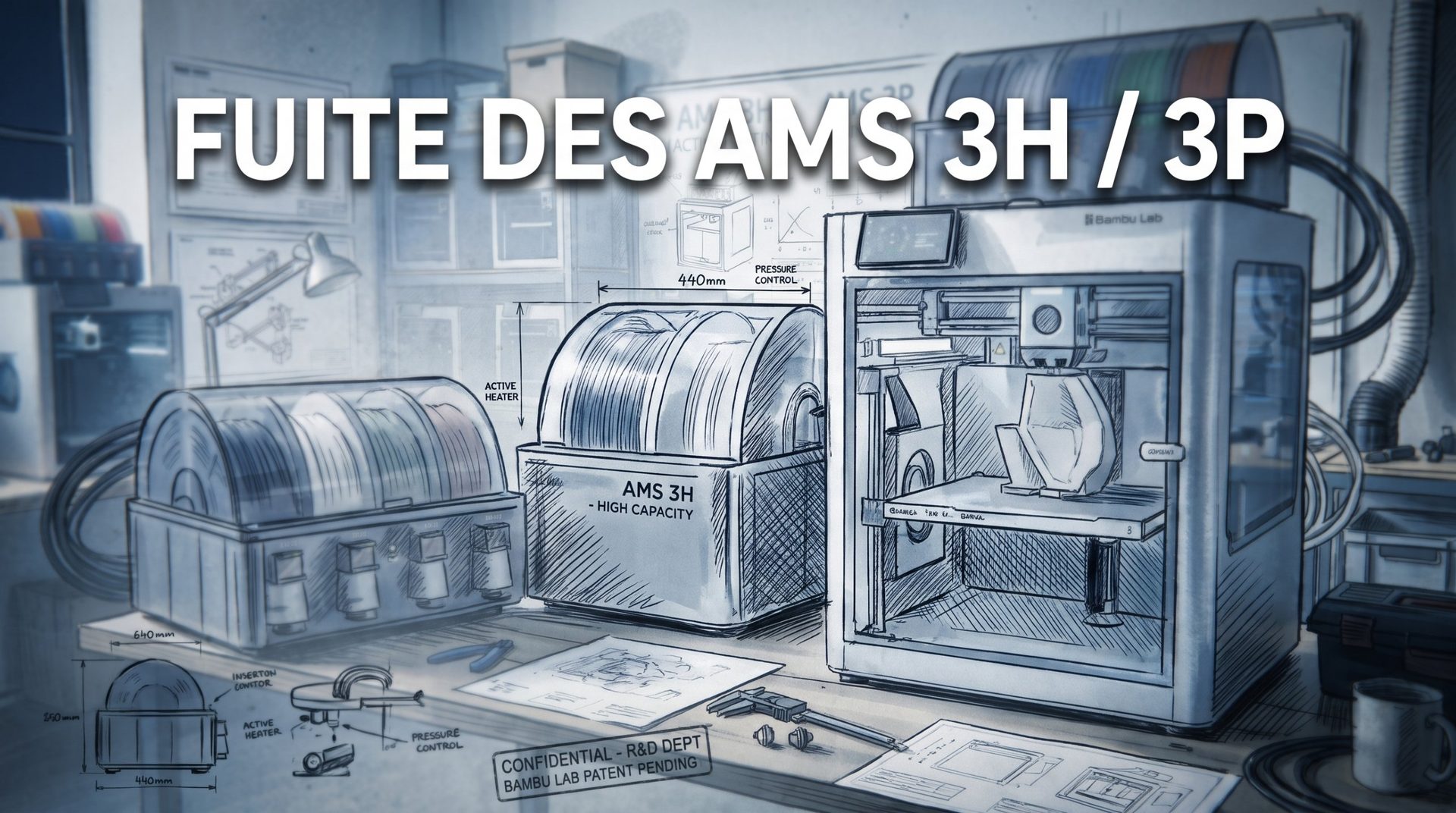
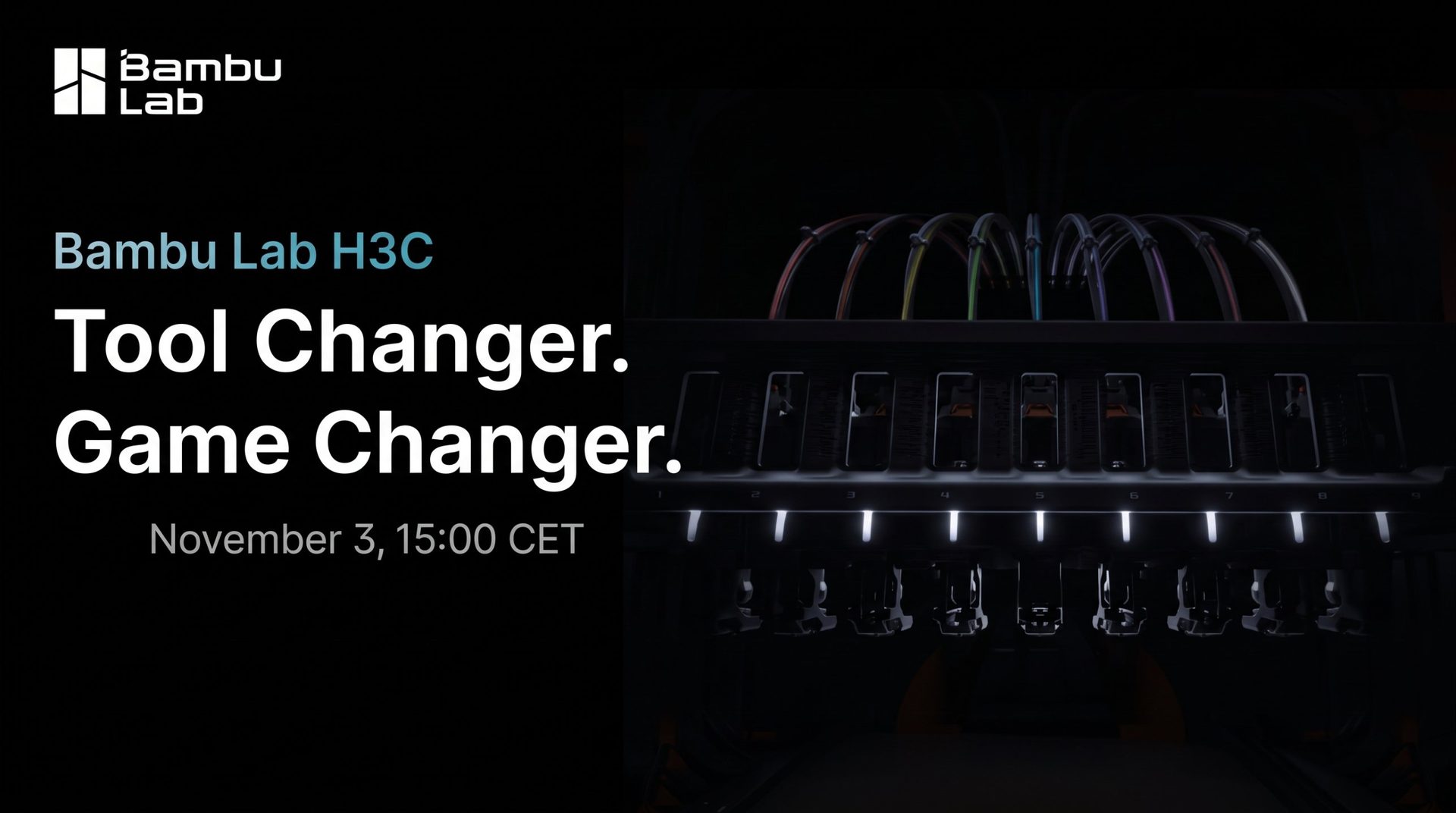
- Bambu Lab H3C (November 2026): Bambu Lab's first printer with a tool changer, featuring 9 independent heads, a new 9-spool AMS 3H, and a heated chamber at 65 °C, starting at €2,499 in a bundle. No more long purges between colors: all the details in our article on the official Bambu Lab H3C.
Impact on the 3D Printing Market
Bambu Lab's arrival sent shockwaves through the entire industry:
- Accelerated Innovation: Competitors were forced to respond, improving their own offerings in terms of speed, features, and pricing to remain competitive.
- Democratization of Advanced Features: Technologies like multicolor printing, auto-calibration, and high-speed printing became more accessible to a broader audience.
- New User Expectations: The standards for "out-of-the-box" 3D printing have been raised, pushing the industry toward more reliable and easier-to-use machines.
Of course, like any rapidly growing company, Bambu Lab has faced challenges, particularly regarding initial customer support and criticism of its relatively closed ecosystem (cloud, more locked-down firmware since 2025). Nevertheless, their trajectory remains impressive. To weigh the brand's strengths and weaknesses, read our analysis on whether Bambu Lab is the undisputed leader.
Bambu Lab has undoubtedly left its mark on the 3D printing world. By focusing on performance, simplicity, and innovation (notably with the AMS), the brand has not only captured a large market share in record time but has also charted the course for a new generation of 3D printers that are more accessible, faster, and more powerful. The future of 3D printing will undoubtedly be shaped by this dynamic company's vision and continued innovations.