How to Recycle Your 3D Printing Waste

Recycling filament waste is an excellent way to make 3D printing more eco-friendly. Your waste—whether supports, skirts, or failed prints—is valuable raw material.
Here are the two main methods for effectively recycling your filament waste.

1. Solution 1: At-Home Recycling (DIY)
If you generate high volumes of waste and want to close the loop in-house, at-home recycling is the most direct option.
How does it work?
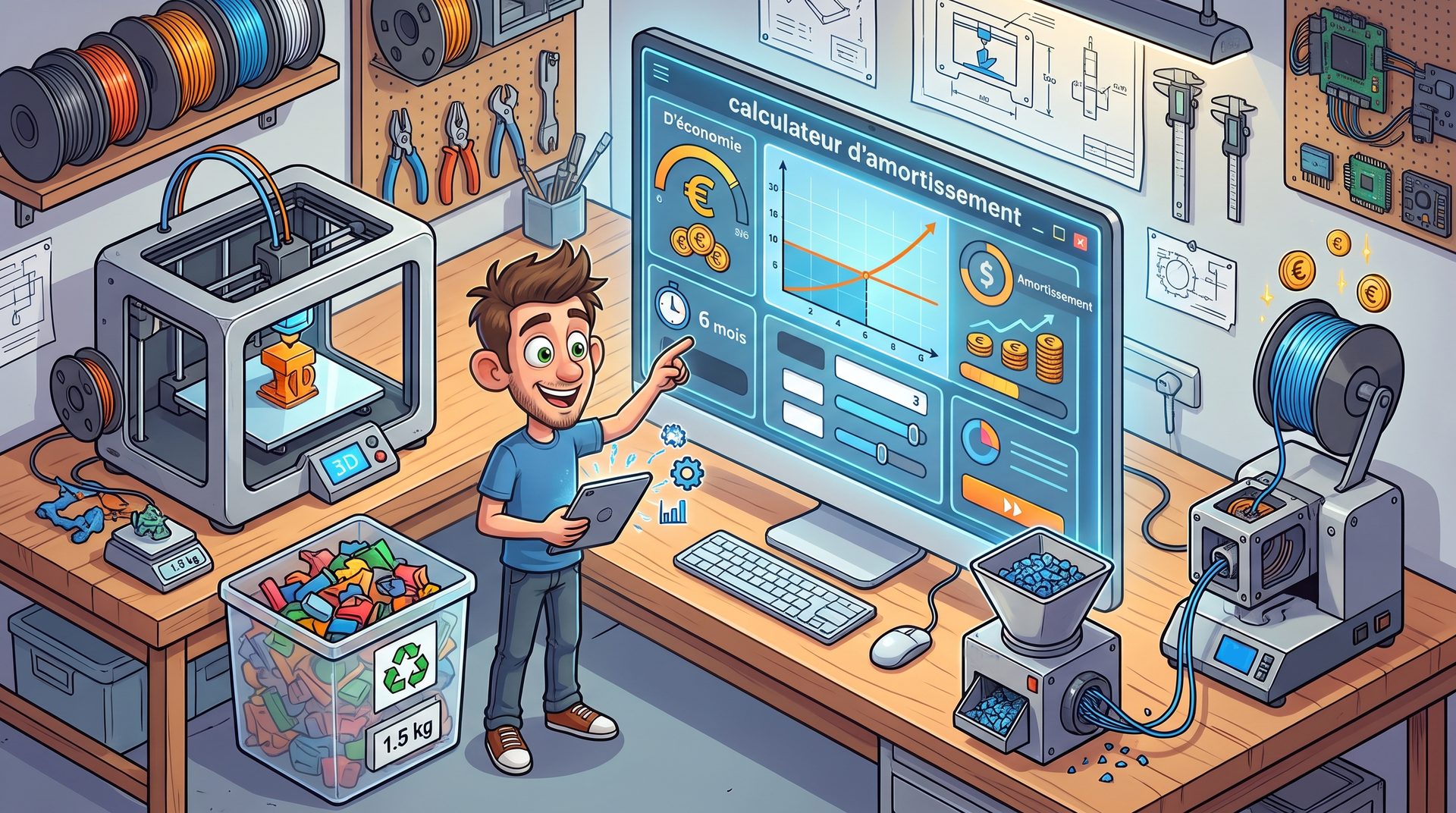
The process requires specialized equipment and unfolds in three steps:
- Shredding: You must reduce your parts and scraps into small pellets (typically or less). This step requires a shredder designed for plastic (often the most expensive part of the setup).
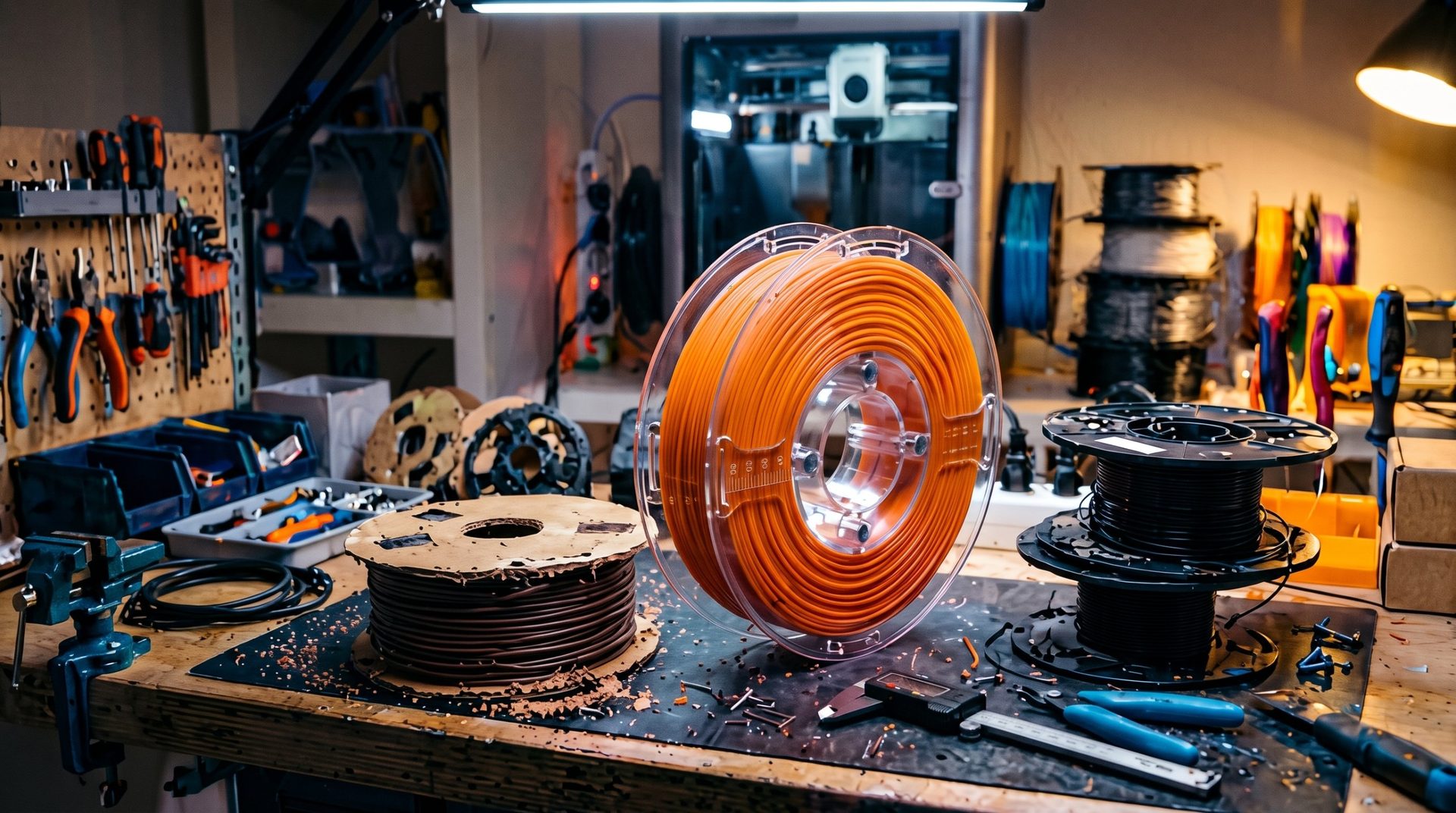
- Extruding: The pellets are fed into a filament extruder (also called a filamentizer). This machine melts the plastic, filters it, and pushes it through a nozzle to form new filament at your desired diameter ( or ).
- Winding: The new filament must be cooled immediately and wound uniformly onto a spool to prevent deformation or tangling.
Pros and Cons

2. Solution 2: External and Professional Initiatives
For the vast majority of makers who don't want to invest in an extruder, sending waste to partner organizations is the simplest and most reliable solution in terms of quality.
Specialized Collection Services
More and more companies (often filament manufacturers themselves) are launching buyback or recycling programs.
- How it works: You sort your waste (only PLA, or only PETG) and ship it to the company.
- In return: Some programs offer discounts on recycled filament purchases, or send you a spool of their recycled filament in exchange for a minimum quantity of sorted waste.
- Benefits: You don't need to invest in expensive machines, and the recycled filament you receive is manufactured to industrial quality standards (uniform diameter, impurity filtration).
Community Collection Points
- FabLabs and Makerspaces: Many community workshops, engineering schools, or FabLabs aggregate waste from their members or region. They may have access to semi-professional shredders or establish partnerships with local recyclers.
3. The Critical Step: Waste Preparation
Regardless of which option you choose, recycling quality depends entirely on your upstream sorting.
1. Sorting by Plastic Type
This is absolutely non-negotiable: you cannot mix different plastic types for recycling.
- Separate PLA, PETG, ABS, Nylon, etc.
- If you've used composite filaments (for example, wood-filled or carbon-fiber-filled PLA), group them together if the recycler accepts that material type. Mixing different plastics creates unusable material or very poor quality output.
2. Cleaning
- Remove everything that isn't plastic: Adhesive residue (glue stick or spray adhesive), paper labels, metal pieces (screws or nuts), or residue from other materials.
- Remove post-processed parts: Parts that have been painted, coated with epoxy resin, or treated with filler should not be recycled, as they contain chemical contaminants.
By ensuring your waste is properly sorted and clean, you significantly increase its recycling value and actively contribute to making additive manufacturing greener.