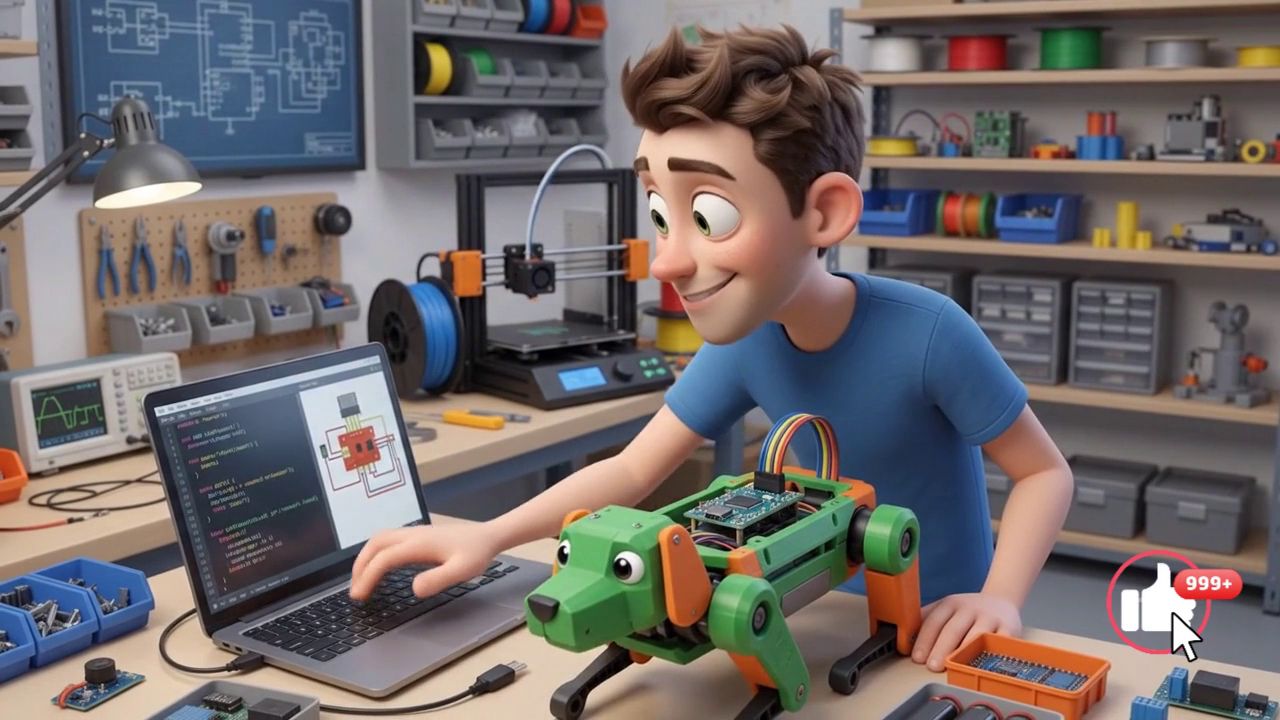
Robotics and 3D Printing

The dream of building your own robot, once reserved for engineers and major research laboratories, is now within reach for everyone, thanks to the convergence of robotics and 3D printing. This technology has democratized creation, transforming a complex project into an accessible, educational, and exciting adventure.

Why is 3D printing ideal for robotics?
3D printing is a powerful ally in robot fabrication. It eliminates the barriers of traditional manufacturing and offers unparalleled design freedom.
- Unlimited customization: You can design and manufacture every part of your robot custom-made for a perfect fit. Whether it's a unique chassis, specific sensor mounts, or science-fiction-inspired design, your imagination is the only limit.
- Speed and affordability: Prototyping is a key element of robotics. With a 3D printer, you can design a part, print it in a few hours, and test it immediately. It's a fast and inexpensive iteration process, far removed from the timelines and costs of industrial manufacturing.
- Complexity without effort: 3D printing lets you create complex geometries that would be impossible to achieve with other fabrication methods. For example, you can print cable guides inside the chassis itself or precise joints for articulated arms.
Steps to build your robot
1. Design: from virtual to physical
The first step is to bring your idea to life in 3D. Use modeling software like Tinkercad (for beginners) or Fusion (more advanced). Draw the chassis, motor and sensor mounts, and all the parts needed for your robot's structure.
2. Electronics: the brain and muscles
For your robot to come to life, you'll need electronic components. The heart of your machine will be a microcontroller like an Arduino board or a mini-computer like a Raspberry Pi. The muscles will be servo motors or DC motors for movement. Sensors (ultrasonic, infrared) will serve as its eyes.
3. Printing and assembly
Once your parts are modeled, it's time to print them. PLA is an excellent choice for structural parts because it's rigid and easy to print. For wheels or tracks, a flexible filament like TPU is ideal. Once printing is complete, simply assemble the printed parts with the electronics.
By combining 3D printing and robotics, you're not just building an object: you're building a learning tool to explore creativity, engineering, and code. That's the essence of the maker movement.