Can You 3D Print a Robot 🤖 at Home?

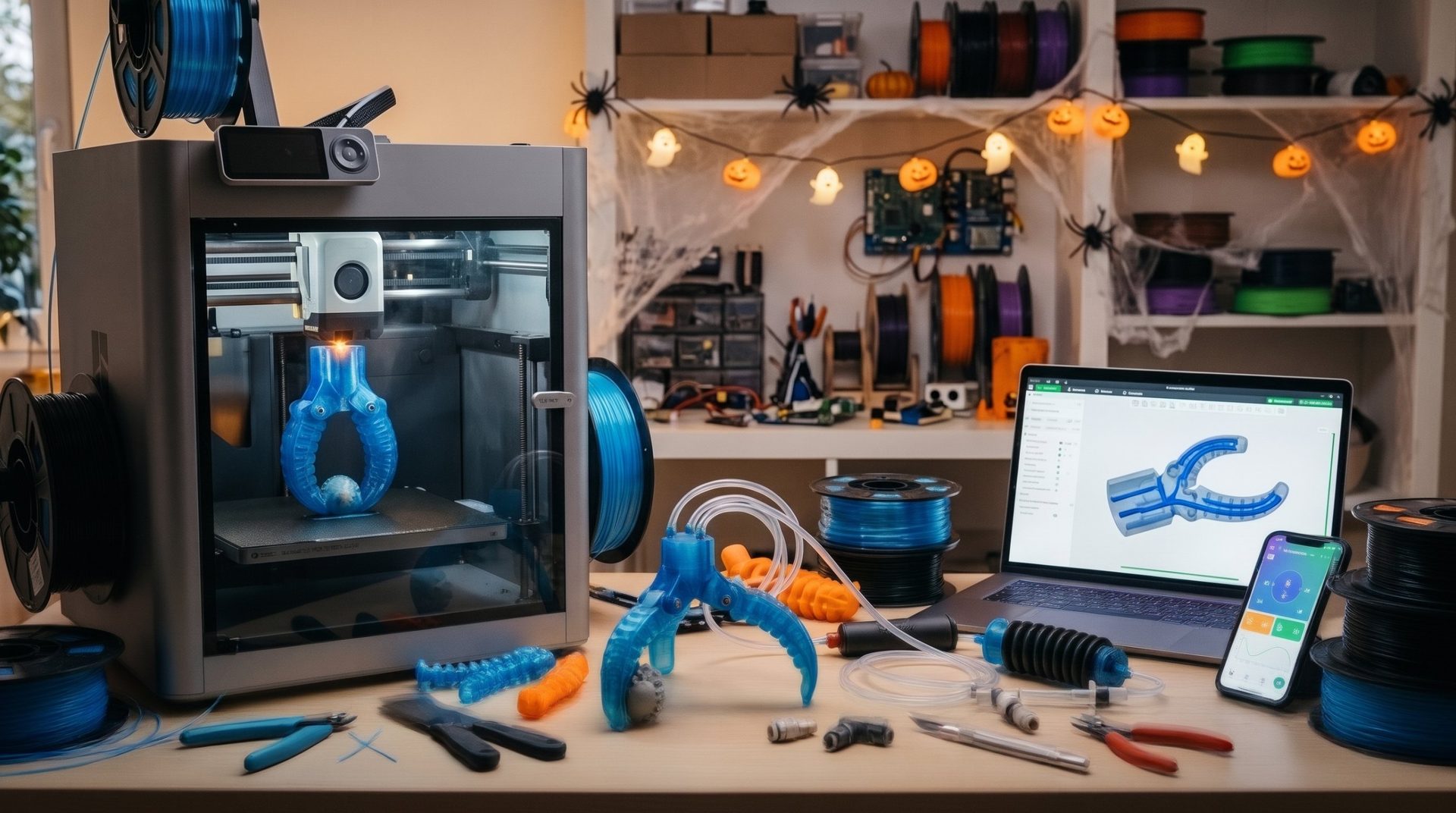
The answer is yes, but not entirely. With a home 3D printer, it's absolutely possible to print many mechanical robot parts: chassis, arms, gears, wheels, supports, housings, grippers… This lets you create custom, educational, or even functional robots.
However, a robot isn't made of printed parts alone:

✅ What You Can Print Yourself
With any FDM or resin 3D printer, you can make:
-
the robot structure (body, chassis, enclosures),
-
joints and hinges,
-
gears and wheels,
-
arms, grippers, or extensions,
-
design or protective parts.
This is the easiest and most affordable part.
❗ What You Can't Print
Some parts cannot be printed because they require electronics or specific materials:
-
motors (servo motors, stepper motors),
-
circuit boards (Arduino, Raspberry Pi, ESP32…),
-
batteries,
-
sensors (cameras, ultrasonic, infrared…),
-
cables and connectors,
-
metal fasteners,
-
high-precision electronic and mechanical components.
These elements must be purchased separately.
🔧 Assembling a 3D-Printed Robot at Home: How Does It Work?
Generally, building a DIY robot follows these steps:
-
Download or create STL files for the printed parts.
-
Print the parts on a home 3D printer.
-
Buy electronic components.
-
Assemble the mechanical parts and attach the motors.
-
Wire the circuit board and sensors.
-
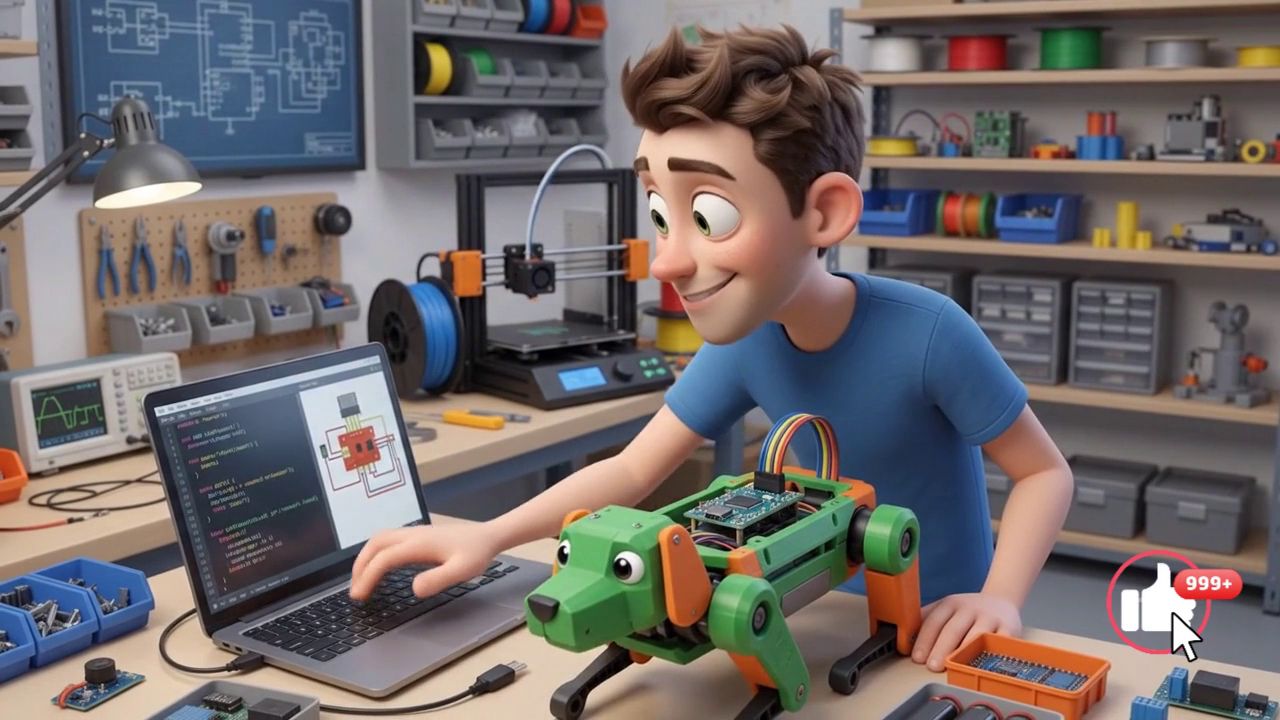
Program the robot.
It's an excellent project for learning mechanics, electronics, and programming.
🤖 Examples of Robots You Can Print at Home
-
Articulated robotic arm (Robot Arm type).
-
Line follower robot.
-
Simple quadruped robot.
-
Mobile robot remote-controlled or autonomous.
-
Partially printable drones (chassis).
-
Simplified humanoid robot (some open-source projects exist).
Free and popular projects like OpenRC, InMoov, or EEZYbotARM already let you print very advanced robots at home.
Yes, you can "3D print a robot" at home… but only its mechanical parts. To make it actually work, you'll need to add electronic components, motors, and program it.