Rapid Liquid Printing (RLP): The 3D Printing That Defies Gravity

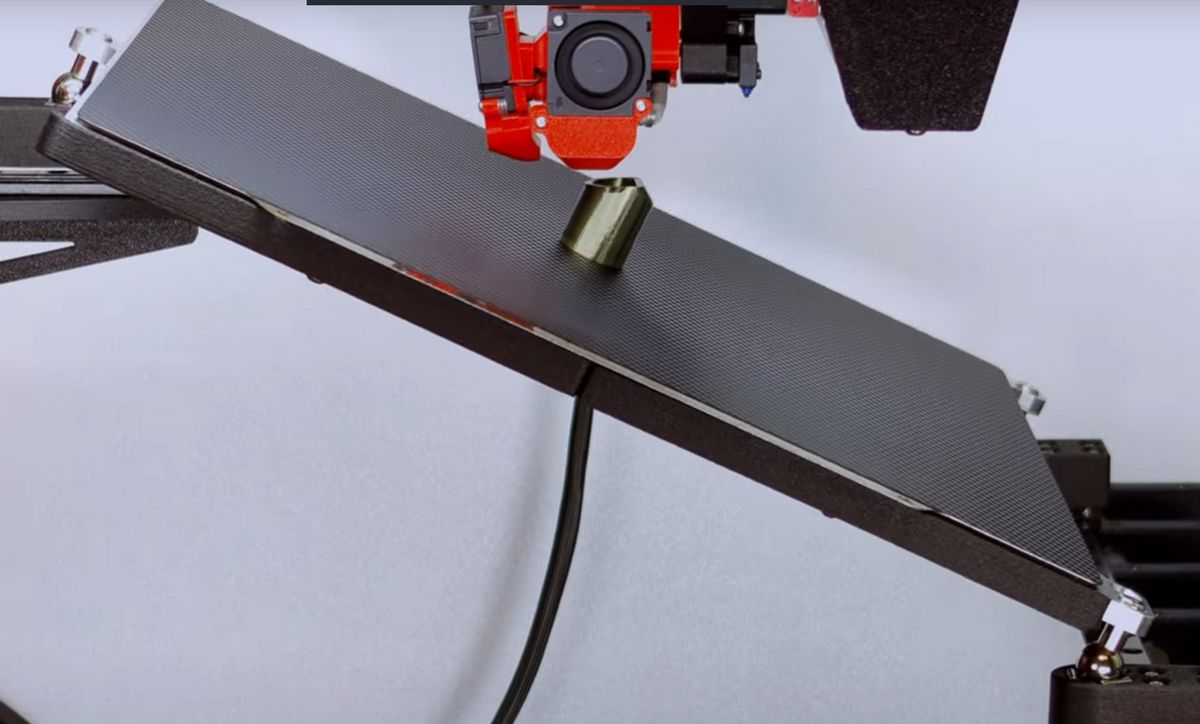
The Rapid Liquid Printing (RLP) technology, originally developed by the Self-Assembly Lab at MIT (Massachusetts Institute of Technology), represents a major breakthrough in 3D printing. Unlike traditional methods that print layer by layer in open air, RLP lets you draw objects freely within a liquid medium, eliminating gravity constraints and the need for support structures.
This method is especially promising for manufacturing flexible objects, large-scale parts, and high-quality industrial materials.

(Image and Video Source: www.rapidliquidprint.com)
The Revolutionary Principle: Printing in Gel
RLP works through a simple yet ingenious concept, often called Gravity Free Manufacturing:
- The Gel Bath: The printer uses a tank filled with granular gel or a transparent viscous solution. This gel serves as a spatial support matrix.
- Extrusion: A nozzle moves inside the gel and extrudes a curing liquid material (often two-part resin, silicone, or rubber).
- Suspension: Thanks to the gel's high viscosity, the extruded material stays in place stably. It doesn't sag or deform, enabling continuous three-dimensional building rather than rigid layer-by-layer construction (non-planar method).
- Curing: The material hardens through chemical reaction (curing) directly in the gel, without requiring UV light or external heat in most cases.
The Major Advantages of RLP
RLP addresses the three main limitations that have slowed 3D printing adoption in industrial production: speed, scale, and material choice.
A. Speed and Efficiency
- Drastically Faster Printing: Eliminating slow layering and removing support structures slashes print times. Complex objects that would take hours or days with traditional additive manufacturing can be produced in just minutes.
- Minimal Post-Processing: Once printed and cured, simply remove the object from the gel and rinse it with water to clean off residue. There's no sanding or complex support removal, dramatically reducing finishing work.
- Waste Reduction: The gel is 100% reusable, and the absence of supports minimizes raw material waste.
B. Design Freedom and Scale
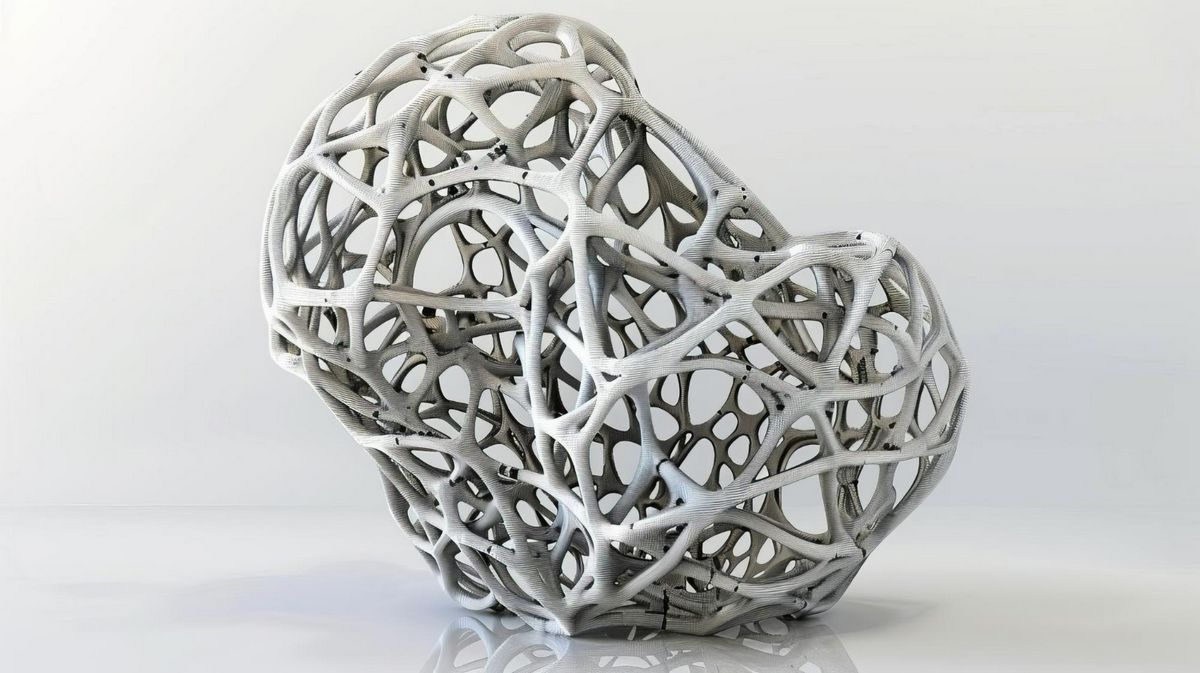
- Unprecedented Geometries: RLP lets you create organic shapes, complex lattice structures, internal cavities, and double-curved geometries that would be impossible with gravity-based 3D printing methods.
- Unlimited Scale: Build volume is only limited by the gel tank and robotic arm size. RLP has been used to print large-scale objects, such as hammock structures or complete furniture pieces.
C. High-Quality Industrial Materials
- Elastomers: RLP excels with industrial materials, especially soft and flexible elastomers like platinum-cure silicones, rubbers, and certain two-part foams or epoxies.
- Structural Quality: RLP parts are isotropic (their properties are uniform in all directions) and possess mechanical properties (like elongation and flex resistance) comparable to injection-molded parts.
Industrial Applications
RLP is transforming several industrial sectors that demand flexibility and durability:
- Automotive: Fast production of interior components (seats, seals, trim) and prototypes.
- Medical (MedTech): Rapid manufacturing of custom prosthetic liners, flexible medical devices, and orthoses.
- Fashion and Design: Creating complex, flexible fashion accessories (like bags or jewelry), enabling mass customization.
- Furniture: Manufacturing soft, durable, and bespoke furniture pieces, eliminating the need for expensive tooling.
Rapid Liquid Printing is a technology that, by freeing 3D printing from gravity's constraints, opens a new chapter for additive manufacturing, positioning it not just as a prototyping tool, but as a viable industrial production method for soft materials.