Metal 3D Printing: A Revolution in Industrial Manufacturing

Metal 3D printing, or additive metal manufacturing, is cutting-edge technology that transforms the way metal parts are designed and manufactured. Far from consumer plastic filaments, this branch of 3D printing makes it possible to create metal components with complex geometries, often impossible to achieve with traditional manufacturing methods like machining or casting. It's a revolution for advanced industries, ranging from aerospace to medical.

How Does Metal 3D Printing Work? The main technologies
There are several processes for 3D printing with metals, each with its own specifics:
Powder Bed Fusion:
-
- DMLS (Direct Metal Laser Sintering) / SLM (Selective Laser Melting): This is the most widespread method. A high-powered laser (for DMLS) or an electron beam (for EBM - Electron Beam Melting) scans and selectively fuses fine particles of metal powder layer by layer. The unfused powder remains in place, acting as support. The resulting parts are very dense and have excellent mechanical properties.
- Typical materials: Titanium alloys, aluminum, stainless steel, Inconel, cobalt-chrome, etc.
Binder Jetting:
-
- A print head deposits a liquid binder agent onto a bed of metal powder, bonding particles together layer by layer. Once printing is complete, the "green" part is often sintered in a very high-temperature furnace to consolidate the metal and remove the binder, then potentially infiltrated with another metal for densification.
- Typical materials: Stainless steel, bronze, and copper powders.
Bound Metal Extrusion / Metal FFF:
-
- Similar to plastic FDM, this method uses a filament made of a high concentration of metal powder bound by a polymer. The part is printed layer by layer, then undergoes debinding (to remove the polymer) and sintering (to densify the metal) in a furnace. This makes metal 3D printing more "accessible" on desktop machines.
- Typical materials: Stainless steel, Inconel, copper, titanium.
Directed Energy Deposition (DED):
-
- A metal wire or powder is melted as it is deposited by a concentrated energy source (laser, electron beam, or electric arc). This process is often mounted on a robotic arm and allows for repair of existing parts or fabrication of very large structures.
- Typical materials: Titanium alloys, nickel, stainless steel.

The Unmatched Advantages of Metal 3D Printing
Adopting metal 3D printing brings considerable benefits:
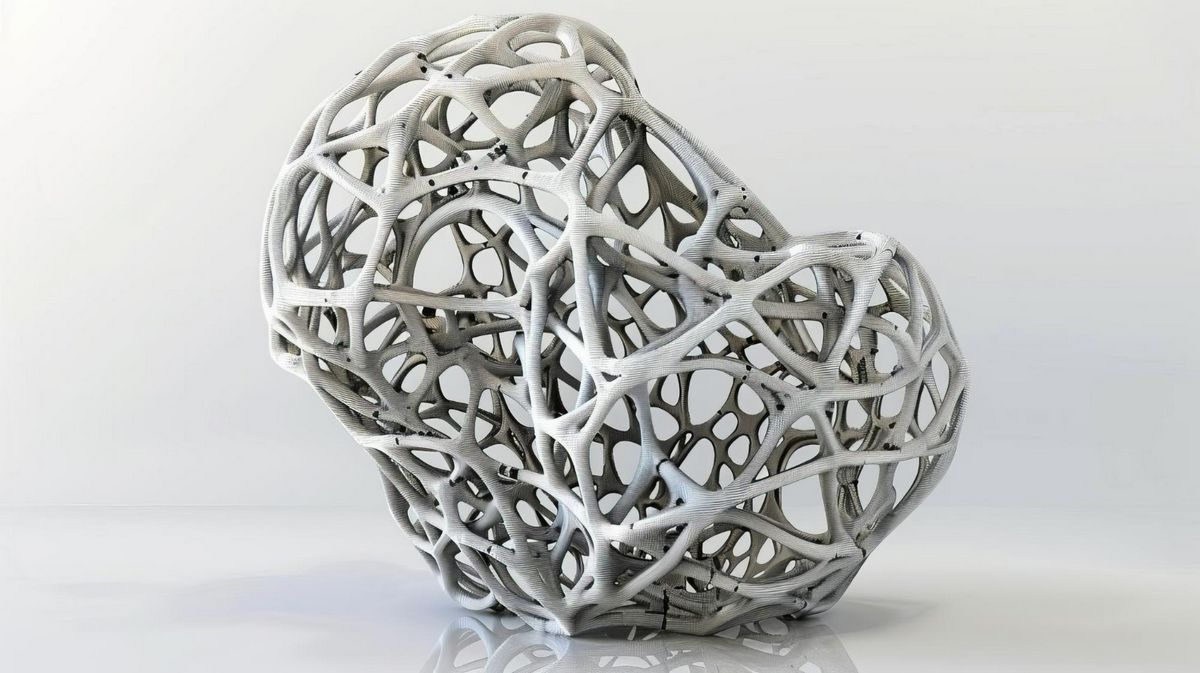
- Extreme Design Freedom: Create highly complex geometries, internal channels, honeycomb lattices, and organic structures that would be impossible to manufacture with traditional methods.
- Topological Optimization and Weight Reduction: Design parts with optimized shapes to maximize performance while minimizing material quantity, reducing weight (critical in aerospace and luxury automotive).
- Part Consolidation: Transform complex assemblies of multiple components into a single printed part, reducing assembly steps, failure points, and costs.
- Rapid Prototyping and Iteration: Accelerate development cycles by quickly moving from digital design to functional part.
- Customization and Short Runs: Ideal for producing unique parts or small series without the need for expensive tooling like molds.
- Waste Reduction: The additive process uses only the material needed to build the part, minimizing scrap.
- Advanced Material Properties: Printed parts can often exhibit superior mechanical properties (strength, hardness) compared to those obtained by other methods.
Key Applications of Metal 3D Printing:
Metal 3D printing is already essential in many sectors:
- Aerospace: Engine parts, satellite components, lightweight structures for aircraft and rockets.
- Medical and Dental: Personalized implants (hips, knees), custom dental prosthetics, surgical instruments.
- Automotive: Parts for luxury and racing vehicles (manifolds, lightweight brackets), manufacturing tools.
- Tooling and Molds: Mold inserts with complex cooling channels for better thermal regulation.
- General Industry: Machine tool parts, hydraulic components, production equipment.
- Defense: On-demand spare parts for critical equipment.
The Challenges of Metal 3D Printing
Despite its many advantages, metal 3D printing still presents challenges:
- High Cost: The price of machines and materials is significantly higher than for plastic printing.
- Speed: While improving, print time for complex or large parts can be lengthy.
- Post-Processing: Most parts require significant post-processing (support removal, heat treatment, finish machining, polishing) to achieve required properties and surface quality.
- Size Limitations: The size of build chambers can be a limiting factor for very large parts.
- Process Complexity: Mastering the technology and printing parameters requires specialized expertise.
Metal 3D printing is undoubtedly one of the most promising technologies in additive manufacturing. It continues to evolve at a rapid pace, pushing the boundaries of what's possible and paving the way for industrial innovations and products with unprecedented performance.