PLA vs PLA+ or PLA Ultra or Reinforced PLA: What Are the Real Differences?
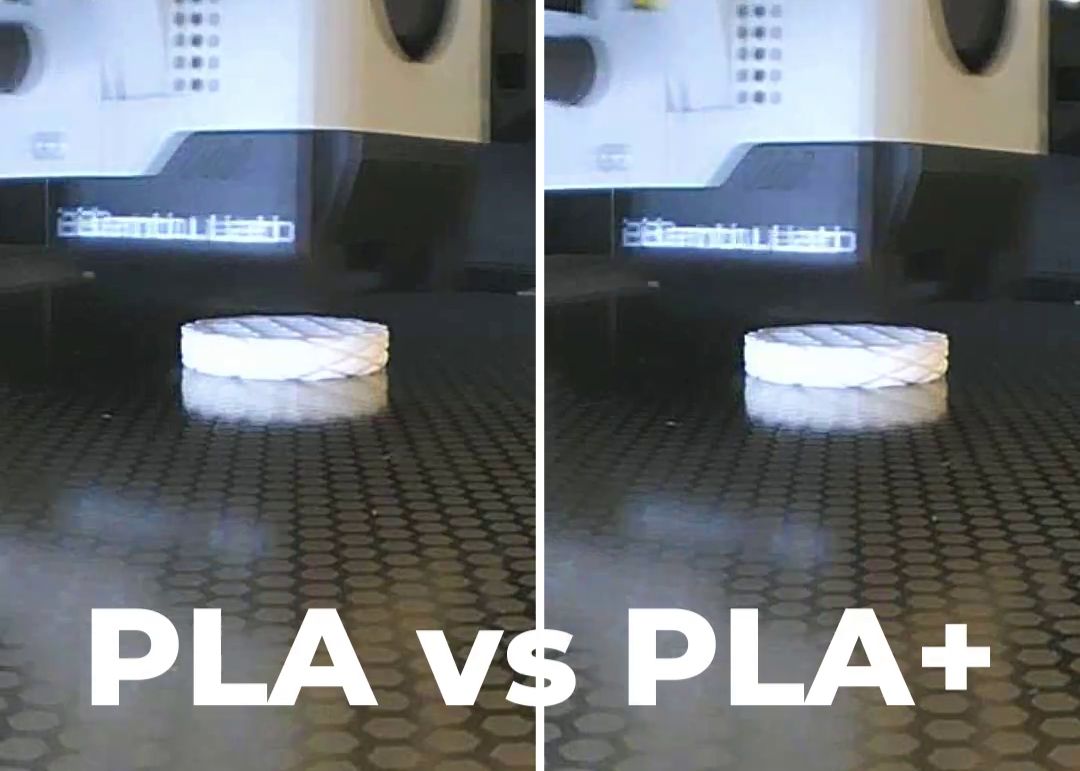
PLA (polylactic acid) is the go-to filament for getting started with 3D printing. Easy to print, low-odor, and biodegradable, it's perfect for maquettes, figurines, and visual prototyping. But on the market, an improved version is becoming increasingly common: PLA+ or PLA Ultra or reinforced PLA.
What are the real differences between these two materials? And which one should you choose for your projects?
The Composition of PLA and PLA+

The main difference lies in their composition. PLA+ is not a single standard, but a generic term used by manufacturers to describe a PLA filament that has been modified with additives. These additional polymers and nano-particles are designed to improve the mechanical properties of standard PLA.
That's why a PLA+ from one brand can have slightly different characteristics from another.
The Advantages of PLA+: Strength and Flexibility
While classic PLA is known for its rigidity and brittleness (it tends to snap rather than bend), PLA+ corrects these flaws.
Here are the main improvements:
- Increased mechanical strength: PLA+ is significantly more resistant to impact and tension than standard PLA. It's less brittle and more flexible, making it ideal for functional parts, technical prototypes, or objects under stress. Some manufacturers claim it can be up to 8 times stronger than ordinary PLA.
- Better heat resistance: Standard PLA warps at relatively low temperatures (around 50°C). PLA+ resists heat better, capable of withstanding higher temperatures (up to 70°C for some versions) before softening, which expands its range of applications.
- Improved surface quality: Thanks to better layer adhesion and improved fluidity, PLA+ often delivers a smoother and more uniform surface finish.
The Drawbacks of PLA+ to Consider
While PLA+ is superior in many ways, there are some aspects to consider:
- Price: Due to additives, PLA+ is generally more expensive than classic PLA. The difference isn't huge, but can be significant if you're printing large quantities.
- Print parameters: PLA+ requires a slightly higher extrusion temperature than standard PLA (often between 210°C and 230°C, versus 190°C to 210°C for PLA). It may need some tweaking to get optimal results.
- Fewer colors: Classic PLA, being very common, offers a much wider variety of colors and finishes (glossy, matte, silky) than PLA+.
PLA or PLA+: Which Should You Choose?
The choice depends entirely on your project:
- Go for classic PLA if:
- You're printing purely aesthetic parts (figurines, decorative maquettes).
- Budget is a limiting factor.
- You're starting out and want an easy-to-use filament.
- Go for PLA+ if:
- Your part needs to be solid and functional (replacement parts, technical prototypes, housings).
- You need better impact resistance and slightly higher heat tolerance.
- You're looking for better quality output without stepping up to technical materials like ABS or PETG.
Ultimately, PLA+ is a smart evolution that fills the gaps of standard PLA. It offers the advantages of PLA's ease of printing while approaching the mechanical performance of ABS, making it an excellent compromise for many projects. Want to know the differences between PLA+ and ABS? Read our article: PLA+ vs ABS: The technical showdown of functional filaments
Affiliate links:
PLA+: https://amzn.to/3J9GwbG
To compare materials at a glance, use our filament selection tool.