PLA+ vs ABS: The Technical Duel of Functional Filaments
The choice between PLA+ and ABS goes far beyond ease of printing. These two filaments, though both used for functional parts, present fundamental differences in technical specifications and resistance. Understanding these properties is essential to selecting the right material for your project.
Thermal Resistance: The Critical Gap Between PLA+ and ABS

The thermal resistance of a filament measures its ability to withstand heat before beginning to soften or deform.
- PLA+: While a notable improvement over standard PLA, PLA+ remains a filament with moderate heat resistance. Its heat deflection temperature (HDT) typically sits around 60–70°C. This means a PLA+ printed part can begin to deform if left in a hot environment, like a car interior in direct sunlight or near a heat source. It's perfect for room-temperature use, but not for applications exposed to significant heat.
- ABS: The major advantage of ABS is its superior thermal resistance. Its HDT is significantly higher, often reaching 85–100°C. This property makes it the material of choice for parts that must operate in hot environments, such as under-hood automotive components, electronics enclosures, or parts subjected to friction-generated heat.
Technical and Mechanical Resistance: The Power Match
Beyond heat, the material's ability to resist impacts, tension, and flexing is paramount for functional parts.
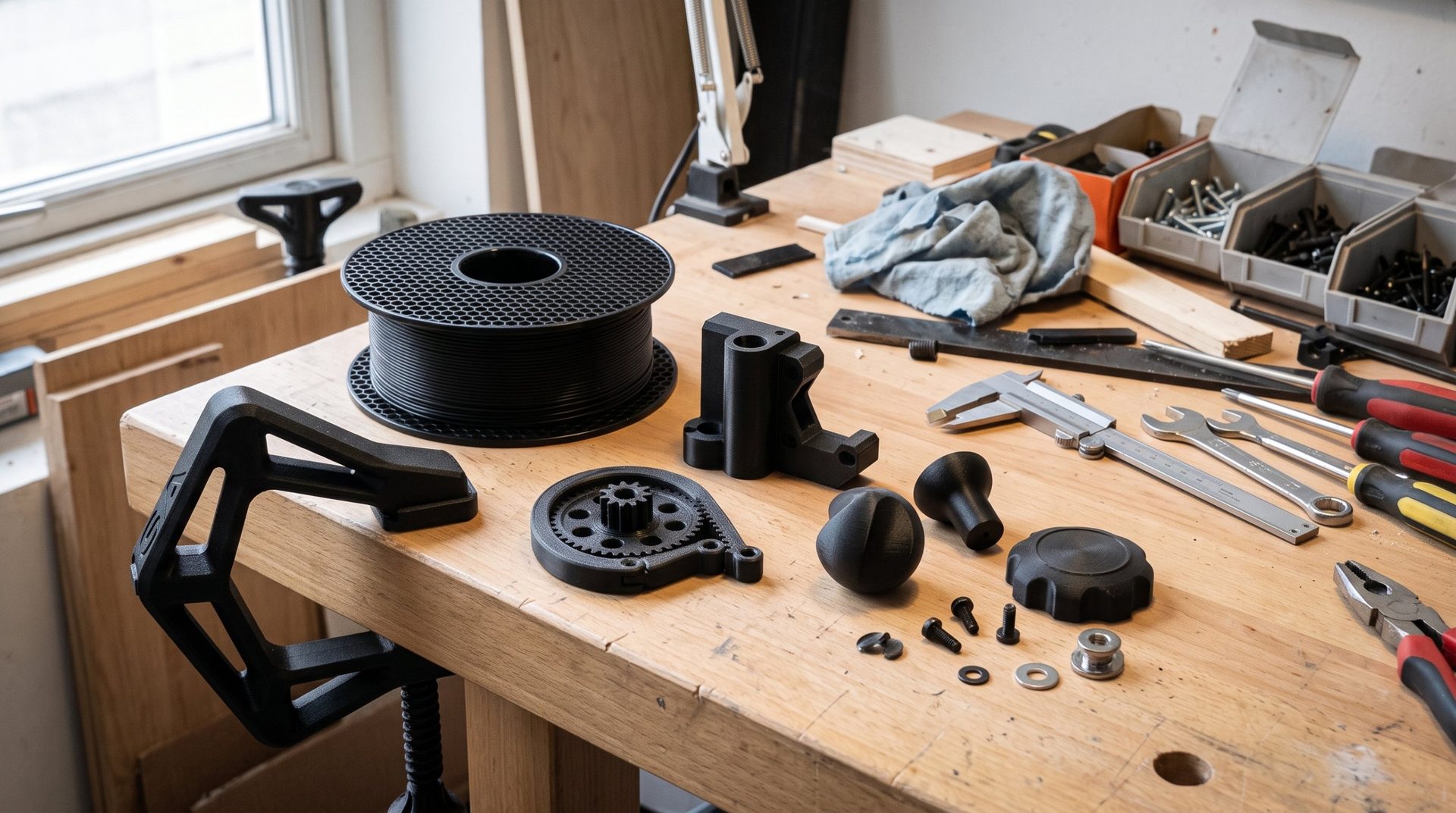
- PLA+: PLA+ is engineered to be tougher than standard PLA. It offers improved tensile strength and impact resistance. It tends to flex slightly before breaking, unlike standard PLA which is brittle. It's an excellent choice for prototypes, light tools, or enclosures that don't endure extreme stresses. However, it cannot match the ruggedness of ABS.
- ABS: ABS is recognized for its high toughness and resilience. It's highly resistant to violent impacts and can deform without breaking, making it ideal for parts under heavy stress. That's why it's widely used in industry for items like LEGO bricks, tooling components, or body panels. Its ability to be sanded, drilled, and glued easily also makes it a preferred choice for finishing.
Comparison Table: PLA+ vs ABS
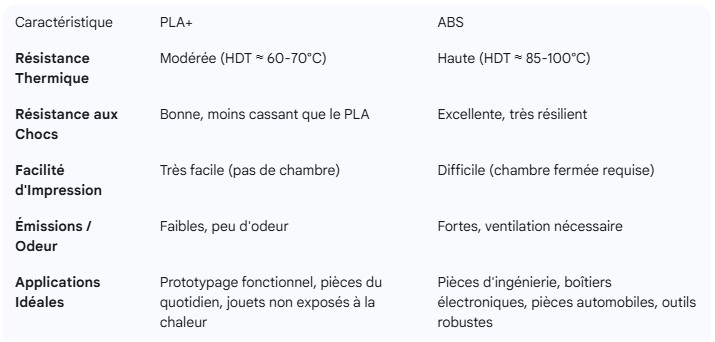
In conclusion, PLA+ is an excellent versatile filament offering the perfect compromise between ease of printing and improved mechanical properties. It's ideal for most everyday projects. ABS remains the material of choice for demanding applications where heat resistance and durability are non-negotiable criteria.
There are also many other technical filaments on the market (PETG, Nylon, PC, ASA…) designed for very specific uses. Choosing the right material is key to ensuring your project's success and longevity. Read our article: Choose the Right Filament for Your 3D Printing
Strength, heat, flexibility: check your needs in our interactive selector.