Filament Resistance in 3D Printing

In the world of 3D printing, choosing a filament is a crucial decision that goes far beyond simple color selection. For a part to be functional and durable, it's essential to understand the different types of resistance that a filament can offer. Whether it's supporting a load, resisting heat, or not degrading in sunlight, each material has its own strengths and weaknesses.
Here's an overview of the main types of resistance and the filaments that embody them.

The Different Types of 3D Filament Resistance
"Resistance" is a general term that encompasses several physical properties. To make the right choice, you need to determine what stresses your part will be subjected to.
1. Mechanical Strength
This is the ability of a material to resist deformation, breaking, or wear under the effect of a force. It breaks down into several categories:
- Tensile strength: The maximum force a part can withstand before breaking when pulled.
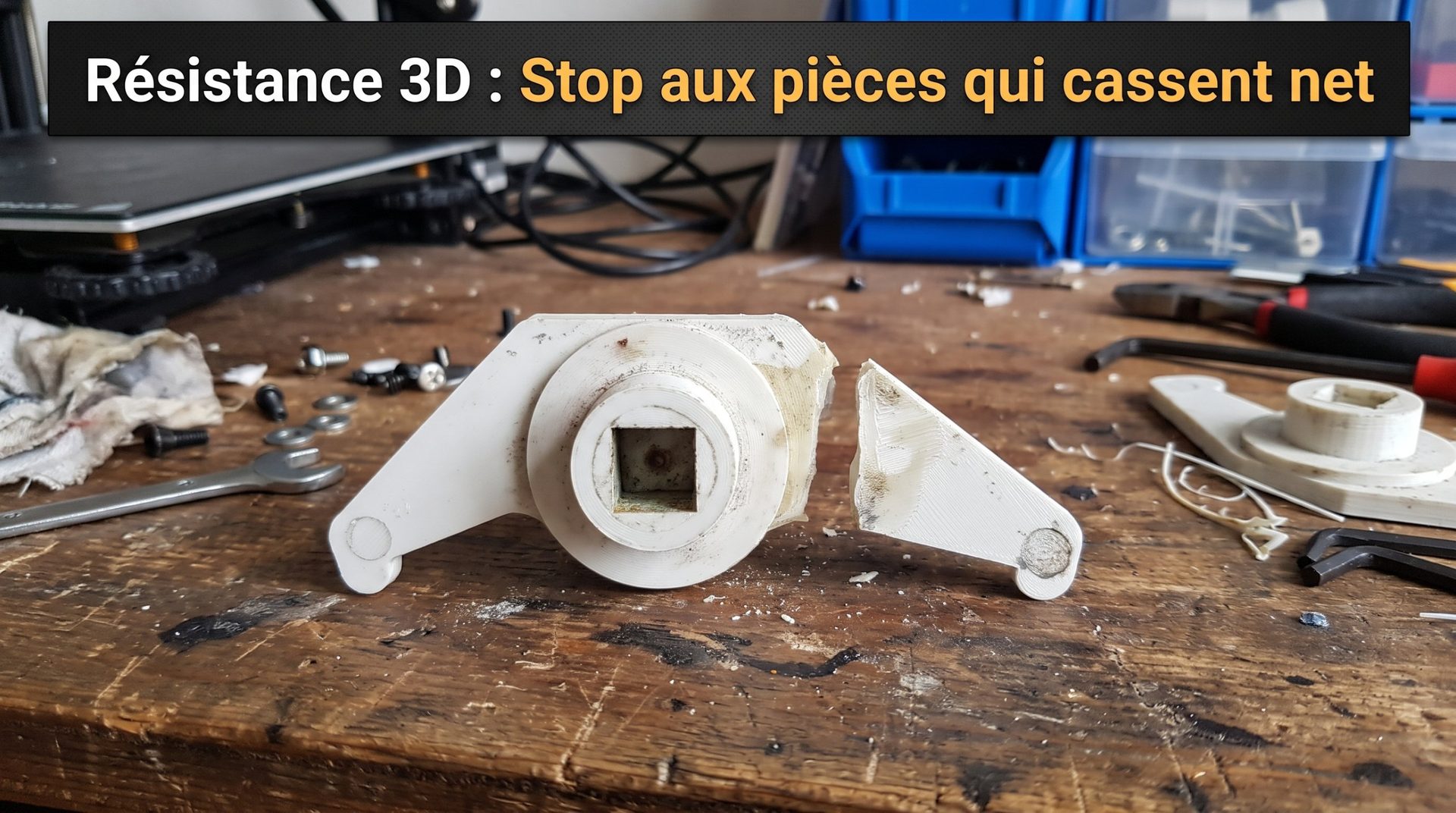
- Impact resistance: The ability to absorb energy without breaking upon sudden impact.
- Rigidity and flexibility: The ability to resist bending (rigidity) or, conversely, to bend without breaking (flexibility).
2. Thermal Resistance
This property measures a filament's ability to maintain its shape and properties under the effect of heat. The Heat Deflection Temperature (HDT) is a key indicator for knowing at what temperature a printed object will start to soften. This is crucial for parts intended to be used near an engine, in a car, or outdoors under intense sun.
3. Chemical Resistance
Some filaments are affected by solvents, oils, greases, or chemicals. A filament can dissolve, deform, or lose its properties if exposed to the wrong substance.
4. UV and Weather Resistance
Essential for objects intended to be used outdoors. A filament that isn't UV-resistant will degrade, become brittle, and change color if exposed to sunlight for too long.
Common Filament Resistance Chart

In Summary
- For a simple prototype or a figurine: PLA is an excellent choice. It's easy to print, but its low resistance makes it unsuitable for functional parts subjected to stress.
- For mechanical or functional parts: PETG is an excellent compromise between ease of printing and strength. It's the "Swiss Army knife" of filaments.
- For outdoor parts: ASA is the go-to choice. It offers mechanical and thermal resistance similar to ABS, but with far superior UV and weather resistance.
- For highly stressed parts: Nylon and PC are preferred for their incredible durability and ability to resist heat and wear.
- For extreme strength: Composite filaments, reinforced with fibers, are ideal for creating lightweight yet extremely rigid parts.
Choosing a filament is a matter of balance. By understanding your project's requirements and each material's properties, you ensure your creation will not only look great but also be durable and functional.
Strength, heat, flexibility: check your needs in our interactive selector.