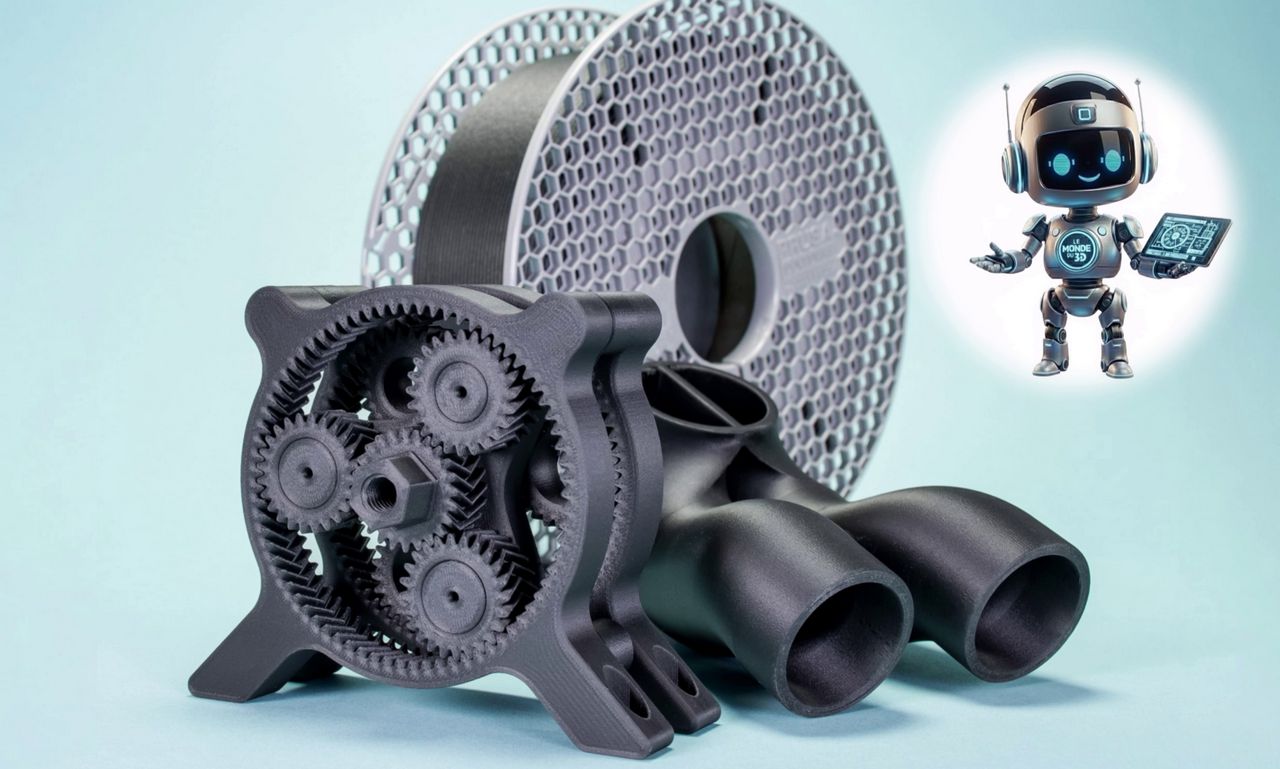
ASA Filament: The Champion of Outdoor 3D Printing
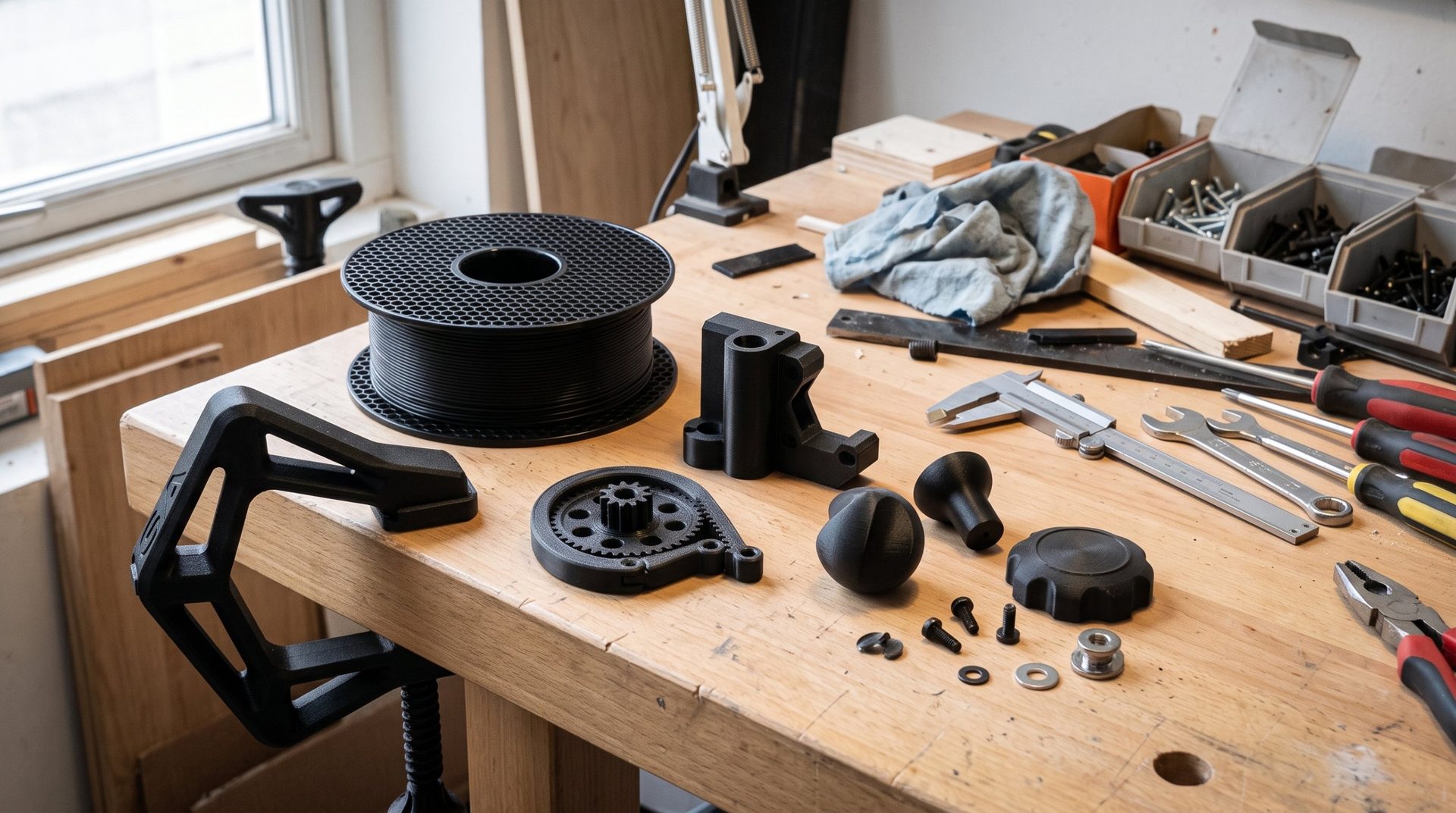
While PLA remains the king of simplicity and PETG the everyday workhorse, they quickly show their limits when a part needs to live outdoors or under a car windshield. That's where ASA (Acrylonitrile Styrene Acrylate) comes in. A true evolution of ABS, this technical thermoplastic has become the essential material for all functional parts exposed to the elements.
1. Why choose ASA over ABS or PETG?
ASA was developed specifically to overcome ABS's Achilles heel: its sensitivity to solar radiation.
- Complete UV immunity: where ABS yellows, becomes brittle and degrades after a few months in the sun, ASA doesn't budge. Its molecular chain naturally resists ultraviolet rays without special additives.
- High heat resistance: with a heat deflection temperature (HDT) around 95 to 100 °C, ASA fears neither scorching heat nor a vehicle cabin parked in full sun (where PLA starts to soften at 55 °C).
- Impact and weather resistance: it withstands mechanical stress, rain, frost, and resists light chemicals and hydrocarbons well.
- Matte finish and acetone smoothing: unlike PETG's glossy appearance, ASA produces a very high-quality matte finish that hides layer lines. It's also soluble in acetone vapor, allowing perfectly smooth, waterproof parts with an injection-molded look.
2. Typical use cases
- Automotive and motorcycle: phone mounts, mirror covers, ventilation scoops, body clips.
- Garden and outdoor: waterproof camera enclosures, weather stations, hose fittings, solar panel brackets.
- Drones and modeling: lightweight rigid structural parts that need to handle rough landings and thermal shocks.
3. Recommended printing parameters
ASA demands a bit more precision than PLA, but it remains far more manageable and less prone to delamination than standard ABS.
| Parameter | Recommended range | Practical note |
|---|---|---|
| Nozzle temperature | 240 to 260 °C | Favor an all-metal hotend. |
| Bed temperature | 90 to 110 °C | Textured PEI build plate highly recommended. |
| Enclosed chamber | Strongly recommended | Critical to avoid cold air drafts and warping. |
| Part cooling (fan) | 0 to 20% maximum | Too much cooling destroys layer adhesion. |
| Print speed | 40 to 100 mm/s | Reduce speed if layers don't adhere well. |
4. Best practices for successful parts
- Fighting warping: ASA shrinks as it cools. Use a brim 5 to 8 mm wide around your part and let the bed reach temperature a few minutes before starting to warm up the chamber air. All solutions in our anti-warping comparison.
- Humidity management: although less hygroscopic than nylon, ASA absorbs ambient moisture, causing cracks and stringing. A run through a dryer at 65-70 °C for 4 to 6 hours restores the filament to full consistency (see how to dry your filament).
- Part ventilation: while the smell is more subtle than ABS, ASA releases styrenes and VOCs during extrusion. Print preferably in a ventilated space or on a machine equipped with an active carbon filter.
Still unsure about the material? Compare with our guide to filaments for strong parts, or let us print your outdoor parts: we produce them in ASA at our workshop.
To find the ideal material for your project, try our filament selector.