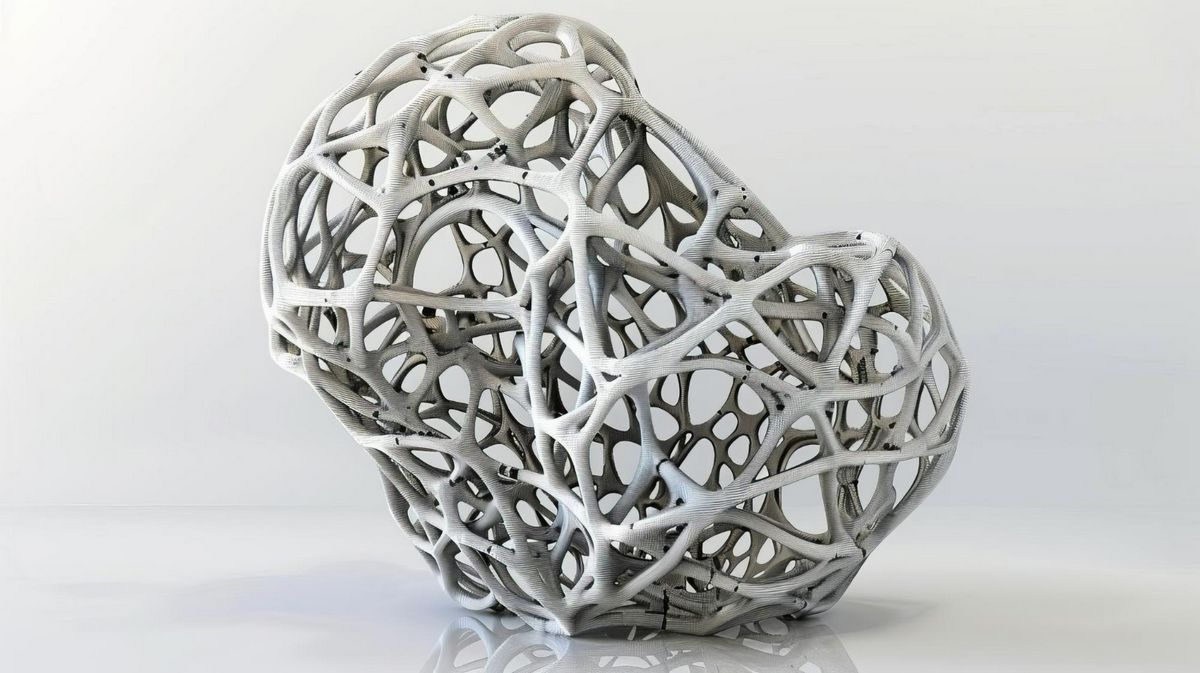
Metal 3D Printing with Powder Bed Fusion (PBF)

3D printing is no longer limited to plastics. Powder Bed Fusion (PBF) is the industrial reference technology that has revolutionized metal part manufacturing. By using powerful energy sources to fuse fine metal particles, PBF enables the creation of components with density and mechanical integrity comparable to, or even superior to, forged or cast parts, opening the door to critical applications in cutting-edge industries.

The Principle of Powder Bed Fusion (PBF)
PBF comprises mainly two technologies, Selective Laser Melting (SLM) and Electron Beam Melting (EBM), but the basic process is similar:
- Bed Preparation: A thin layer of metal powder (Nickel, Titanium, Steel, Aluminum) is spread on a build platform in a sealed chamber.
- Selective Fusion: A powerful laser (SLM) or electron beam (EBM) scans the cross-section of the part, selectively melting and solidifying the powder according to the geometry of the 3D file.
- Layer Addition: The platform lowers by one layer thickness (often 20 to ), a new layer of powder is spread, and the process repeats until the part is complete.
The result is a fully dense metal part with uniform microstructure.
Applications and Technical Challenges
Application Sectors
PBF technology is now essential in the following fields:
- Aerospace: Manufacturing rocket engine components or aircraft parts where reliability, lightness, and heat resistance are paramount (Nickel or Titanium alloys).
- Medical: Creating custom orthopedic implants (hip, spine) with porous structure to facilitate osseointegration.
- Racing Automotive: Production of lightweight, highly optimized engine or chassis parts.
Major Challenges
PBF is a costly and complex technology:
- Controlled Environment: Metal fusion must occur under inert atmosphere (Argon or Nitrogen) to prevent metal oxidation and guarantee part purity.
- Mandatory Post-Processing: After printing, parts require heat treatment (stress relief), as well as removal of supports that are fused to the part and build plate (often by electroerosion or machining).
- Cost: The price of machines and metal powders is very high, limiting this technology to high-value-added parts.
PBF has made metal 3D printing the method of choice for manufacturing critical parts, shifting mass production toward the creation of ultra-high-performance and highly customized components.