What Is the Maximum Size for a 3D Printer?

The question of maximum 3D printer size doesn't have a single answer. The concept of "maximum" varies enormously depending on the type of machine and industry sector. While desktop printers are limited to a few tens of centimeters, the industrial world pushes boundaries to the scale of entire buildings.

Consumer 3D Printers: The Limits of Standard Specifications
For the average user, a "large 3D printer" is a machine that exceeds standard dimensions.
- Industry standard: Most desktop printers have a build volume around 220 x 220 x 250 mm. This size is sufficient for most hobby projects and allows you to print reasonably sized objects.
- Consumer large-format: Models like the Creality CR-10 or Anycubic Kobra Max have democratized larger build volumes. They offer print sizes up to 400 x 400 x 450 mm, making it possible to create cosplay helmets, large decorative pieces, or prototypes without having to cut them into parts.
Even with these machines, it's common to divide an object that's too large into multiple parts, then glue them together for an impressively sized final result.
Industrial 3D Printers: Size Knows Almost No Limits
It's in the professional sector that the notion of "large" truly takes on meaning.
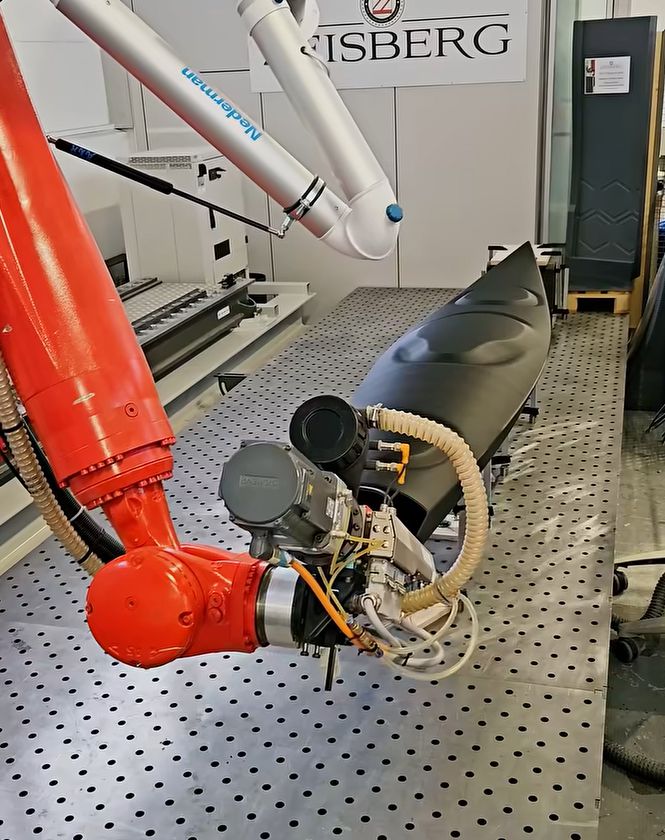
- Standard industrial printing: High-end machines, often used in aerospace or automotive, can reach build volumes of several cubic meters to manufacture dashboard prototypes, engine parts, or body molds.
- Architectural-scale 3D printing: The most extreme machines are those that print houses. Companies like ICON use giant printers capable of depositing concrete to construct building walls. In this case, print size is limited only by the machine's own size and construction space. Complete houses of dozens of square meters can be printed in just a few days.
The Challenges of Large-Format Printing
Printing large objects isn't just a matter of volume—it's also a technical challenge.
- Print time: An object that would take 5 hours on a small printer can take 50 hours or more on a large-format machine.
- Warping: The larger the part, the higher the risk of warping (deformation due to uneven cooling). This is why many large-format industrial printers are enclosed and temperature-controlled.
- Reliability: A failed print on a 40-hour part is a disaster in terms of time and material waste. Large machines must be extremely reliable.
In conclusion, while the maximum size for a desktop 3D printer is a few tens of centimeters, the industrial and construction world pushes limits to meter scales and even entire buildings.