
Zeisberg: The XL Format Revolution in Industrial 3D Printing
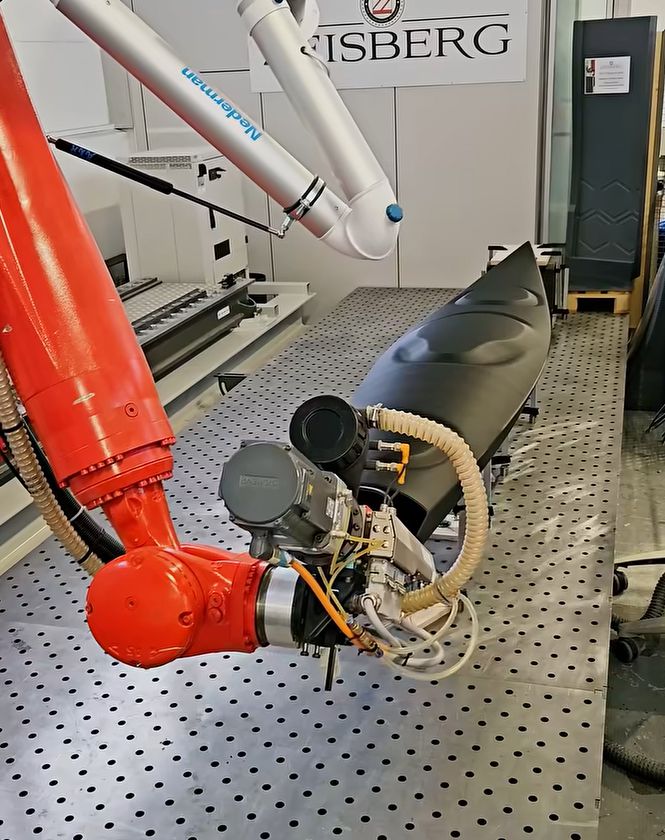
In the additive manufacturing landscape, size has long been a major constraint. German company Zeisberg Carbon has shattered these limits by offering what is considered one of the largest industrial 3D printing solutions in Europe.
Originally specialized in high-performance carbon components, Zeisberg has extended its expertise into Large Scale Additive Manufacturing (LSAM) to meet the needs of aerospace, automotive, and industrial tooling sectors.

✅ Out-of-Scale Dimensions
The main strength of Zeisberg's technology lies in its phenomenal build volume. Where standard "XL" printers on the market are often limited to 60 cm or 1 meter, Zeisberg's system pushes the boundaries:
-
Maximum length: Up to 6,000 mm (6 meters) in a single piece.
-
Build volume: A typical construction space of 6m x 2m x 2m.
-
Capacity: The ability to print massive monolithic structures, eliminating the need to segment and assemble (gluing or welding) parts, which ensures superior structural integrity.
✅ Materials and Technology
Zeisberg primarily uses fused granular fabrication (FGF) technology. Unlike conventional filament printers, this method uses industrial plastic pellets, offering several advantages:
-
Deposition speed: Allows filling large volumes in a fraction of the time required by filament.
-
Cost: Pellets are significantly less expensive than processed filaments.
-
Technical materials: Use of high-performance thermoplastics often reinforced with carbon fiber or glass fiber for maximum rigidity and low thermal expansion coefficient.
✅ Strategic Applications
Zeisberg's XL 3D printing is not just for prototyping—it has become a direct production tool:
-
Molds and Tooling: Rapid manufacturing of molds for composite stratification or foundry work.
-
Maritime and Wind Energy: Creation of large-scale hulls, blade sections, or assembly fixtures.
-
Architecture and Design: Production of complex building structures or urban furniture pieces.
✅ Why XL Format Changes Everything
Zeisberg's approach reduces development cycles from several months to just a few weeks. By directly printing complex shapes at large scale, companies save on storage costs, spare parts transportation, and labor associated with manual assembly.


