
3D Printing and Cosplay: Bring Your Favorite Characters to Life

The world of cosplay, where fans embody their favorite characters with elaborate costumes, is constantly evolving. 3D printing has become a revolutionary technology, allowing cosplayers to create armor pieces, accessories, and costume elements with unparalleled realism and precision. Gone are the days of endless sculpting and molding: 3D printing opens the doors to unlimited creativity.
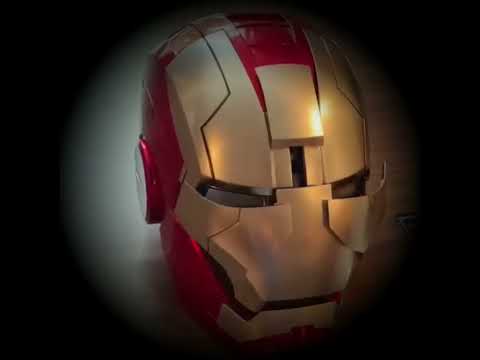
Why is 3D printing so highly prized in cosplay?
Integrating 3D printing into costume creation offers many advantages:
- Detail precision: Characters from video games, films, or comic books often feature accessories with intricate engravings or complex geometries. 3D printing allows you to reproduce these details with incredible accuracy, something that's difficult to achieve by hand.
- Speed of fabrication: Compared to traditional methods (molding, sculpting, foam work), 3D printing can significantly accelerate the creation process for complex pieces, though printing time itself must be taken into account.
- Lightweight and durability: Using suitable filaments like PLA or PETG, it's possible to manufacture strong yet lightweight pieces, essential for costumes that must be worn for extended hours at conventions.
- Customization and fit: Every cosplayer can print their pieces at the exact scale of their body, guaranteeing perfect fit and optimal comfort. 3D models can be easily modified to adapt to specific preferences or sizes.
Types of pieces achievable with 3D printing
The possibilities are vast for costume elements:
- Armor and helmets: 3D printing is ideal for complex armor pieces (shoulder guards, gauntlets, breastplates) and detailed helmets, which can be printed in multiple segments then assembled.
- Accessories and weapons: Swords, scepters, futuristic guns, badges, belt buckles... 3D printing allows you to faithfully reproduce the most iconic character accessories.
- Details and ornaments: Small gears, mechanical parts, fine decorations, prosthetics (such as horns or claws) can be created with great precision.
The process: from idea to reality
- 3D modeling: This is the starting point. You can find pre-existing models on 3D file platforms. For unique pieces, you'll need to use 3D modeling software (Blender, Fusion, ZBrush) or hire a professional modeler.
- Slicing: The 3D file is then prepared with slicing software like Cura, PrusaSlicer, or Bambu Studio. You need to set layer height, infill, supports, and print speed.
- Printing: The most common filaments are PLA (easy to print, ideal for details) and PETG (more durable and slightly flexible).
- Post-processing: This is where the magic happens. Sanding to smooth surfaces, filler to close gaps between assembled pieces, primer to prepare for painting, then paint itself to bring the character's colors to life.
3D printing hasn't replaced traditional cosplay techniques, but it has complemented and enriched them. It allows cosplayers to reach new levels in terms of realism and complexity, while reducing time spent on certain tedious steps. It's a powerful tool that, in the hands of enthusiasts, transforms fantasy into tangible reality.


