How to Print with ABS?

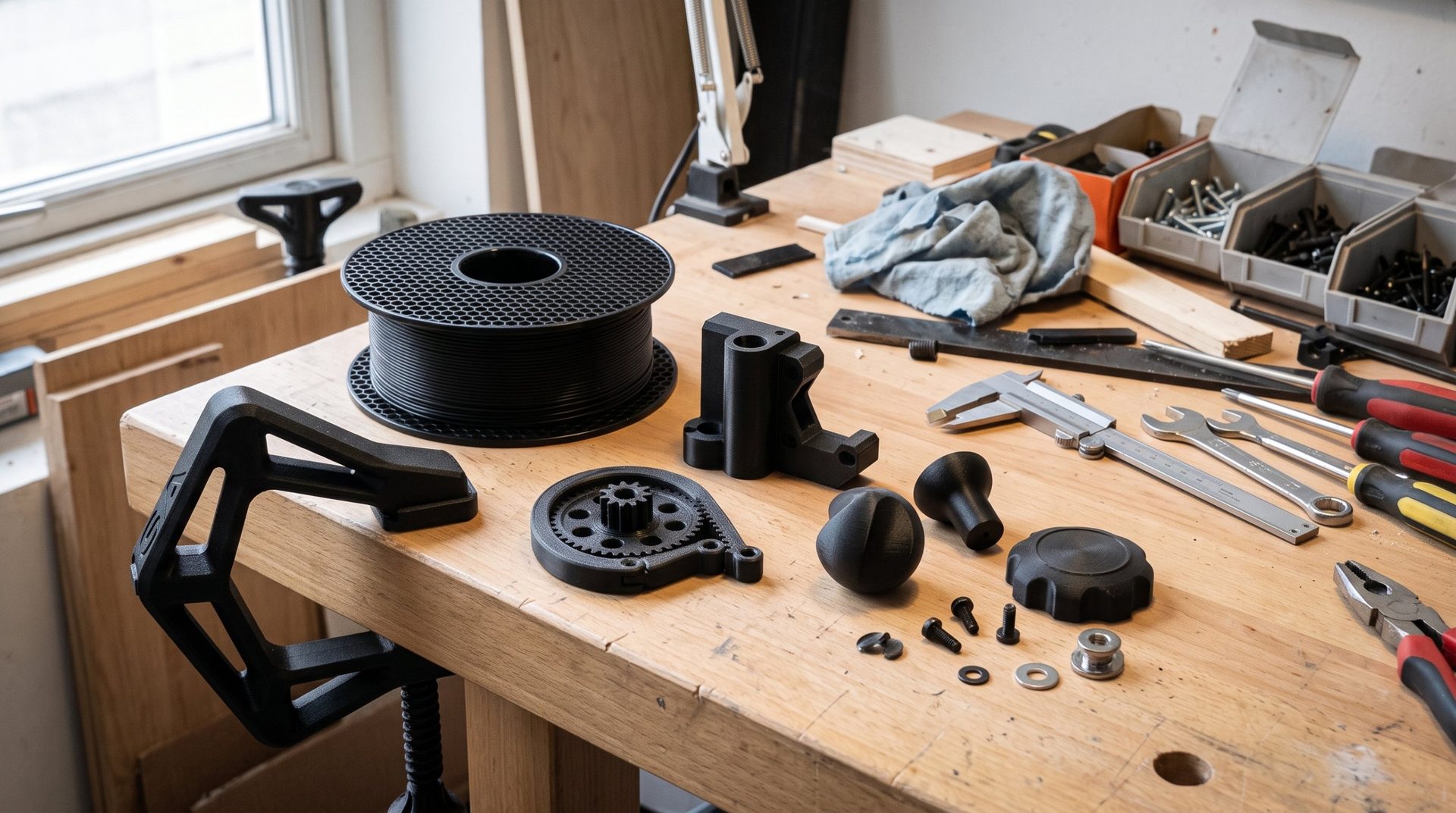
ABS (Acrylonitrile Butadiene Styrene) is one of the most robust and durable filaments in 3D printing. Its impact resistance and ability to withstand high temperatures make it ideal for functional or mechanical parts. However, it's known to be more difficult to print than PLA. Its main challenge: warping.
With the right approach, you can easily master ABS printing.

Understanding ABS: The Warping Challenge
The main problem with ABS is its tendency to contract as it cools, causing the corners of parts to peel off the build plate. This phenomenon, called warping, is due to the material's high thermal expansion. To succeed, you must maintain a stable ambient temperature around the print. Additionally, ABS fusion releases odors and particles that require good ventilation.
Steps for Successful ABS Printing
1. Use an Enclosed Chamber
This is the most critical step. A printer with an enclosed chamber (or "enclosure") is essential. It maintains a high and stable ambient temperature around the part, reducing thermal contraction and preventing warping. The enclosure also helps contain odors and particle emissions.
2. Prepare Your Build Plate
Adhesion is key. The build plate must be heated correctly and uniformly.
- Build plate temperature: Set the temperature between 90 °C and 110 °C.
- Adhesion: For optimal adhesion, use an adhesive solution. The most common options are glue stick, Kapton tape, or "ABS slurry" (a mixture of ABS and acetone).
3. Adjust Slicer Settings
- Nozzle temperature: ABS requires a higher extrusion temperature than PLA. Print between 220 °C and 250 °C.
- Part cooling: Turn off or minimize part cooling fan settings. Excessive cooling cools the ABS too quickly and promotes warping. It may be useful for overhangs, but avoid it as much as possible.
- Print speed: Print at a moderate speed, between 40 and 60 mm/s. This ensures good layer adhesion.
4. Let the Part Cool Slowly
Once printing is complete, don't remove the part immediately. Let the build plate and part cool together slowly, inside the closed chamber. The thermal shock of rapid cooling can cause warping, even if the print was successful.
5. Ensure Good Ventilation
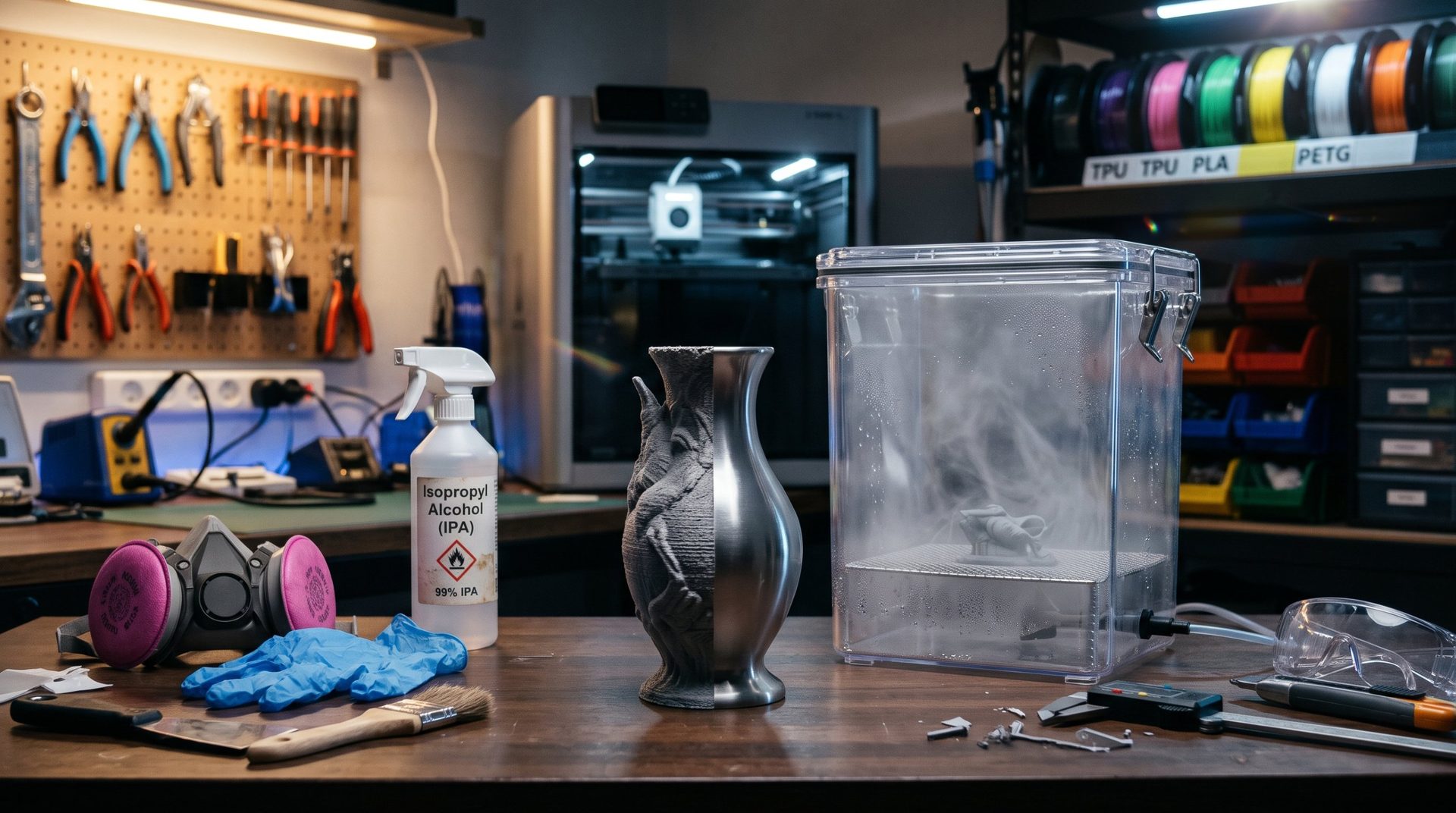
Finally, for your safety, always print in a well-ventilated space or use an air purifier. This helps manage odors and limits exposure to particles emitted.
By following these steps, you'll transform ABS from a finicky material into a reliable and powerful filament for all your projects requiring durability and robustness.
To compare materials at a glance, use our filament selection tool.