
The Future of FDM 3D Printing: Speed, Advanced Materials and Artificial Intelligence

FDM 3D printing (Fused Deposition Modeling), which uses filament, is the most widespread and accessible technology in the world. Far from being outdated by resin or powder technologies, FDM is undergoing major transformation. Its future doesn't lie in new deposition methods, but in eliminating its historical weaknesses: slowness, calibration complexity, and material limitations.
1. The Era of Speed and Reliability
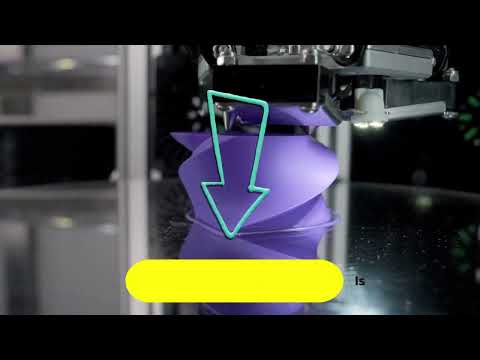
Slowness is the biggest barrier to adopting FDM for mass production. The future is heading toward machines capable of printing 5 to 10 times faster without sacrificing quality.
- Precision mechanics: Integrating advanced motion control systems (such as resonance compensation and dynamic pressure) allows print heads to move at extreme speeds without generating vibrations (ghosting effect).
- "High-Flow" systems: Hotends (heating elements) are designed to melt and extrude plastic much faster, with increased flow rates, allowing mechanical speed to be truly leveraged.
- Automating success: Features like automatic build plate leveling (ABL) and real-time error detection are becoming standard. The future of FDM is printing that succeeds on the first try, with no human intervention.
2. The Explosion of Functional Materials
Historically, FDM was limited to PLA and ABS. The future dramatically expands the functional capabilities of the technology.
- Filled polymers: Consumer FDM printers increasingly integrate the ability to use filaments filled with carbon or glass fibers (for example, Nylon-CF). These materials offer mechanical strength, rigidity, and heat resistance comparable to industrial parts.
- Integrated Multi-Material Printing: Sophisticated filament management systems (like those from Bambu Lab or Prusa) allow you to combine not only different colors, but different materials within the same part (for example, a rigid PC base and a flexible TPU joint), while automating spool changes.
- Advanced soluble supports: The widespread use of water-soluble supports (like PVA) allows printing extremely complex geometries without damaging the part when removing supports.
3. Artificial Intelligence at the Service of the Process
Artificial intelligence is key to making FDM accessible to non-expert users and optimizing production.
- Intelligent calibration: AI will handle complex calibration tasks (such as precise flow rate for each filament or compensation for machine geometry) that are today manual or require expertise.
- Failure Detection and Correction: Integrated cameras and AI algorithms will identify issues from the first layers (the infamous "spaghetti") and can either pause the machine to alert the user, or even adjust parameters during printing (temperature, speed) to correct defects.
The FDM of the future is shifting from the status of a hobby tool to that of a local and decentralized production tool, capable of rapidly producing functional, complex, and reliable parts.


