Factory of the Future 1.0: The New Giant of 3D Printing

The University of Maine (UMaine) has once again redefined the limits of what's possible in additive manufacturing by unveiling, in April 2024, the Factory of the Future 1.0 (FoF 1.0). This polymer 3D printer, vastly larger than anything currently in existence, smashed the previous Guinness world record that it had already held since 2019.
The FoF 1.0 is not just a technological gadget; it's an integrated engineering platform designed to transform entire industries, from shipbuilding to affordable housing.

Staggering Dimensions and Unprecedented Speed
The Factory of the Future 1.0 was developed within the Advanced Structures and Composites Center (ASCC) at UMaine. Its dimensions place it in a class of its own:
- Maximum printing length: (96 feet)
- Maximum printing width: (32 feet)
- Maximum printing height: (18 feet)
- Deposition speed: Up to of polymer per hour.
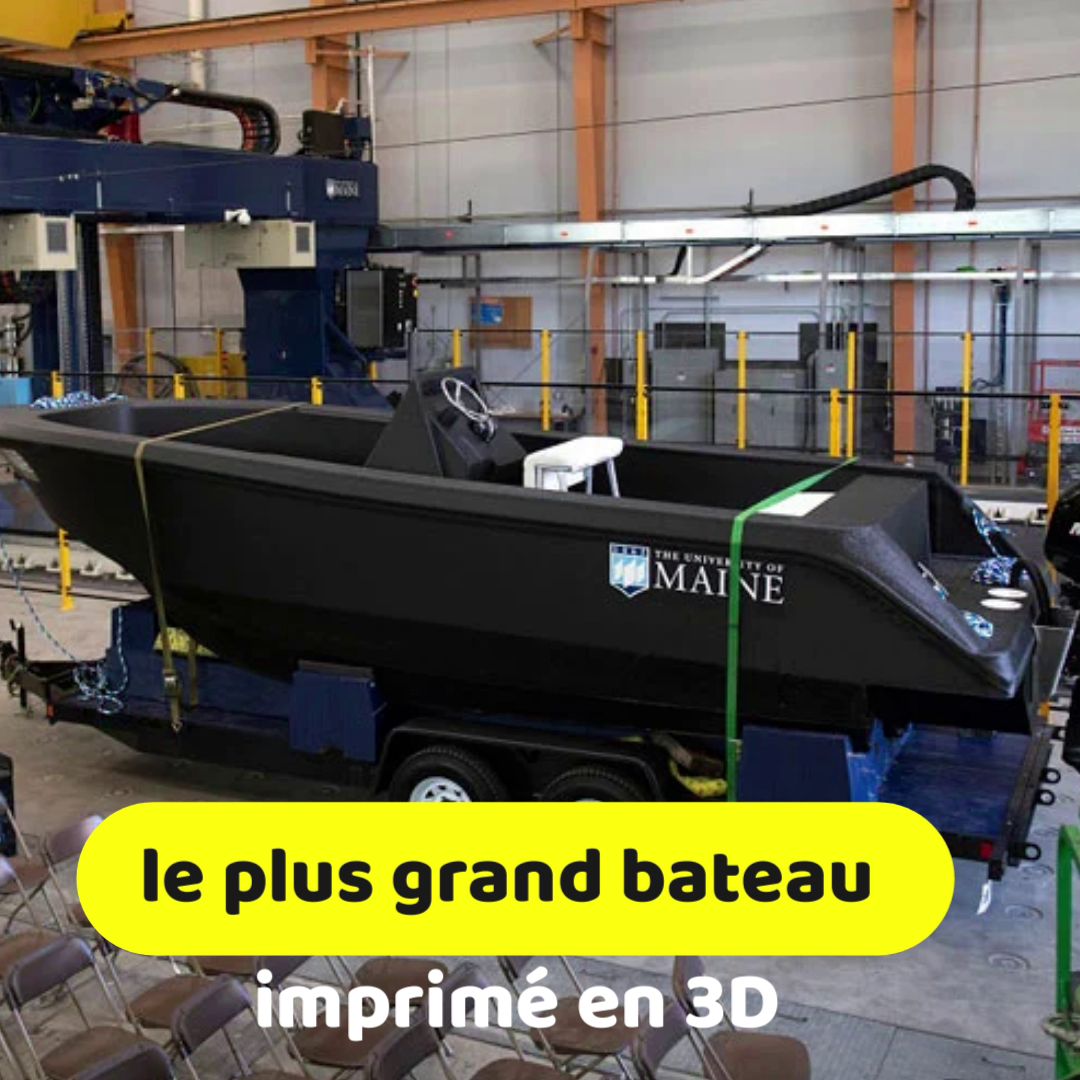
This colossal printing volume allows the machine to fabricate monolithic objects (in a single piece) that were unthinkable just a few years ago, ranging from long bridge segments to ship hulls. UMaine previously used its first record-breaking printer, the MasterPrint, to print a patrol boat long in just 72 hours.
Beyond Size: Sustainable 3D Printing
What truly makes the FoF 1.0 revolutionary is not just its size, but its focus on sustainability and process integration.
1. Materials Innovation
The machine is designed to use bio-based materials derived from Maine's vast forest resources. UMaine is actively working to integrate wood residues (cellulose) and other biomaterials into thermoplastic polymer blends. This effort aims to create more eco-friendly and cost-effective manufacturing solutions that could rival traditional materials.
2. A Hybrid "Factory of the Future"
The FoF 1.0 is not limited to additive manufacturing. It's a complete, collaborative system that dynamically integrates multiple processes on the same part:
- Additive Manufacturing (3D printing);
- Subtractive Manufacturing (CNC machining);
- Advanced Robotic Operations.
This versatility is essential for engineering research, allowing complex geometries to be created through 3D printing while critical surfaces are machined by CNC for maximum precision.
Applications: Building the Future
Thanks to its scale, the FoF 1.0 is a critical research tool for solving national-scale problems:
- Affordable Housing: The printer can rapidly fabricate house structures. UMaine has already demonstrated this potential with the BioHome3D project, a fully printed small home. The new machine can print a similar structure in approximately 80 hours.
- Defense and Security: The machine supports U.S. Department of Defense initiatives for rapid prototyping of lightweight deployment systems and defense structures.
- Infrastructure and Energy: It is used to create large molds for wind turbine components or prototypes of bridge beams, making construction more efficient and sustainable.
The Factory of the Future 1.0 therefore symbolizes a major milestone: the transition from 3D printing as a prototyping tool to a genuine industrial engine capable of manufacturing finished products at full scale, destined to transform industry and the built environment.