The Conveyor Belt 3D Printer: Breaking the Size Limit
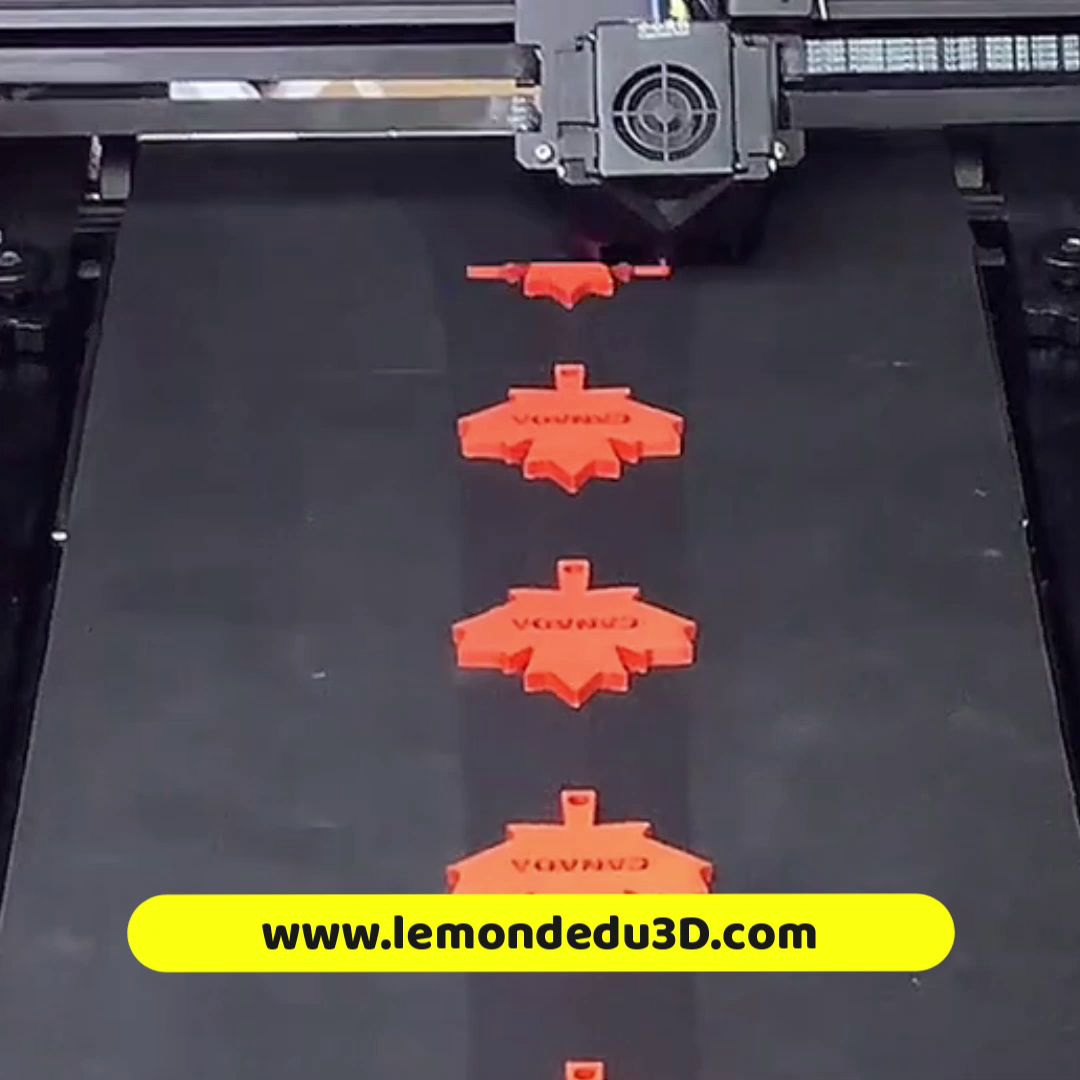
3D printing is often limited by build plate size. To solve this problem, engineers reinvented the 3D printer concept by introducing the 45° print head and the conveyor belt. This technology is far more than a gimmick—it enables continuous printing and the creation of objects with theoretically infinite length.

How It Works
The principle is both simple and ingenious:
- The print head is angled: Instead of being perpendicular to the build plate, the extruder is positioned at a 45-degree angle.
- The conveyor belt replaces the build plate: The belt moves slowly beneath the print head.
- Continuous printing: The object is printed layer by layer, and as it grows, it's pushed onto the conveyor belt and exits the build area.
This system allows you to either print a series of identical objects one after another without human intervention, or create a single piece with unlimited length.
Key Advantages
- Series production and automation: This is the main benefit. The printer can run autonomously, creating dozens or hundreds of identical parts and depositing them into a collection bin.
- Unlimited print length: No more worrying about maximum object size. You can print long objects like swords, rods, tubes, or decorative pieces in a single run.
- Reduced support material: The 45° print angle handles most overhangs without supports, since the lower layer naturally supports the upper one.
- Better bed adhesion: The constant belt movement reduces the risk of part detachment and warping.
Challenges and Limitations
- Calibration complexity: Calibration is trickier than on a standard printer. You must fine-tune the angle and belt speed with precision.
- Layer quality: On some parts, layer lines may be more visible and the result may be less precise than on a fixed bed, especially for very tall pieces.
Applications and Future
The conveyor belt 3D printer isn't for every use case, but it's ideal for very specific applications:
- Small businesses: For small-batch production of parts.
- Prototype makers: To create very long objects or parts requiring continuous production.
- Architectural and decorative design: To create moldings, balusters, or other elements that exceed standard printer dimensions.
This technology proves that 3D printing continues to reinvent itself. It pushes the boundaries of object size, opening the door to a new era of automated production.