Carbon Composite Filaments: High Performance 3D Printing
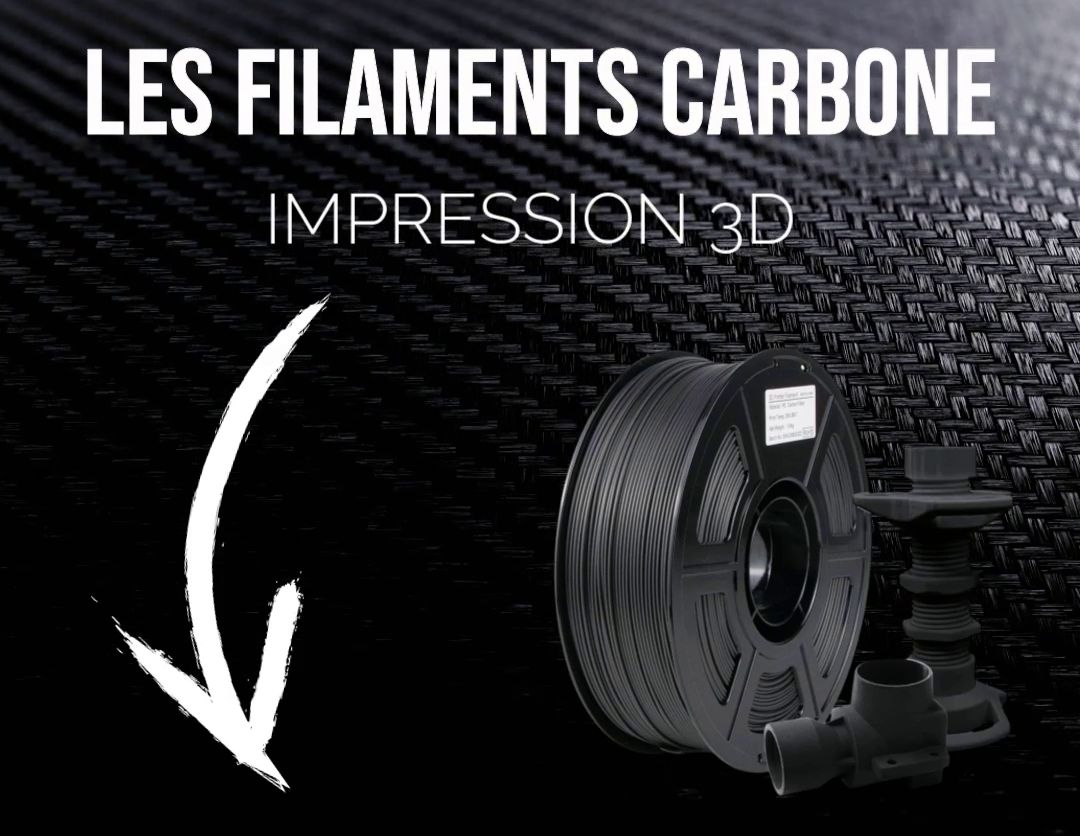
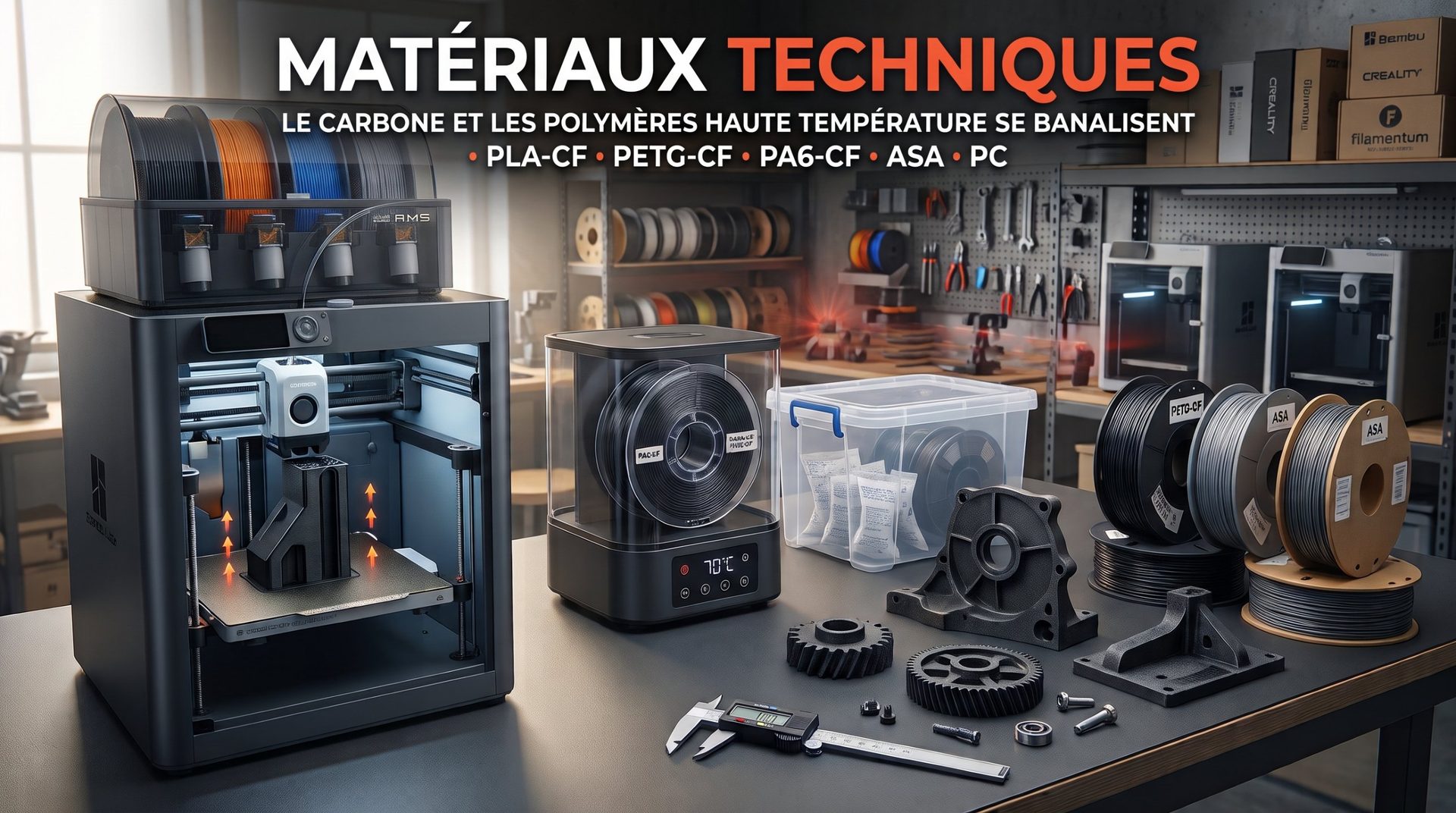
For many 3D printing enthusiasts, carbon fiber filament represents the next step toward creating ultra-high-performance parts. Unlike what you might think, these filaments aren't 100% carbon—instead, they're a thermoplastic polymer (like PLA, PETG, ABS, or Nylon) with short chopped carbon fibers added to it.
This unique blend gives printed parts exceptional mechanical properties, making them perfect for applications demanding more than the strength of standard filament.

The advantages of printing with carbon fiber
Carbon fiber-reinforced filaments transform simple plastic into an advanced material, offering several key benefits:
- Increased rigidity and strength: Carbon fibers act as an internal framework, dramatically boosting the material's rigidity and tensile strength. This is ideal for structural parts that must withstand loads without bending.
- Lightweight: Despite their durability, printed parts are often lighter than those made with traditional filaments. This is a major advantage for applications like robotics, drones, and RC modeling.
- Dimensional stability: Adding carbon fibers reduces material shrinkage during cooling. This minimizes the risk of "warping" (edge lifting), allowing you to print larger parts with better precision.
- Surface finish: The matte, slightly textured appearance of carbon effectively hides layer lines, giving the part a very professional and high-quality look.
Challenges and drawbacks to know
While the benefits are many, printing with carbon isn't without challenges. It's crucial to be aware of these points before you start:
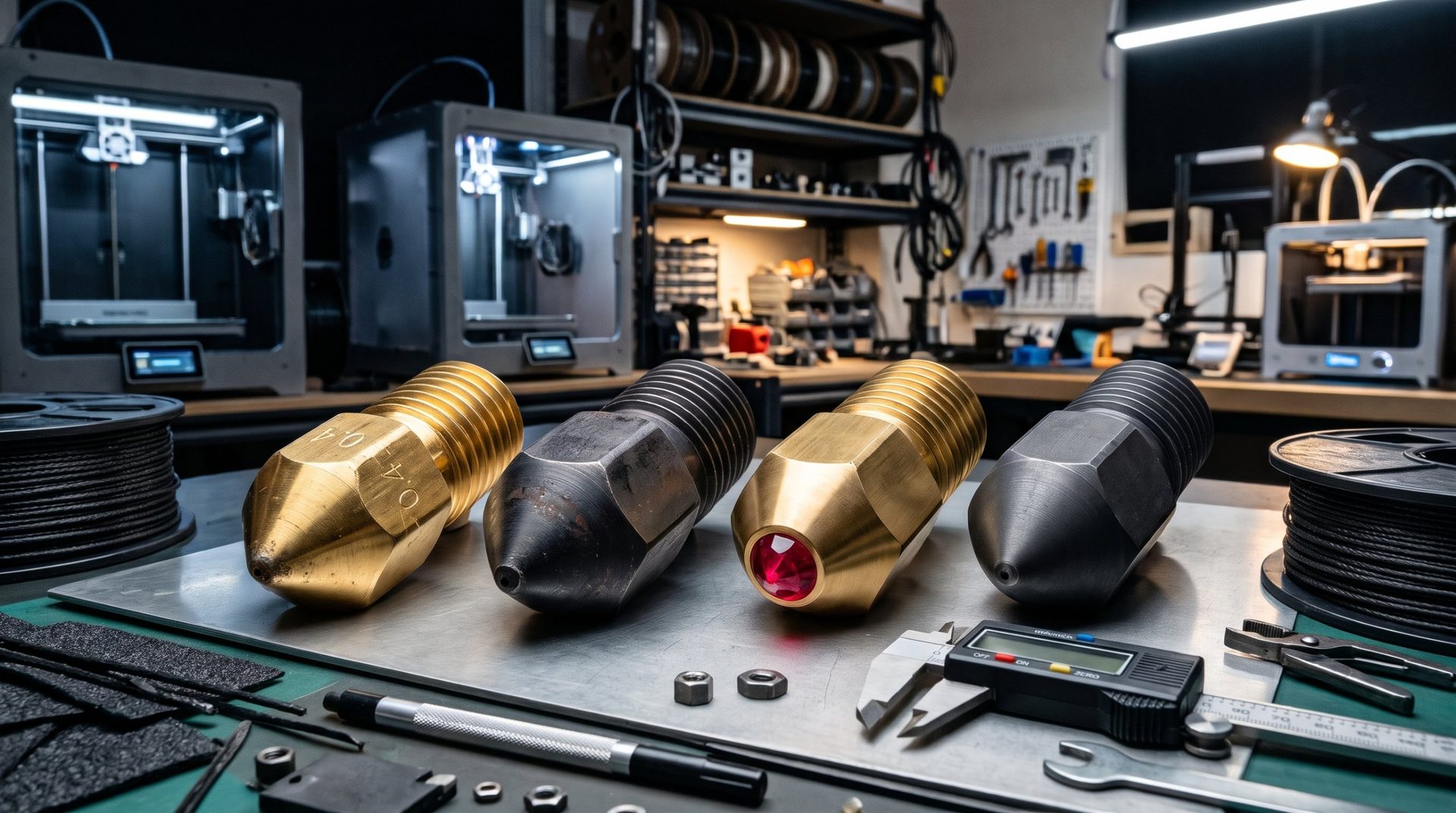
- Abrasiveness: This is the main constraint. Carbon fibers are extremely abrasive. Printing with this filament will wear out a standard brass nozzle at an incredible rate, sometimes in just a few hours.
- Cost: Carbon-reinforced filaments are more expensive than their non-reinforced counterparts. Prices can range from 3 to 10 times that of standard PLA.
- Clogging: Fibers can sometimes cause clogs in the extruder, especially if the nozzle diameter is too small.
Equipment needed for carbon fiber printing
To avoid problems and fully benefit from carbon filaments, proper equipment is essential:
- A wear-resistant nozzle: You must use a nozzle made of hardened steel, stainless steel, or a ruby-tipped nozzle. These materials are hard enough to resist fiber abrasion.
- A "Direct Drive" extruder: While not mandatory, it's often recommended. It allows better control of extrusion and retraction, preventing clogs.
- Properly adjusted print settings: It's advisable to slightly increase the extrusion temperature compared to the base filament (for example, PLA-CF will print a bit hotter than standard PLA). Print speed should also be slightly reduced to ensure perfect extrusion and adhesion.
Common applications
Carbon filaments are the preferred choice for:
- Drone parts and remote-controlled (RC) models.
- Robotics components and gear parts.
- Functional prototypes that must be both lightweight and rigid.
- Automotive or industrial parts.
In conclusion, carbon composite filaments are an excellent solution for creating lightweight, strong, and dimensionally stable parts. They're not suitable for every project, but for technical and functional applications, they represent a major advancement worth the investment.
Still unsure? Our filament comparison tool guides you in just a few clicks.