How to Choose the Right Nozzle for Your 3D Printer

Choosing the right nozzle for your 3D printer is one of the simplest and most effective ways to improve your print quality and extend your machine's lifespan. From nozzle diameter to material composition, here's a complete guide to help you navigate.

✅ Nozzle Diameter: Precision vs Speed
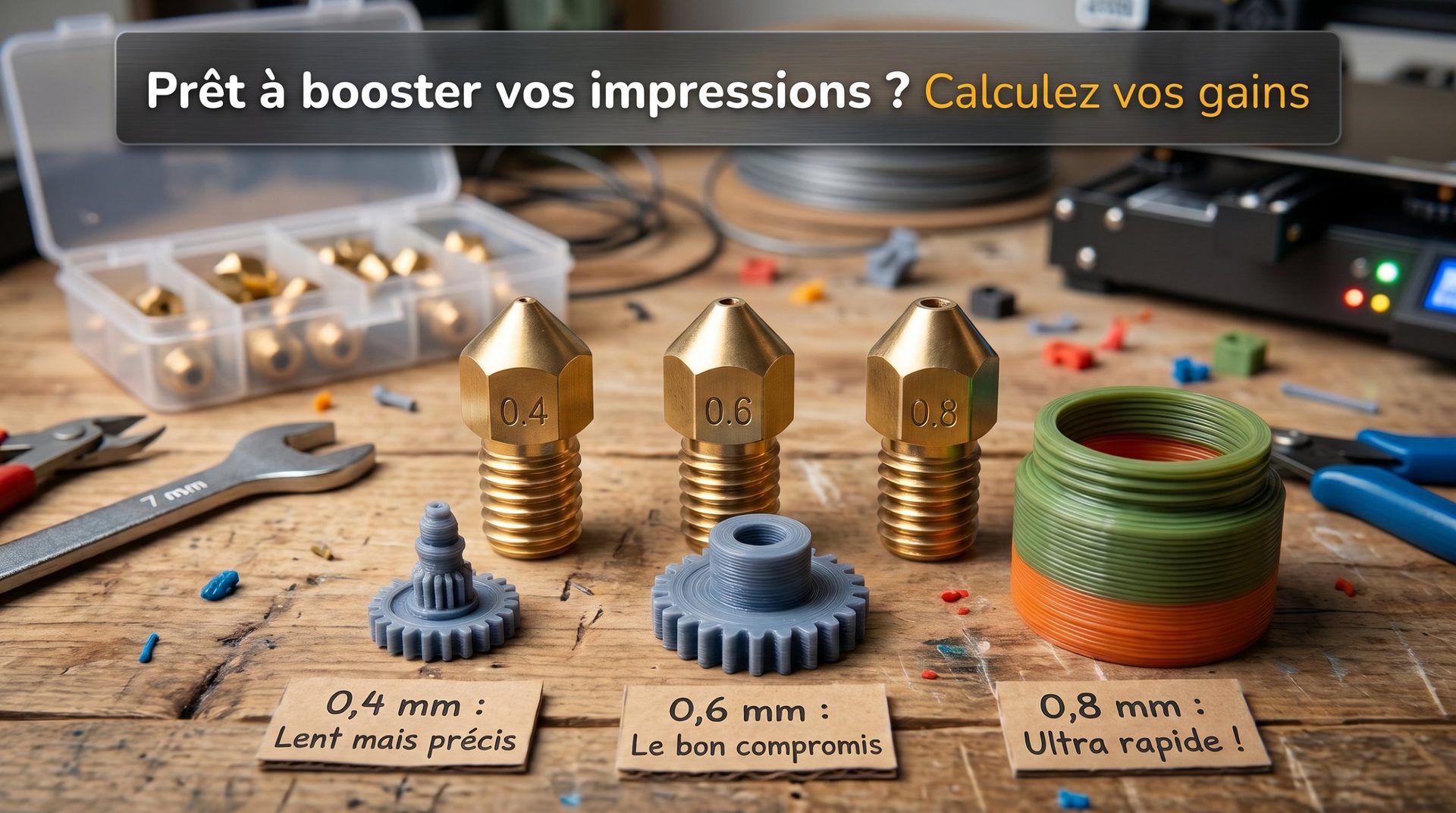
The diameter determines both horizontal resolution (X/Y) and plastic flow rate.
-
0.25 mm - 0.30 mm: Ideal for miniature figurines and extremely fine details. Recommended for layer heights of $0.05$ mm to $0.1$ mm. Warning: High risk of clogging.
-
0.4 mm: The universal standard. It's the best balance between speed and detail. Most slicer profiles are optimized for this diameter.
-
0.6 mm - 0.8 mm: For large structural parts. Significantly reduces print time and increases wall strength, but details are coarser.
✅ Material Guide: Which Nozzle for Which Filament?
Material choice depends mainly on your filament's abrasiveness.
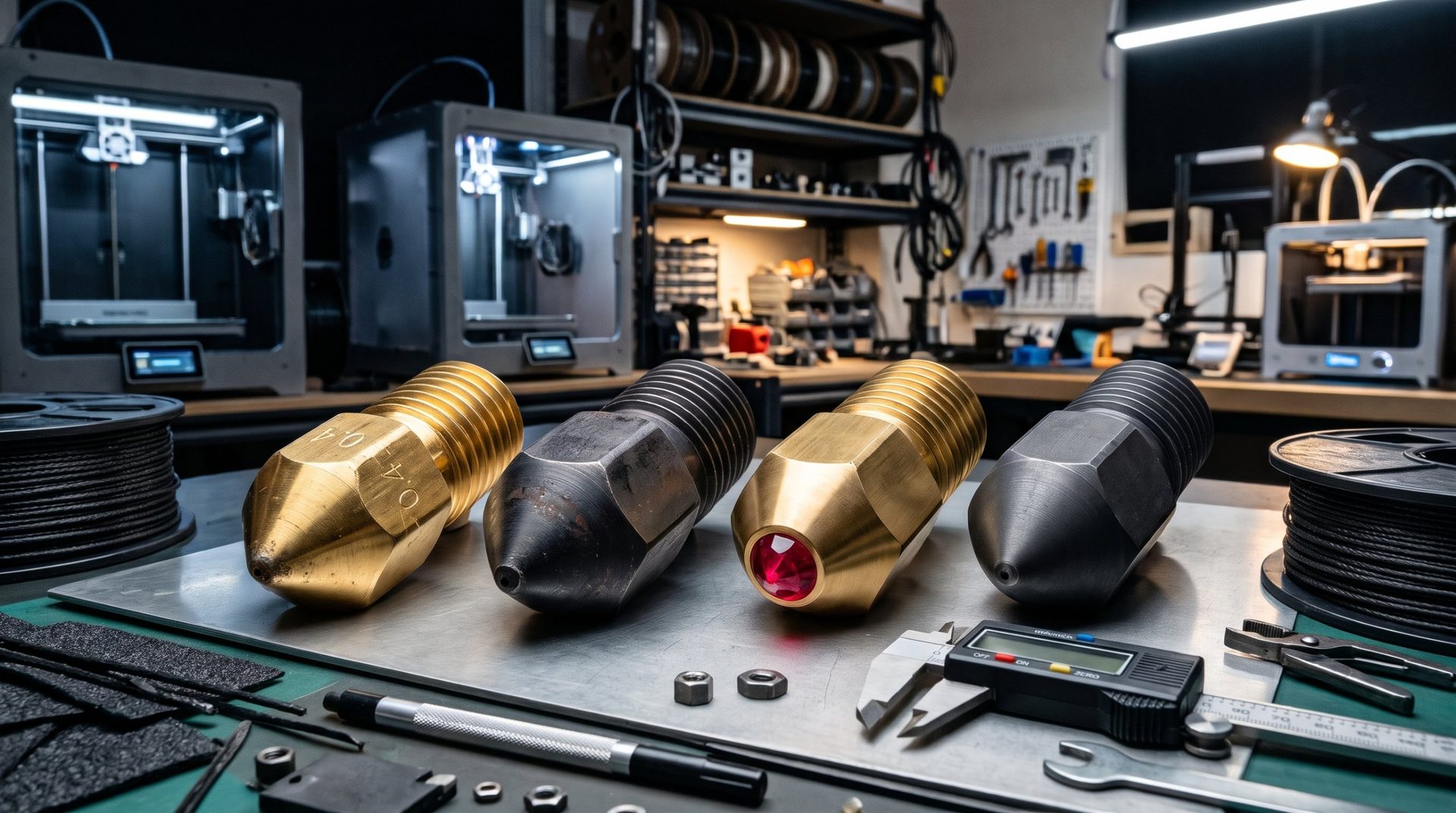
Brass
This is the nozzle standard that comes with 90% of printers.
-
Pros: Excellent thermal conductivity, very low price.
-
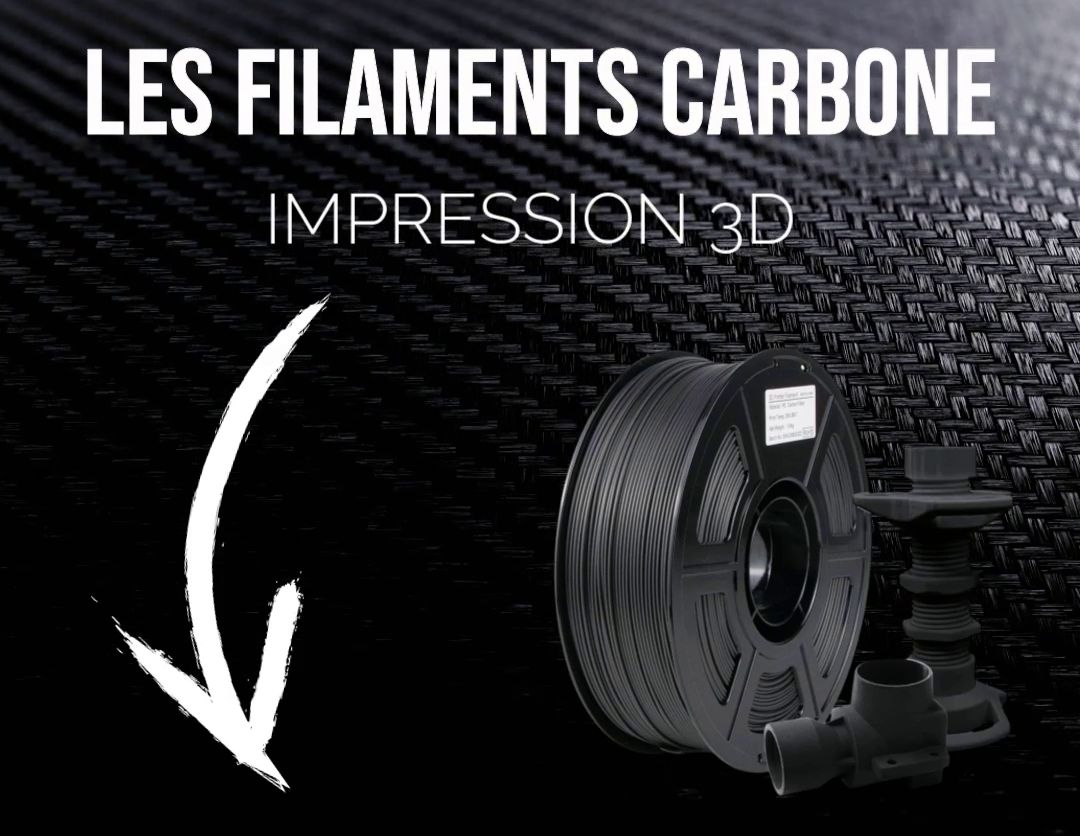
Cons: Very soft. It wears quickly with filled filaments (carbon, wood, phosphorescent).
-
Use: PLA, PETG, standard ABS.
Stainless Steel
Primarily used for food safety or medical reasons.
-
Pros: Won't rust, more resistant than brass.
-
Cons: Poor thermal conductivity (you often need to increase nozzle temperature by $5$ to $10$°C).
-
Use: Medical applications, food contact.
Hardened Steel
Your gateway to technical materials.
-
Pros: Extremely resistant to abrasion. Essential for filaments filled with carbon fiber, glass fiber, or metal.
-
Cons: Worse thermal conductivity than brass. The internal surface is sometimes less smooth, which can cause minor surface defects.
-
Use: Carbon PLA, Nylon-CF, Woodfill.
Tungsten Carbide
The "Holy Grail" of 3D printing.
-
Pros: Combines hardened steel's durability with thermal conductivity close to brass. It's virtually indestructible and easy to clean.
-
Cons: High price.
-
Use: All filament types, intensive and industrial use.
Ruby Insert Nozzle (e.g., Olsson Ruby)
A brass nozzle with a synthetic ruby tip.
-
Pros: Extreme hardness at the tip while maintaining brass heating.
-
Cons: Very fragile to impact (the tip can crack if it hits the build plate) and very expensive.
✅ Summary: Which Nozzle Should You Choose?
| Material | Durability | Thermal Conductivity | Price | Ideal Use |
| Brass | Low | Excellent | € | Basic PLA / PETG |
| Hardened Steel | Very High | Medium | €€ | Abrasive Materials (Carbon) |
| Tungsten | Extreme | Very Good | €€€ | Complete Versatility / Pro |
| Ruby | Extreme | Excellent | €€€€ | Abrasive Materials (Specific) |
Expert tip: If you're new to technical materials, start with a 0.4 mm hardened steel nozzle. It's the most cost-effective investment to test carbon or wood without destroying your original nozzle in a single print.