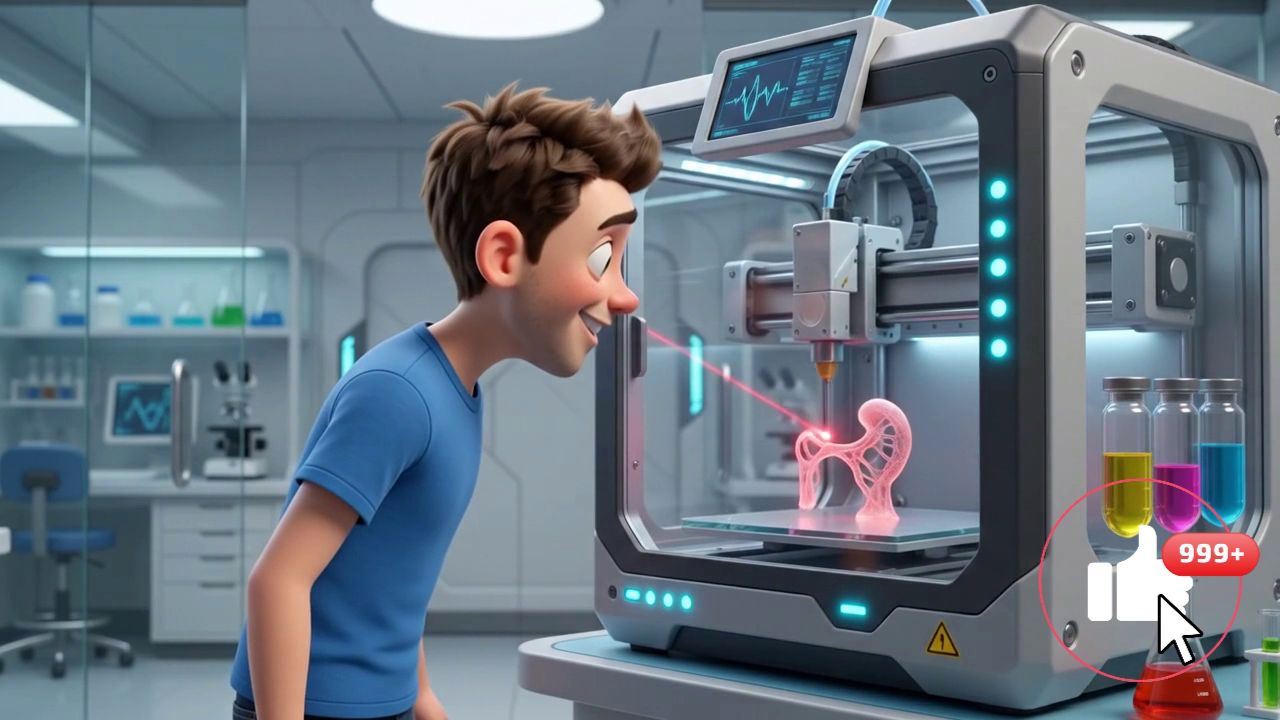
Bioprinting: 3D Printing at the Service of the Human Body

The term bioprinting evokes a futuristic vision: the creation of living tissues and complex organs layer by layer, thanks to 3D printing technologies. Far from being science fiction, this discipline is a thriving scientific reality, promising to radically transform medicine, from pharmaceutical research to transplant surgery.
Bioprinting consists of using biological materials—living cells and biomaterials—as "inks" to build functional three-dimensional structures that mimic the natural tissues of the human body.
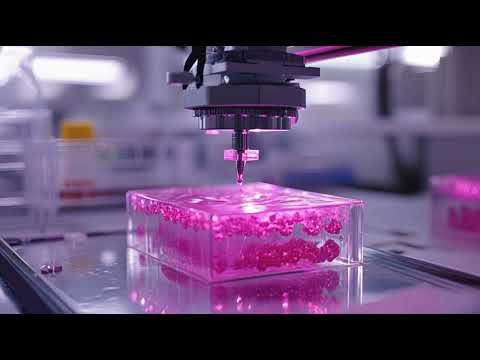
Fundamental Principles of Bioprinting
Bioprinting relies on the integration of principles from engineering, cell biology, and materials science:
- Bio-inks: At the heart of the process are bio-inks, complex formulations that combine living cells with biomaterials (often hydrogels such as alginate, collagen, or gelatin). These biomaterials serve as a temporary extracellular matrix, providing structural support to cells during and after printing while ensuring their survival and function. The key criteria for a good bio-ink are biocompatibility, printability (viscosity, polymerization speed), and the ability to support cell viability and proliferation.
- Bioprinting Technologies: Several 3D printing approaches are suited to bioprinting, each with its advantages and limitations:
- Inkjet Bioprinting: Similar to desktop printers, this method deposits micro-droplets of bio-ink. It offers excellent resolution and good cell viability thanks to minimal shear forces, but is limited to low-viscosity bio-inks.
- Extrusion Bioprinting: This technique pushes bio-ink through a nozzle to deposit continuous filaments. It allows the use of more viscous bio-inks and higher cell densities, creating more robust structures. Resolution is generally lower than inkjet printing.
- Light-based Bioprinting (e.g., DLP/SLA): Light systems (lasers or projectors) selectively polymerize photopolymerizable bio-inks. This method excels in resolution and creating complex geometries at high speed, but UV radiation can potentially affect cell viability.
- The General Process: Bioprinting follows a typical workflow:
- 3D Modeling: Creating a precise digital model of the tissue or organ to be printed (often from medical imaging).
- Bio-ink Preparation: Mixing cells and biomaterials.
- Printing: Layer-by-layer deposition of bio-ink according to the 3D model.
- Maturation and Perfusion: The printed structures are placed in bioreactors where they are cultured and nourished to allow cells to develop, differentiate, and organize to form functional tissue, potentially with a vascular system.
Current and Revolutionary Future Applications
Bioprinting is at the forefront of regenerative medicine and biomedical research:
- Tissue Models for Pharmaceutical Research: Creation of human tissue models in vitro (liver, heart, tumors) to test the efficacy and toxicity of new drugs. This reduces the need for animal testing and allows for more relevant testing.
- Tissue Repair and Replacement:
- Skin: Printing skin grafts for severe burn victims.
- Cartilage and Bone: Development of cartilaginous and bone structures to repair joint lesions or bone defects.
- Vascular Structures: Creation of blood vessels to improve vascularization of larger printed tissues or for grafts.
- Personalized Medicine: One of the most exciting promises is the ability to use the patient's own cells to print tissues or organs. This would eliminate the problem of immune rejection, a major obstacle to transplantation.
- The Ultimate Goal: Complete Organs: Although major challenges persist (complex vascularization, innervation, specific functions), the long-term vision is to print functional organs (heart, kidney, liver) to address the shortage of donors.

Challenges and Future Prospects
Despite its enormous potential, bioprinting faces complex challenges:
- Biological Complexity: Recreating the complexity, cellular heterogeneity, vascularization, and innervation of natural organs remains a monumental challenge. Biological tissues are dynamic and are not simple static structures.
- Bio-ink Development: Finding biomaterials that perfectly mimic the natural environment of cells while being printable is an ongoing area of research.
- Cell Viability and Functionality: Ensuring that cells survive the printing process and maintain their specific functions once the structure is printed.
- Regulation and Ethics: The creation of human organs and tissues raises important ethical questions and requires a rigorous regulatory framework to ensure safety and compliance.
- Industrialization and Standardization: Moving from the laboratory stage to large-scale production of functional tissues and organs is a technical and logistical challenge.
Despite these obstacles, bioprinting research is advancing by leaps and bounds. Continued advances in materials, printing technologies, and cell biology promise to make bioprinting a cornerstone of 21st-century medicine, offering hope for new therapies for incurable diseases and innovative solutions for human health. The possibility of printing life is no longer a dream, but a roadmap for the future of medicine.