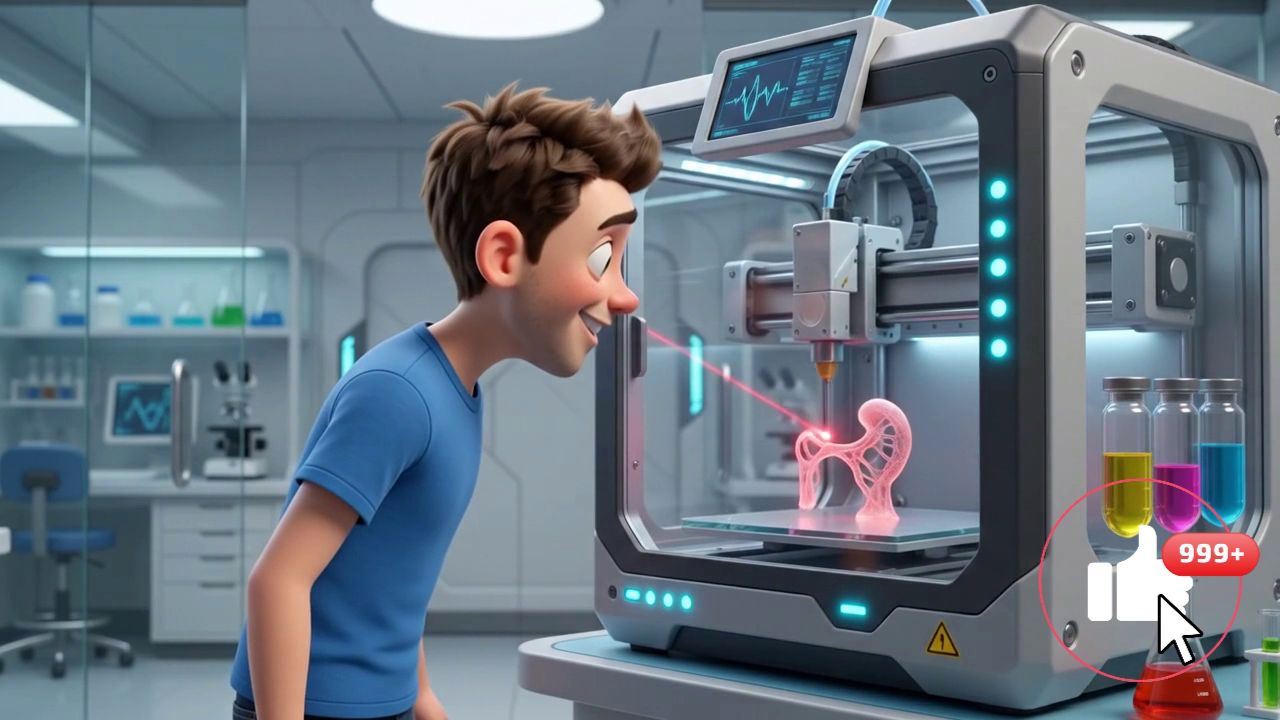
3D Printing's Future: From Science Fiction to Reality

Today, 3D printing allows us to manufacture prototypes, toys, and practical objects. But current research suggests we're only at the beginning of a far greater revolution. In the future, this technology will go beyond simply creating plastic objects—it will fundamentally transform entire industries, from medicine to food.

A Revolution in Medicine
One of the most promising fields is bioprinting. Researchers are actively working on printing living tissues and organs. Soon, it may be possible to print skin for grafts, cartilage to repair joints, or even entire replacement organs. Moreover, 3D printing will enable the creation of personalized medications, with dosages and compositions tailored to each patient for maximum effectiveness.
The Habitat and Construction of Tomorrow
Large-scale 3D printing will transform the building industry. We can already print entire houses in just a few days, with large robots depositing concrete or other construction materials layer by layer. In the future, this method will make it possible to build homes faster, at lower cost, and with far less waste. It could even be used to construct habitats on the Moon or Mars, using materials found on site.
Personalized Nutrition
Imagine being able to print your meal with custom nutrients and flavors. That's the promise of food 3D printing. Specialized printers could create dishes with complex shapes for fine dining, or foods with specific textures and compositions for the elderly, astronauts, or those with dietary restrictions.
Industry in the Age of Mass Personalization
Industrial production will evolve radically. Instead of producing millions of identical objects, the factories of the future will be able to manufacture unique, personalized products on demand, thanks to machines capable of printing with a variety of materials—metals, ceramics, composites—all at once. Parts for aerospace, automotive, or everyday items will be optimized to be lighter and stronger, without the material waste of traditional manufacturing techniques.
The future of 3D printing is not limited to the machines we know today. It represents a fundamental transformation in how we create, consume, and live, paving the way for a world where innovation is faster, production more local, and objects more suited to our needs.