Become an Additive Manufacturing Technician (3D Printing)
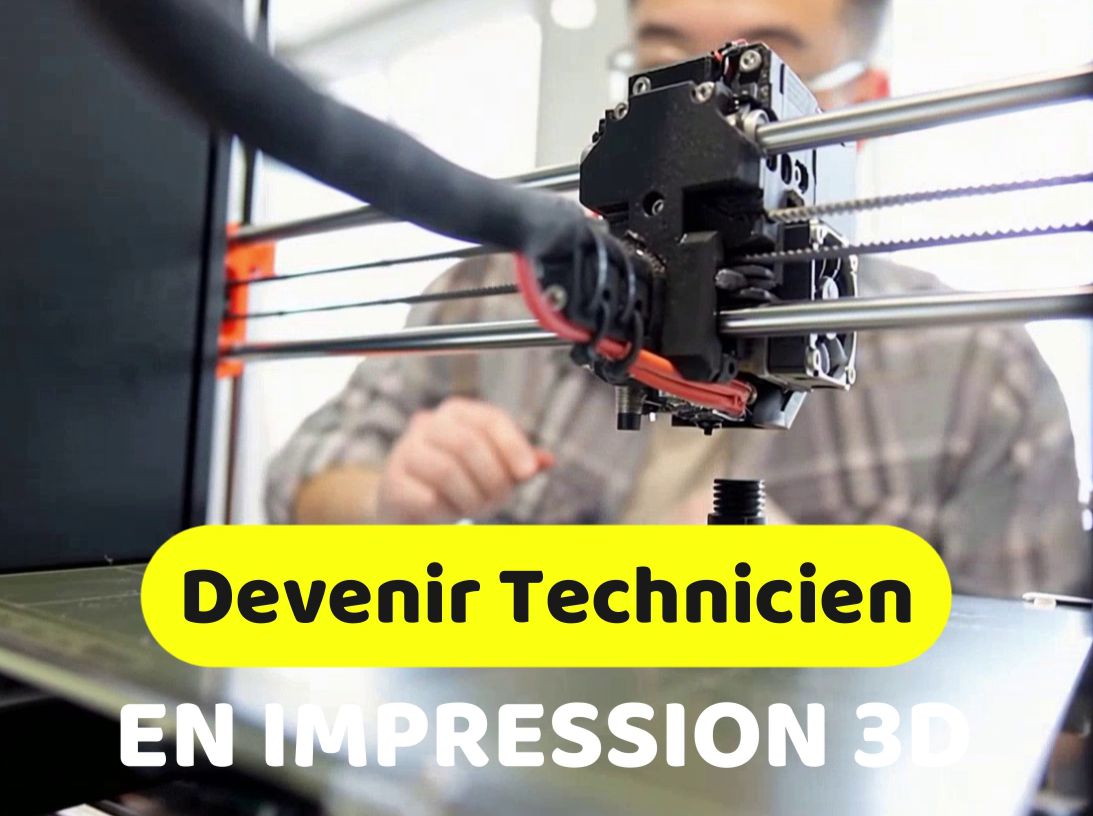
The Additive Manufacturing Technician (or 3D Printing Technician) role is at the heart of the industrial revolution. This professional ensures smooth production operations, from file preparation to industrial machine maintenance. The position requires both advanced technical skills and meticulous attention to detail.

The Role of the 3D Printing Technician
The additive manufacturing technician is the operational expert of the shop floor. Their main responsibilities include:
- Production Preparation:
- Verification and optimization of 3D files (STL format) for printing.
- Setup of the build plate and machine configuration (advanced slicing).
- Management of material inventory (filaments, powders, resins).
- Operation and Monitoring:
- Launching and monitoring print cycles across a fleet of machines (FDM, SLS, SLA, etc.).
- Quality control during production and anomaly detection.
- Post-Processing and Finishing:
- Removal of parts from the build plate or powder.
- Cleaning, sanding, and application of necessary finishing touches.
- Maintenance:
- Preventive and corrective first-level machine maintenance (nozzle changes, calibration, troubleshooting).
The Ideal Training Path
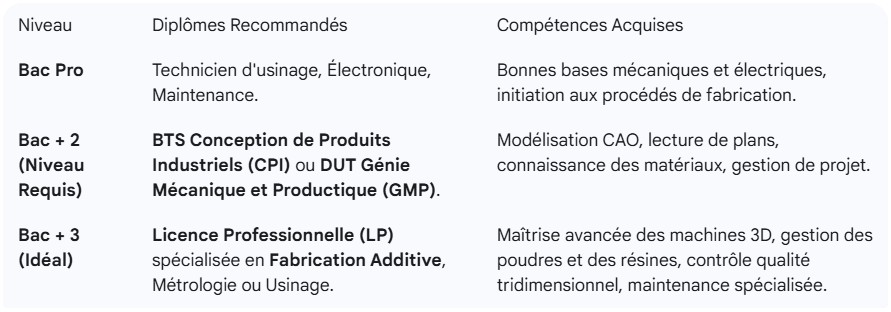
To enter this profession, a technical level qualification (Bac+2 to Bac+3) is generally required. Training typically focuses on mechanical engineering, design, and materials science:
Structured and Certified Training Options
For those wanting to validate their skills professionally, a structured approach is essential and can be covered by funding programs (CPF, OPCO, France Travail).
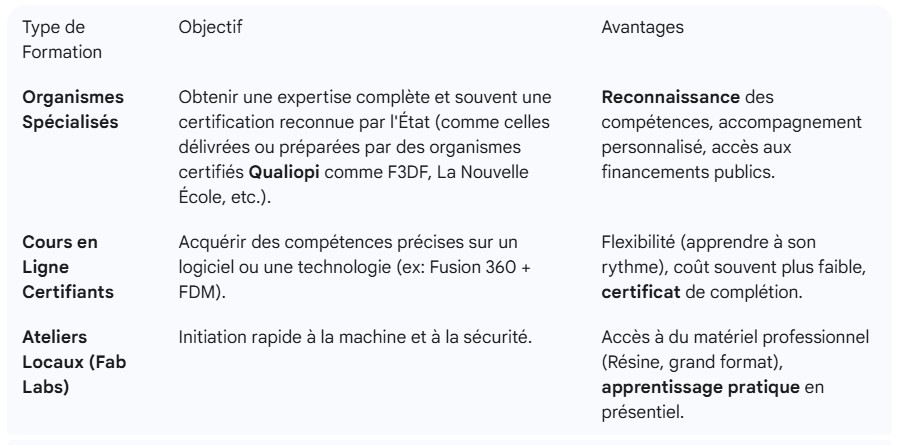
An increasing number of Professional Certifications (CQP) and specialized short-term Additive Manufacturing training programs are offered by technical training centers.
Essential Skills
The 3D printing technician is a hybrid profile, at the intersection of several disciplines:
- Technical Skills:
- Slicing Mastery: Understanding the impact of each parameter (speed, layer height, infill, supports) on the final result.
- CAD and Blueprint Reading: Ability to modify a simple 3D file and understand required tolerances.
- Maintenance: Knowledge of mechanics, electronics, and automation for fault diagnosis.
- Behavioral Skills:
- Rigor and Organization: Essential for maintaining machine cleanliness (especially powder) and following precise specifications.
- Analytical Ability: Diagnose why a print failed and propose solutions (mechanical, thermal, or software issues).
- Autonomy: Ability to manage the complete production cycle independently.
Career Development Prospects
With the sector booming, career advancement opportunities are excellent:
- Progression: An experienced technician can advance to Production Team Lead (shop floor management) or Quality Manager positions.
- Specialization: Specializing in more complex processes (SLS, DMLS for metals) enables becoming an Additive Process Expert, a highly sought role in design or research and development (R&D) departments.
The Additive Manufacturing Technician is the cornerstone that enables 3D technology to transition from prototyping to real industrial production.